Skip to content

Cart

Your cart is empty

Continue shopping

Clay Tempered Katana

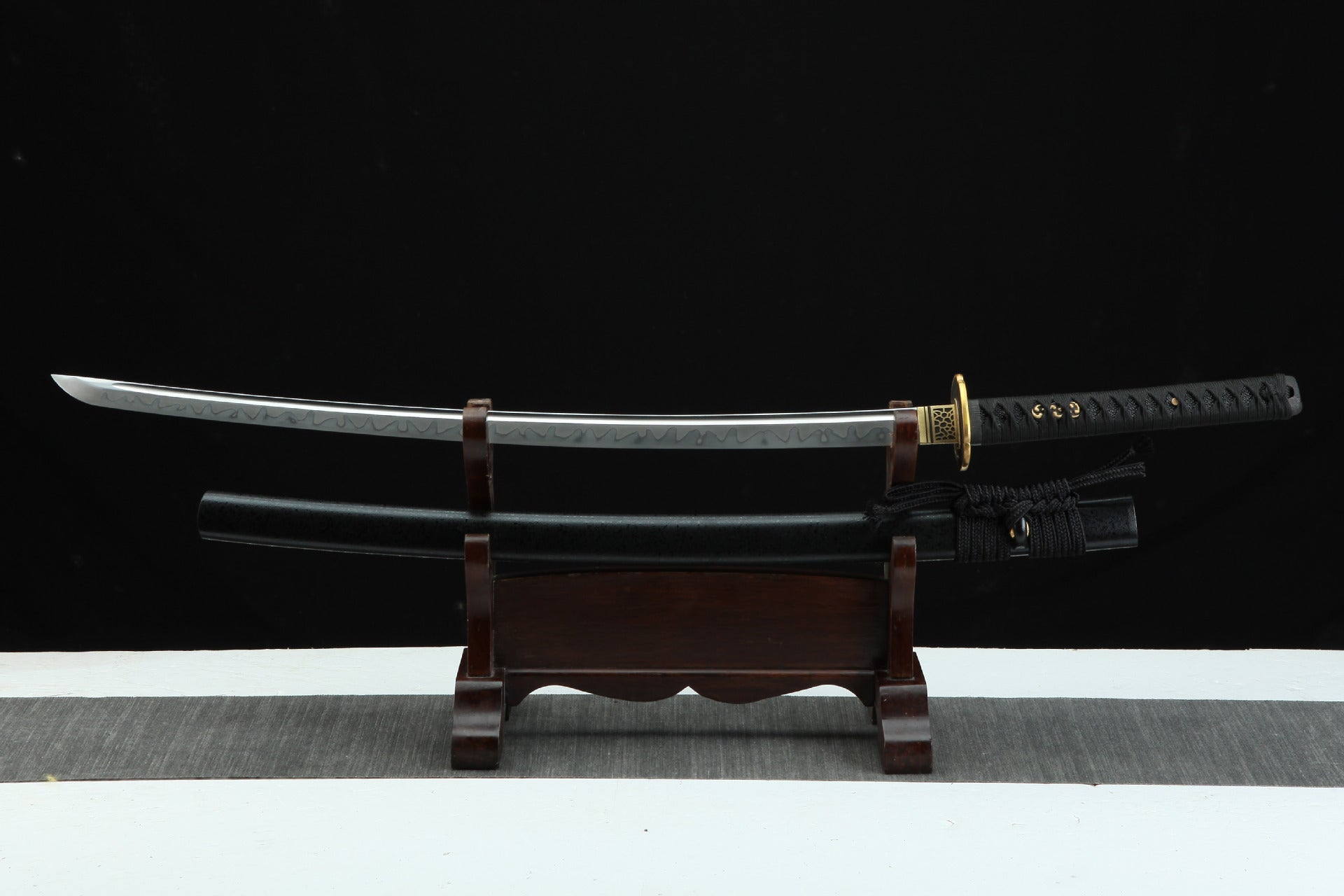
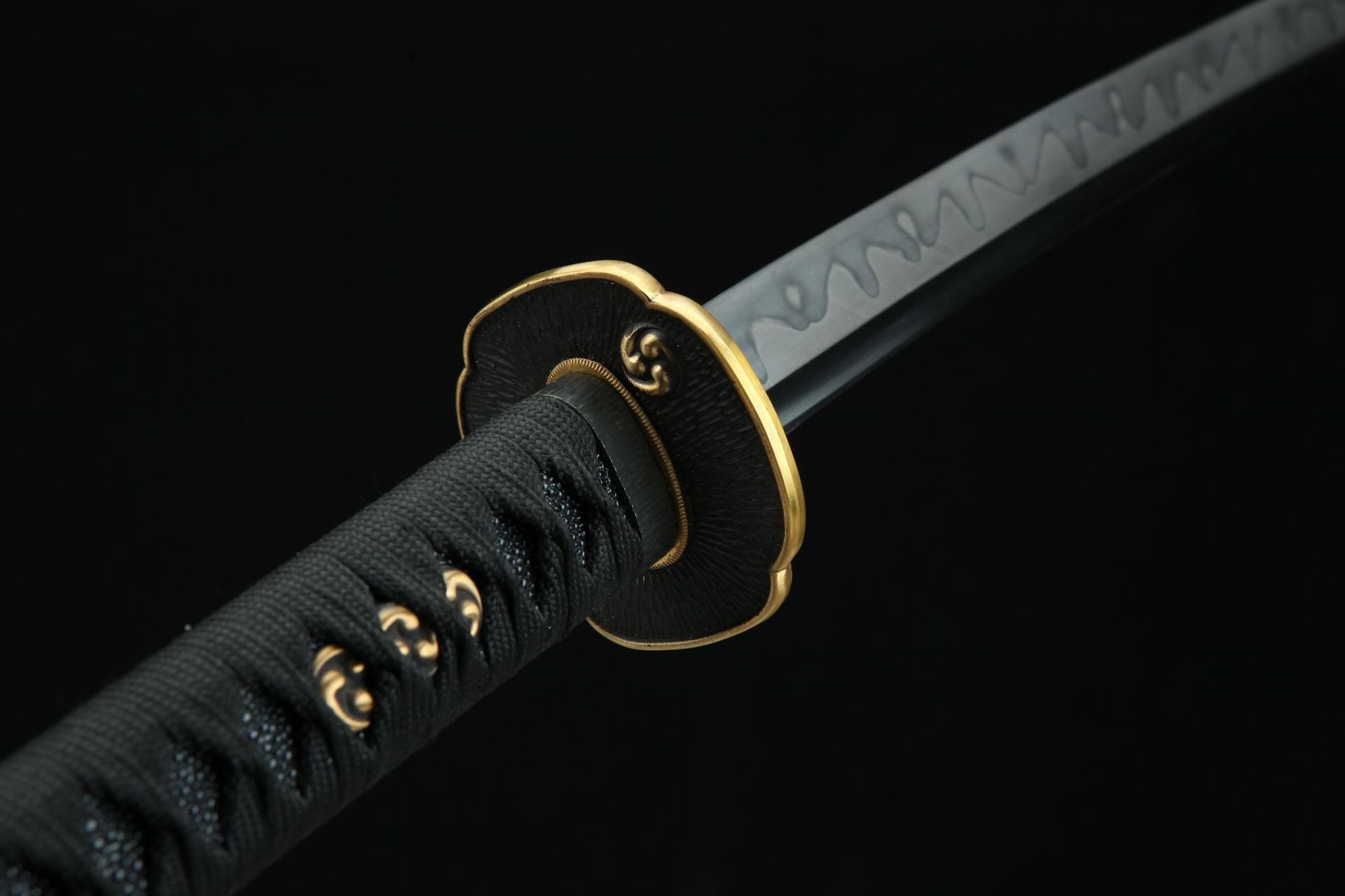
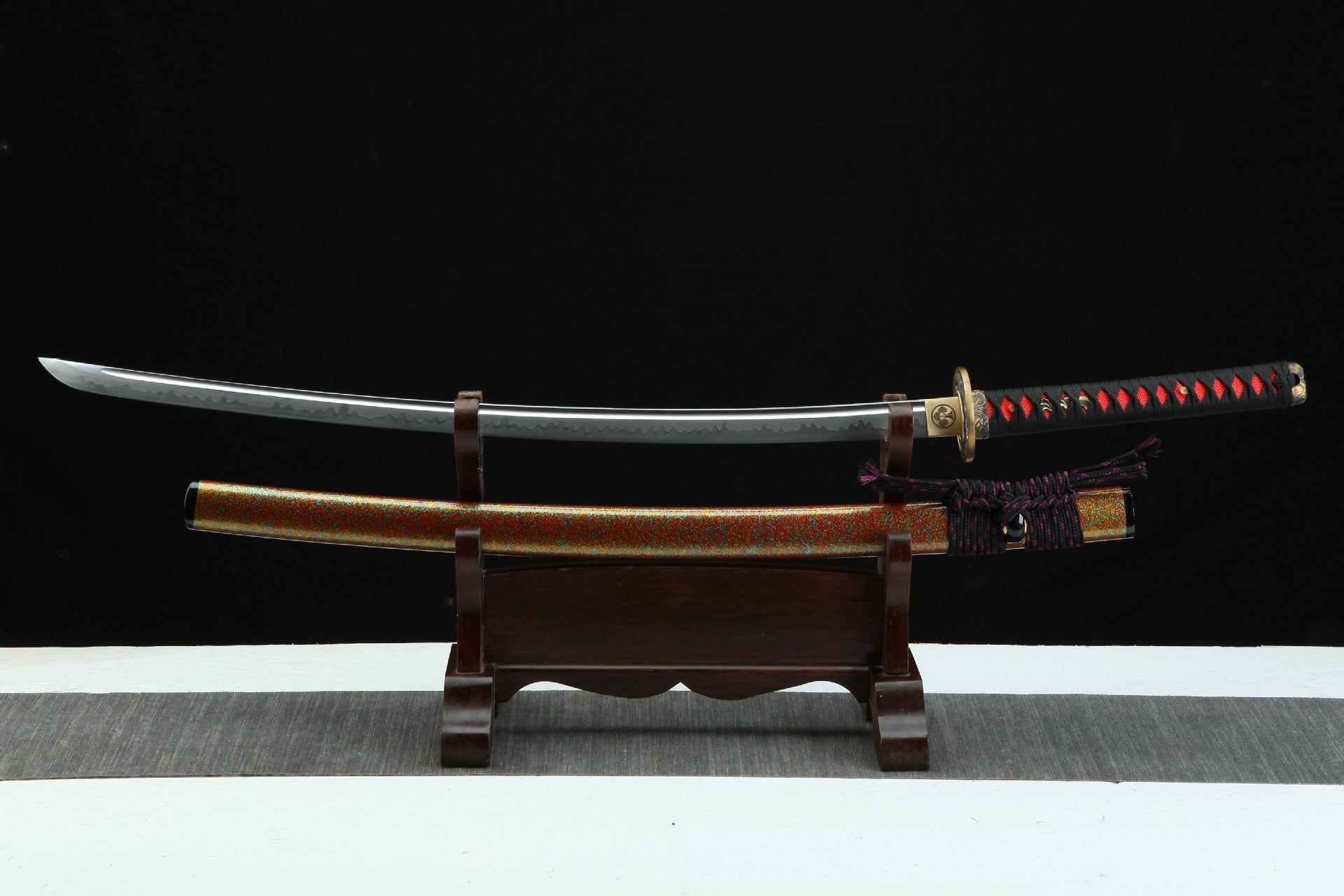
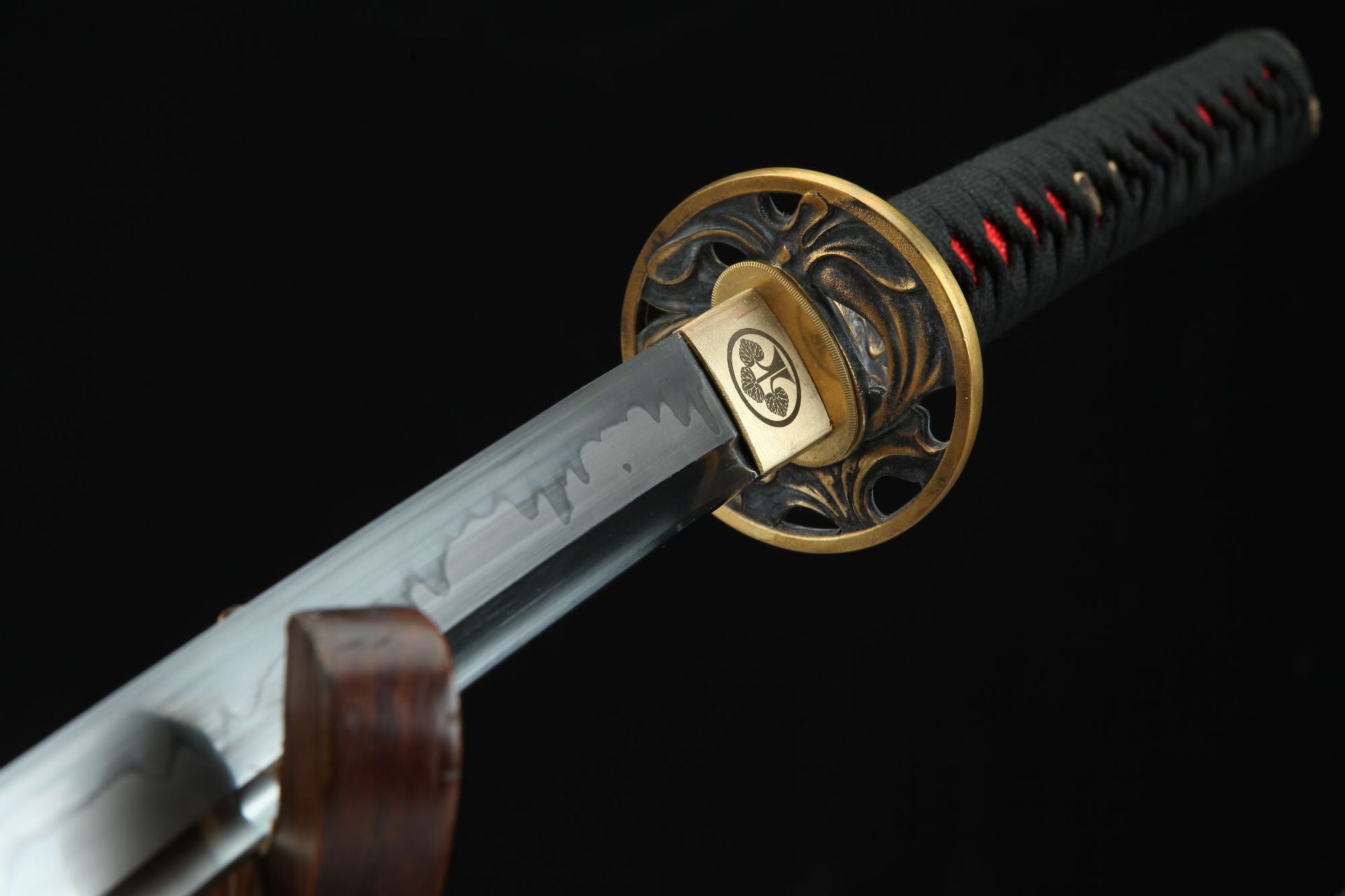
Explore our collection of clay tempered katana, made with blades that use differential hardening to create different properties along the edge and spine. This process is closely associated with the formation of a genuine hamon, making the heat-treatment method itself an important part of the blade’s character.

When comparing clay tempered katana, check how the blade was heat treated and whether the hamon is formed by differential hardening rather than added as a decorative effect.

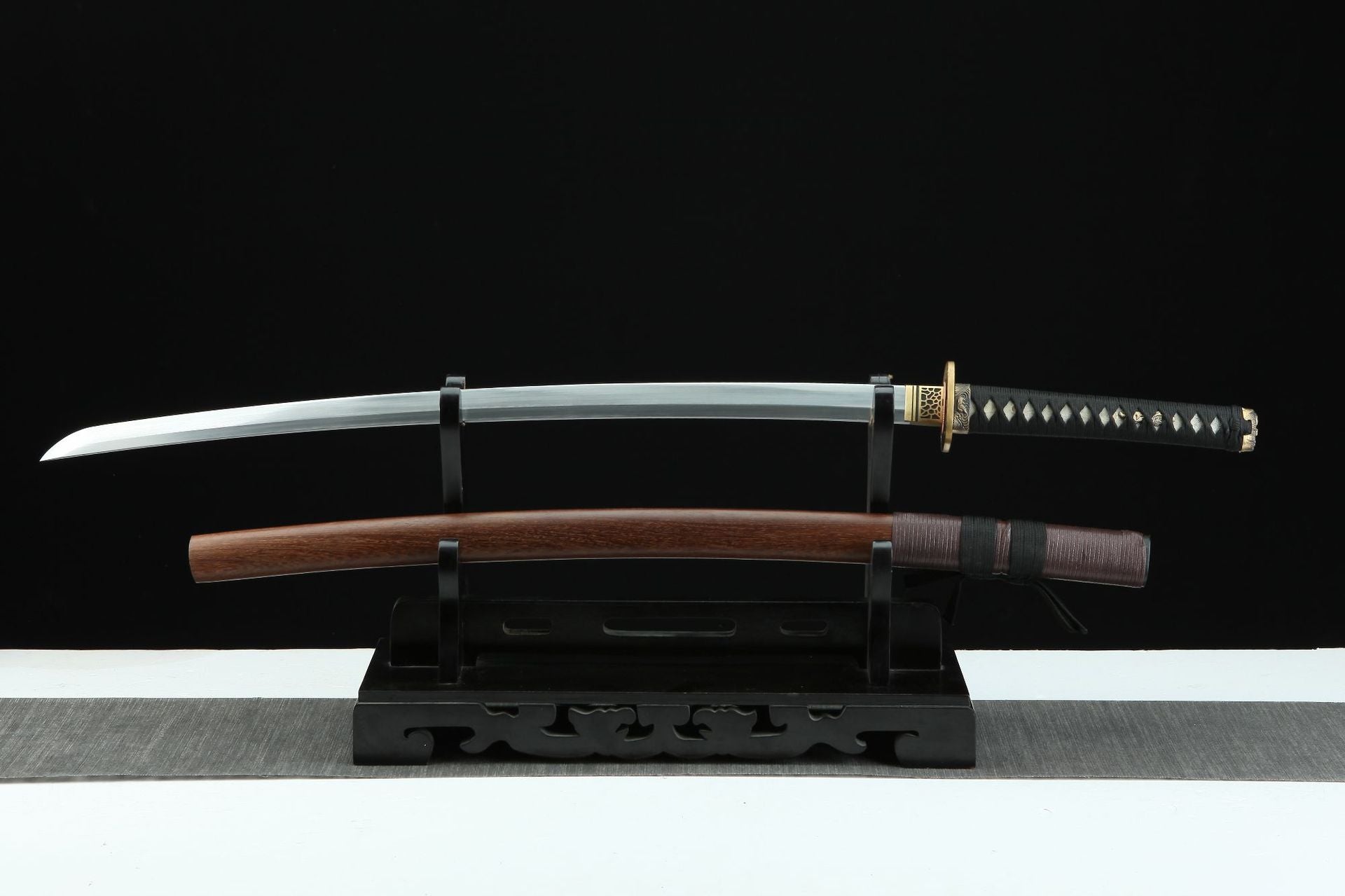
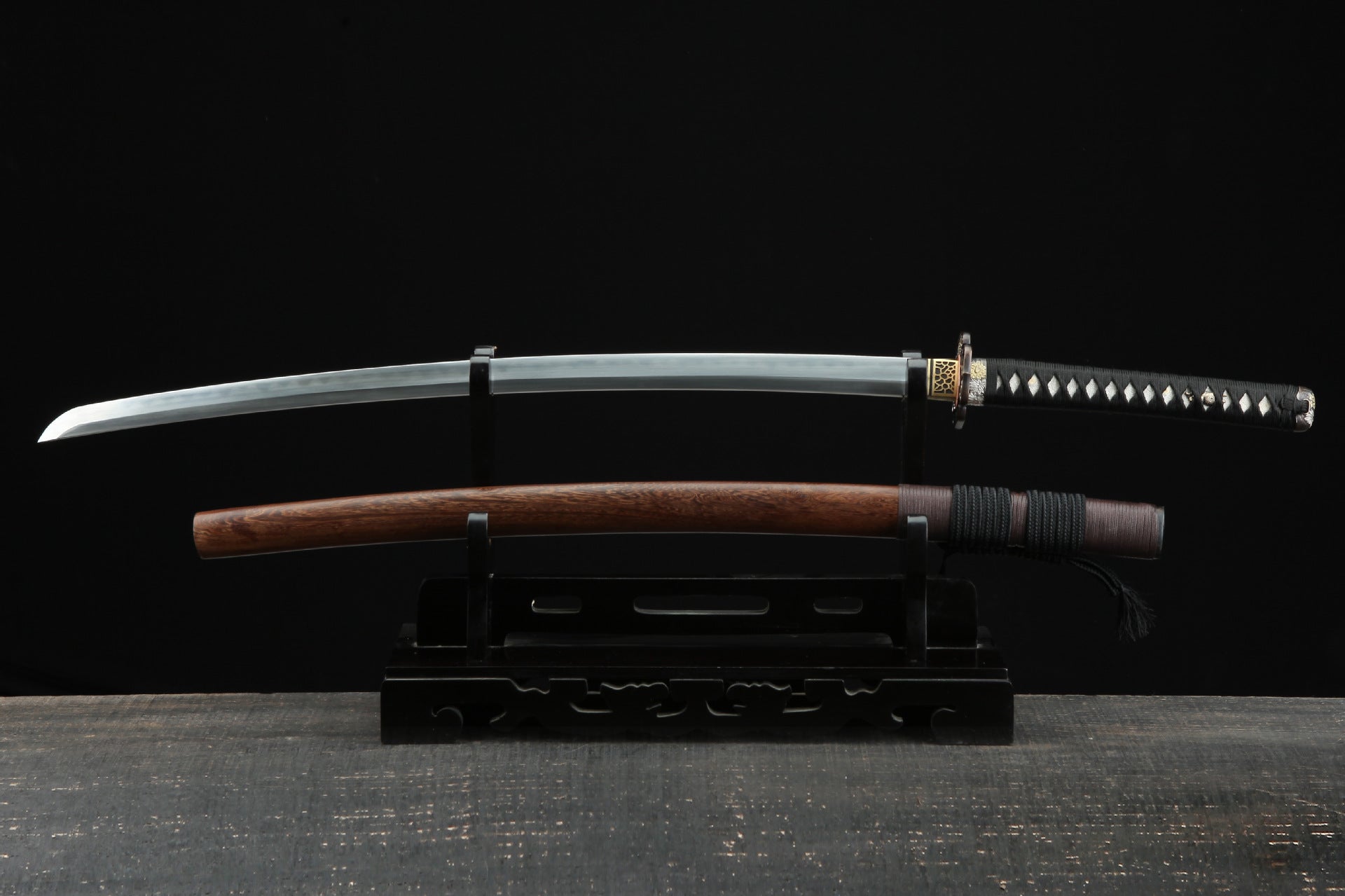
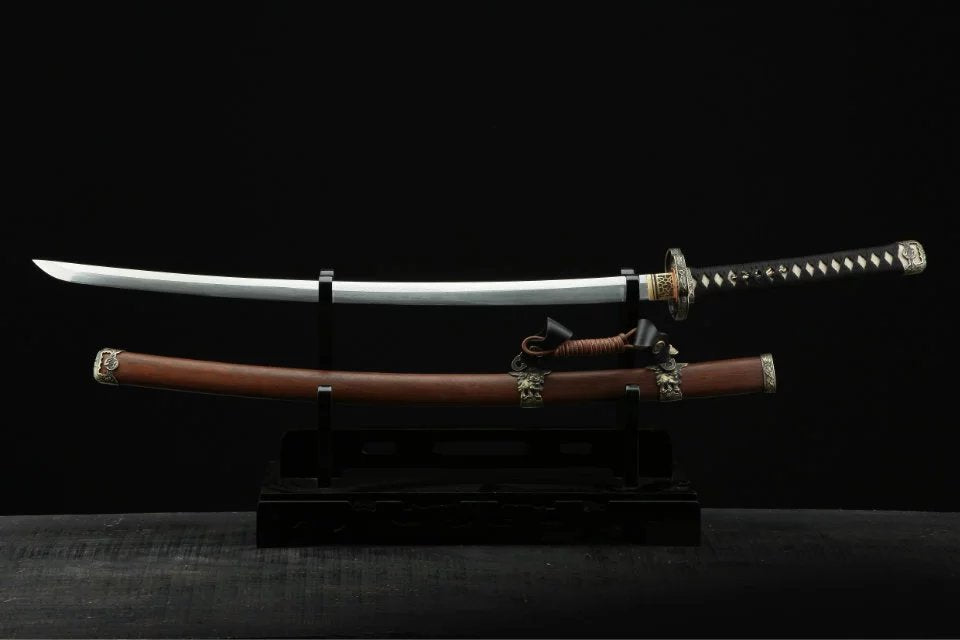
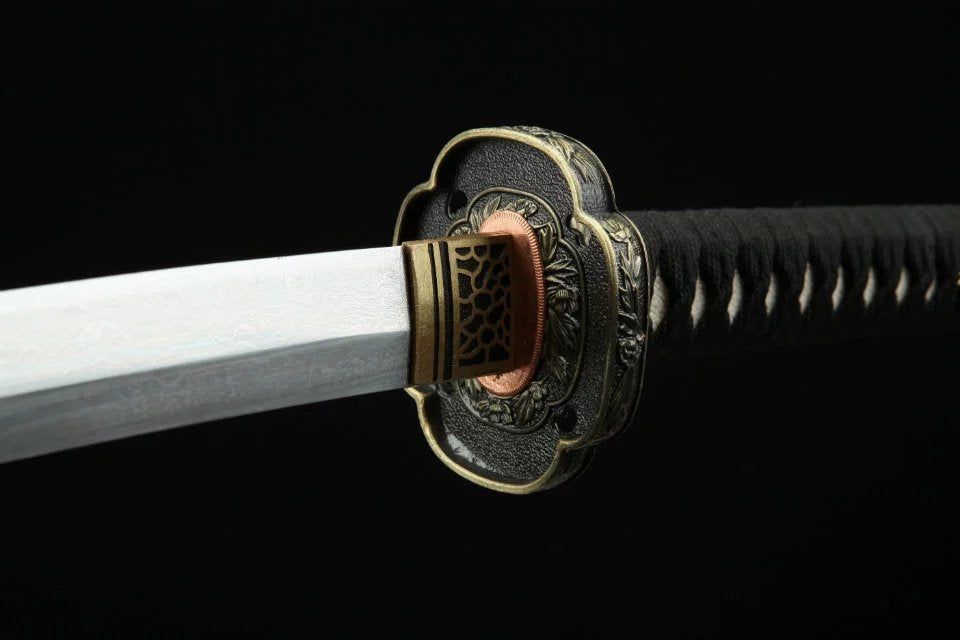
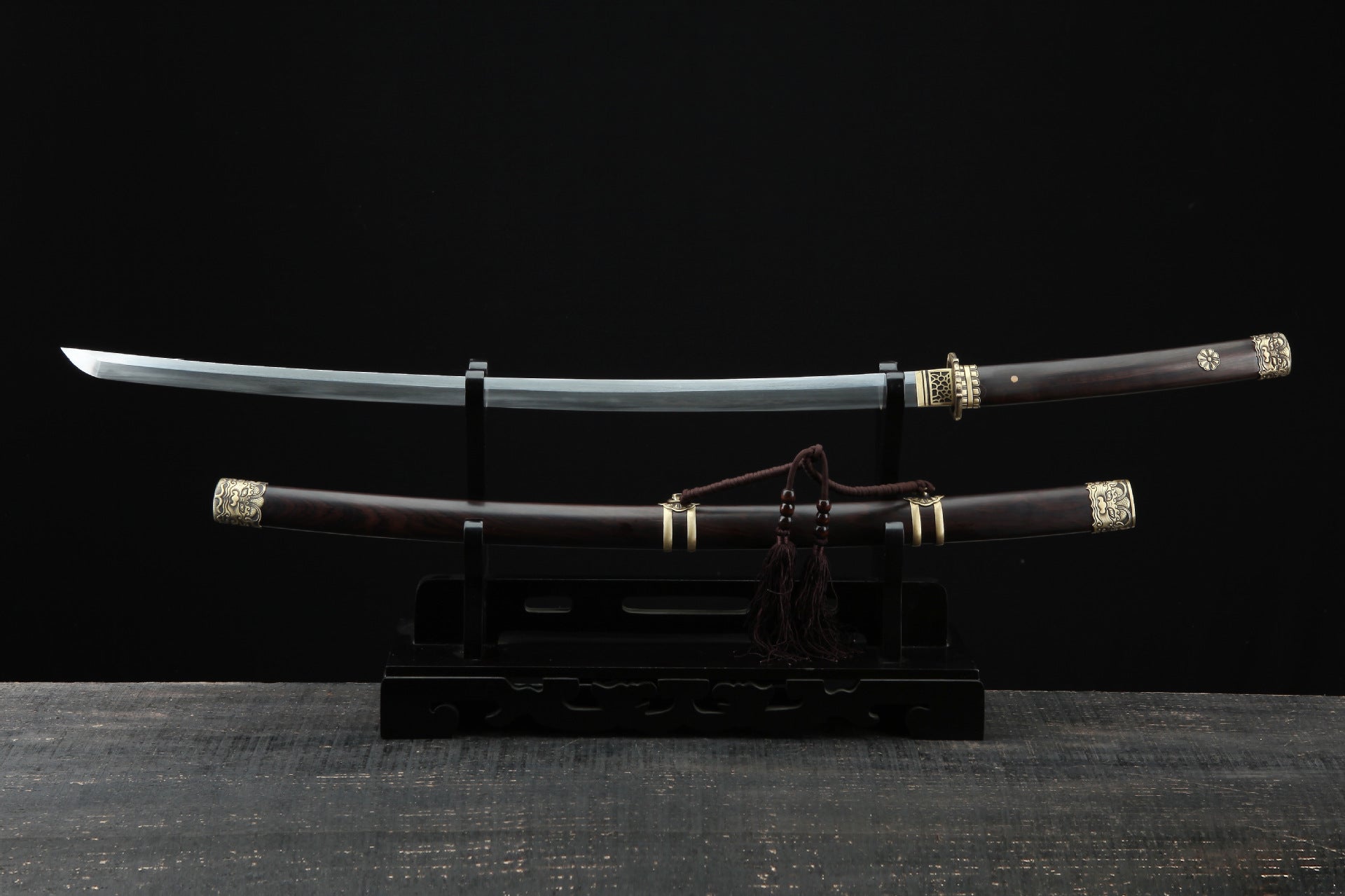
Save 17%A brown-red clay-tempered carbon steel katana with a polished blade, showcasing traditional craftsmanship.
Sale price$199.00 Regular price$239.00
Save 17%A hand-forged carbon steel katana, showcasing the craftsmanship and precision in the blade’s creation.
Sale price$199.00 Regular price$239.00
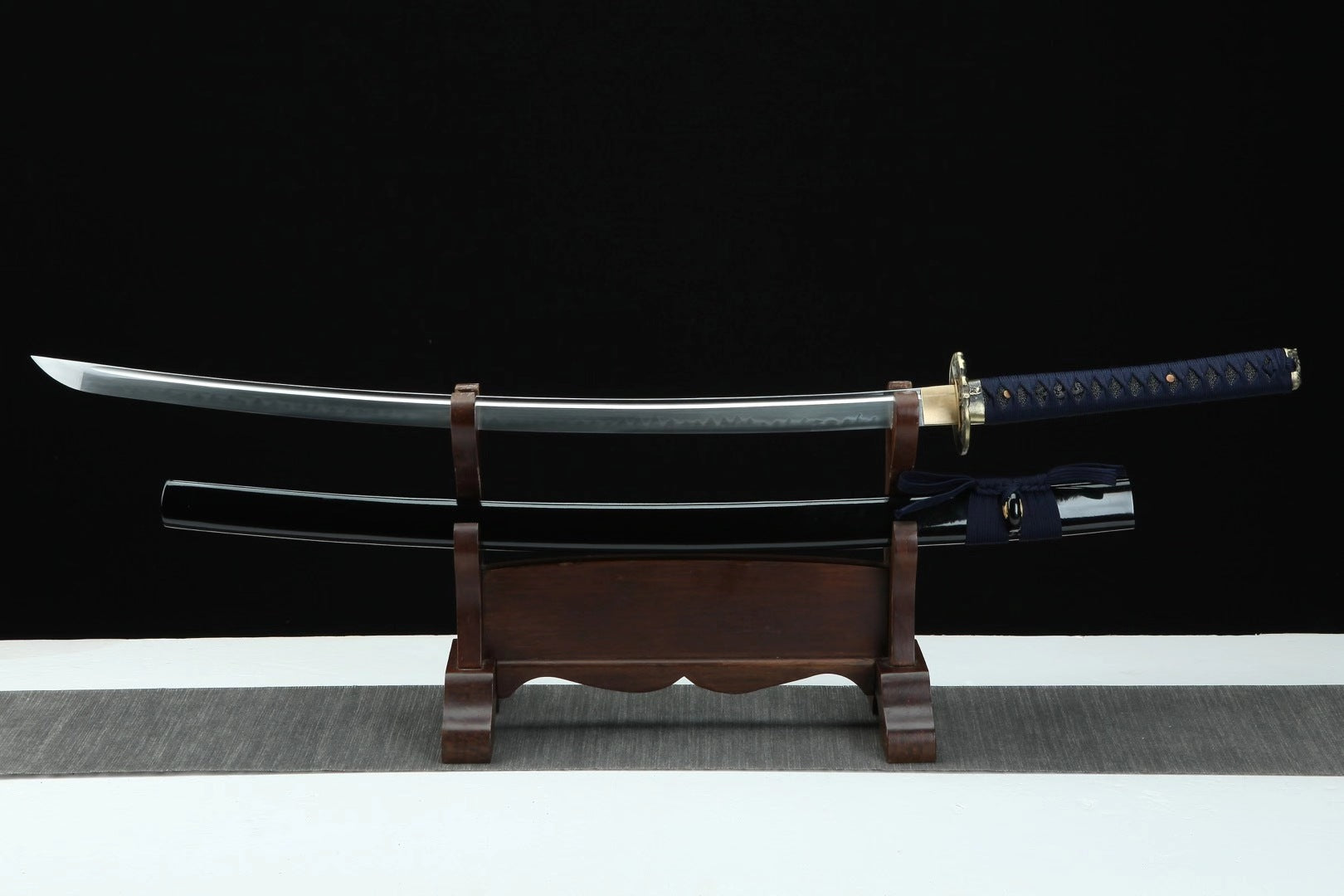
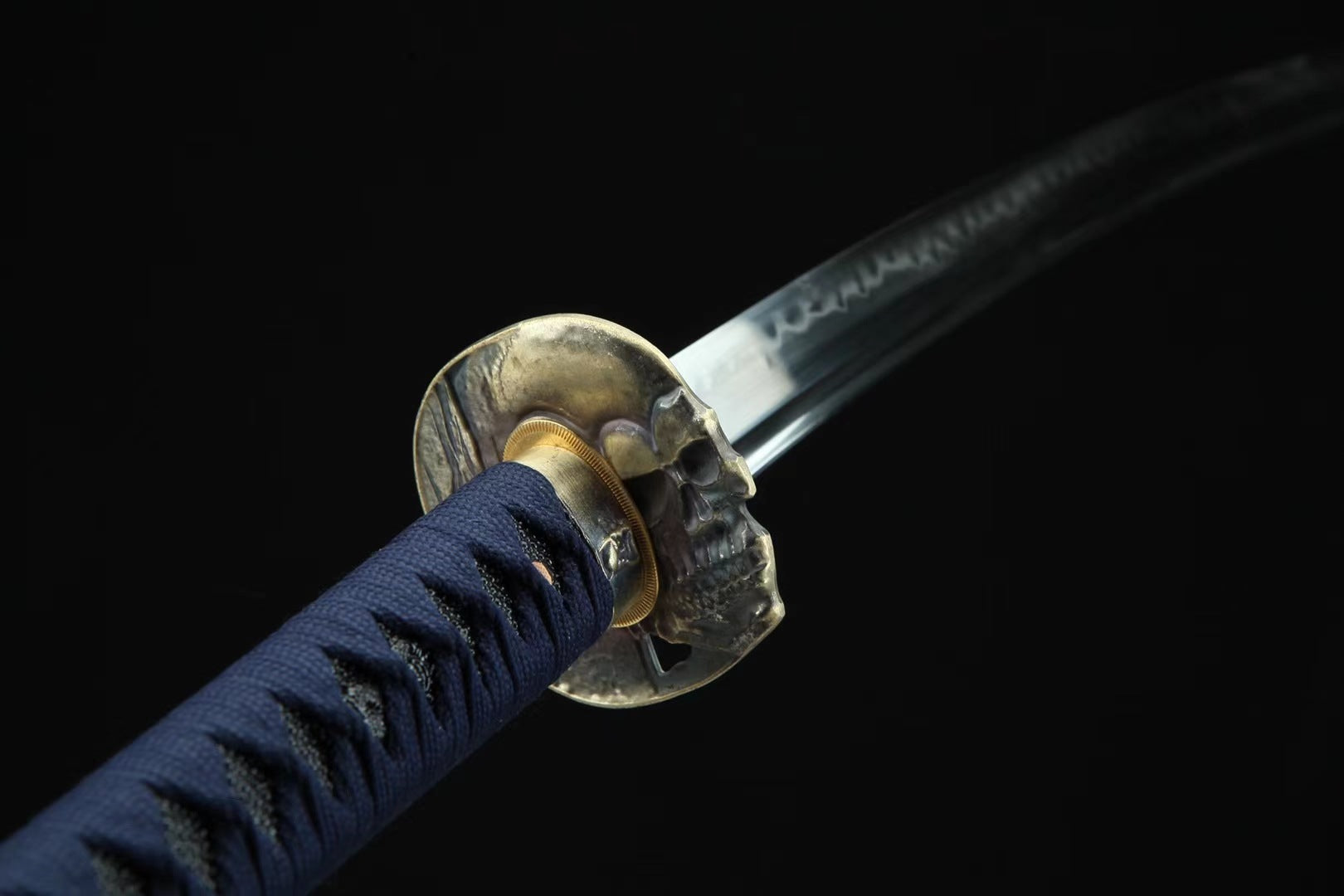
Save 13%The "Devil" clay-tempered true katana, available for purchase in the US, featuring a beautifully crafted blade.
Sale price$199.00 Regular price$228.00
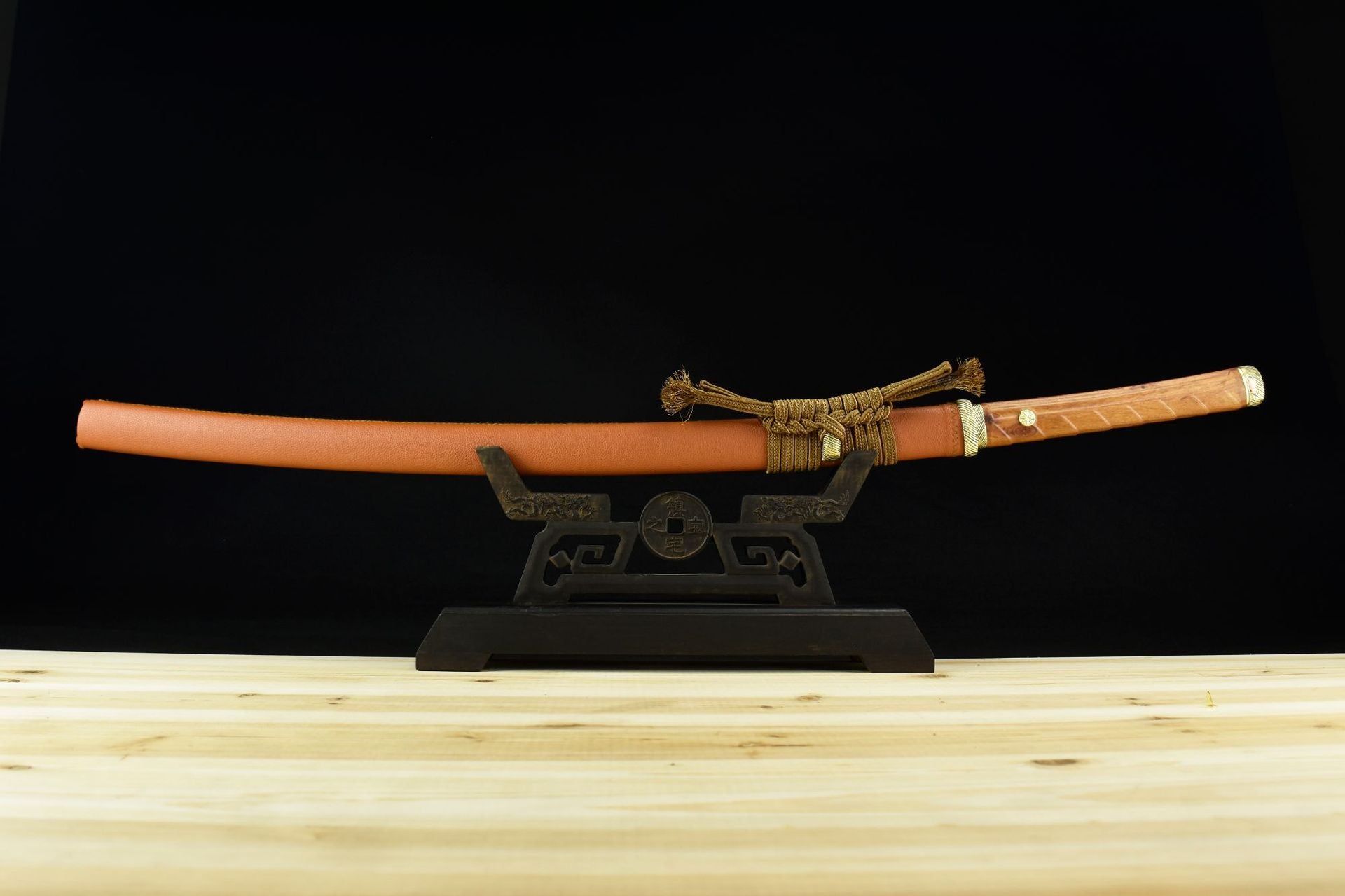
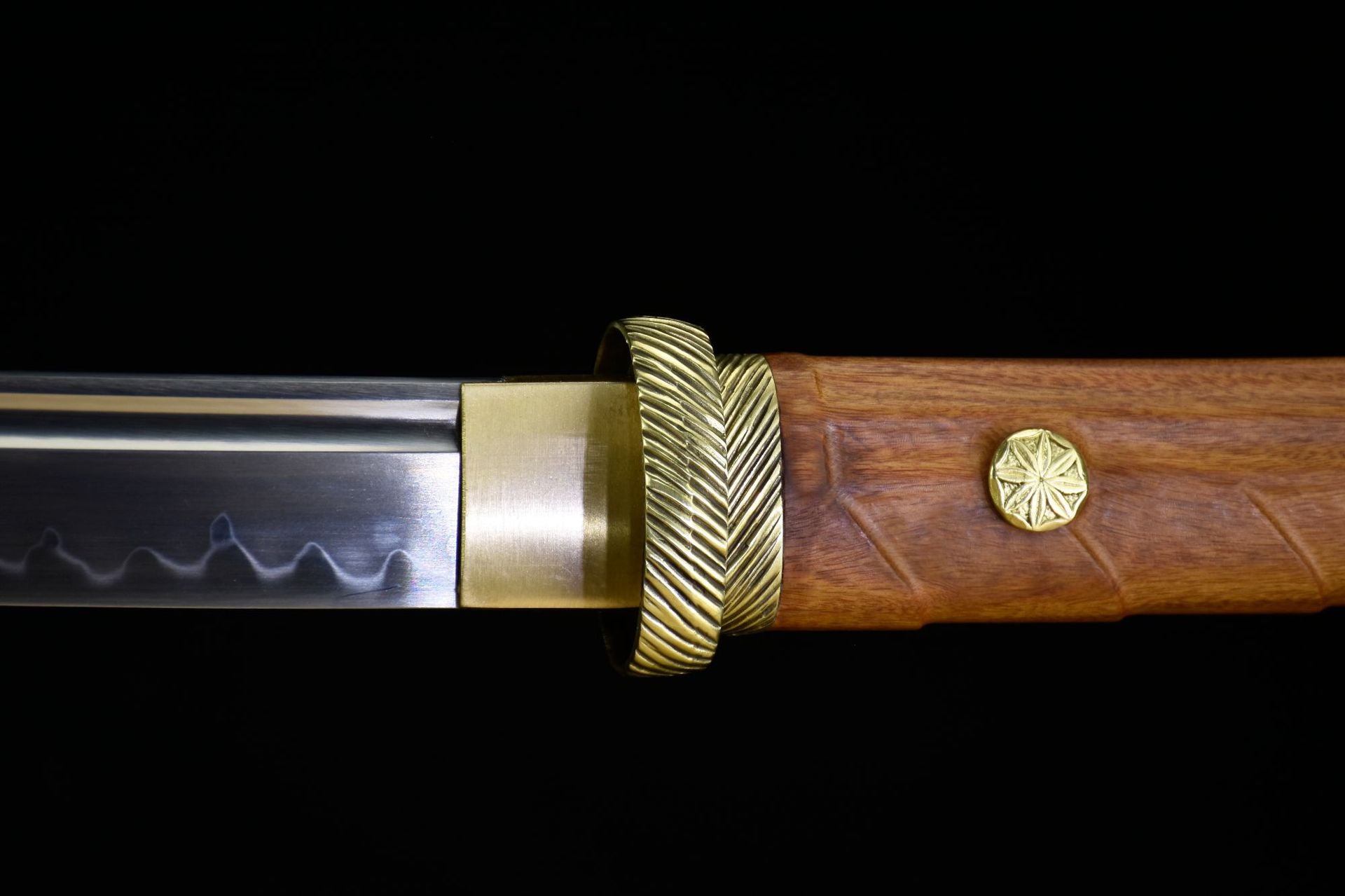
A Japanese sword displayed on a stand, featuring a tan-colored scabbard and a polished wooden handle wrapped in decorative cord.
Sale price$395.00
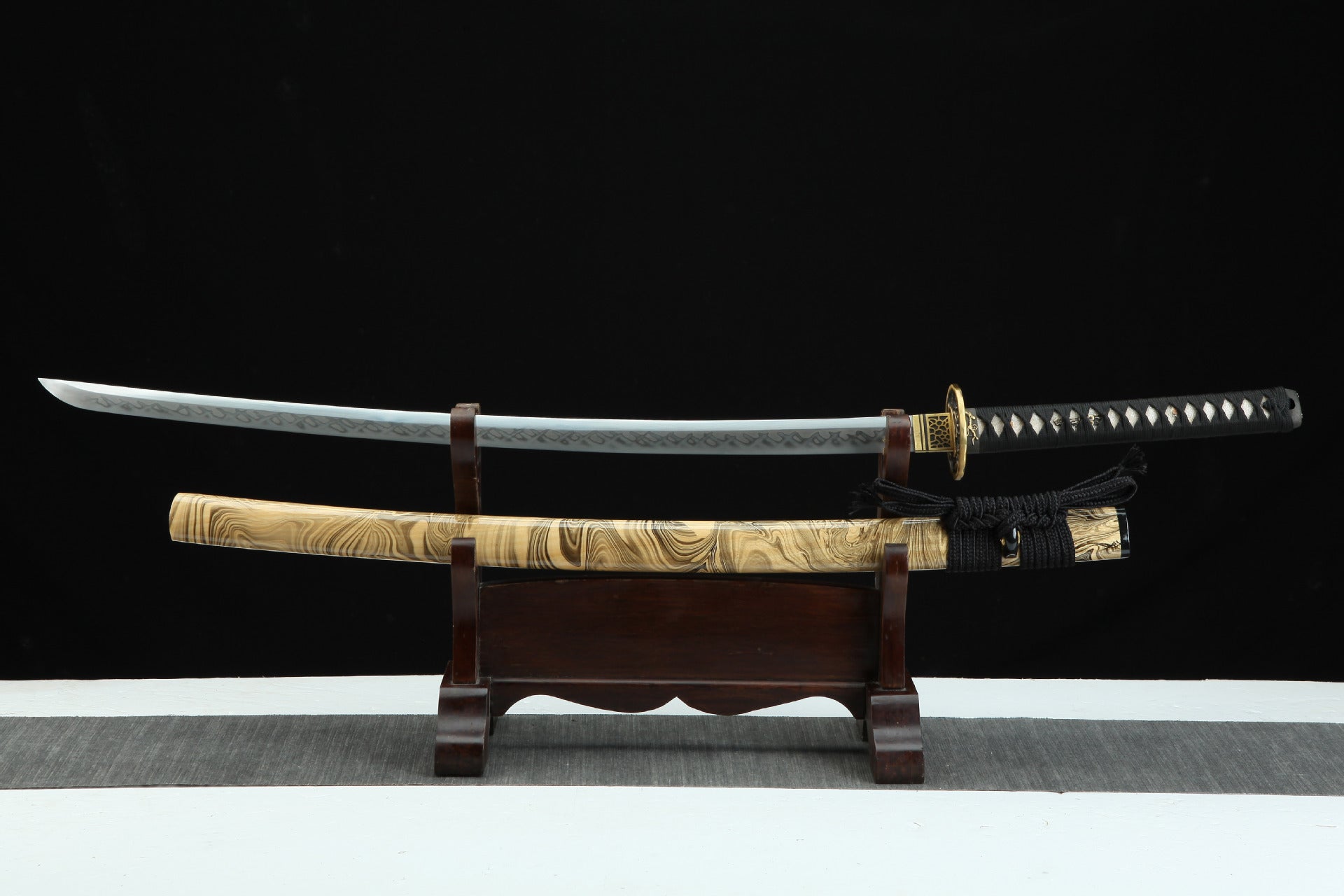
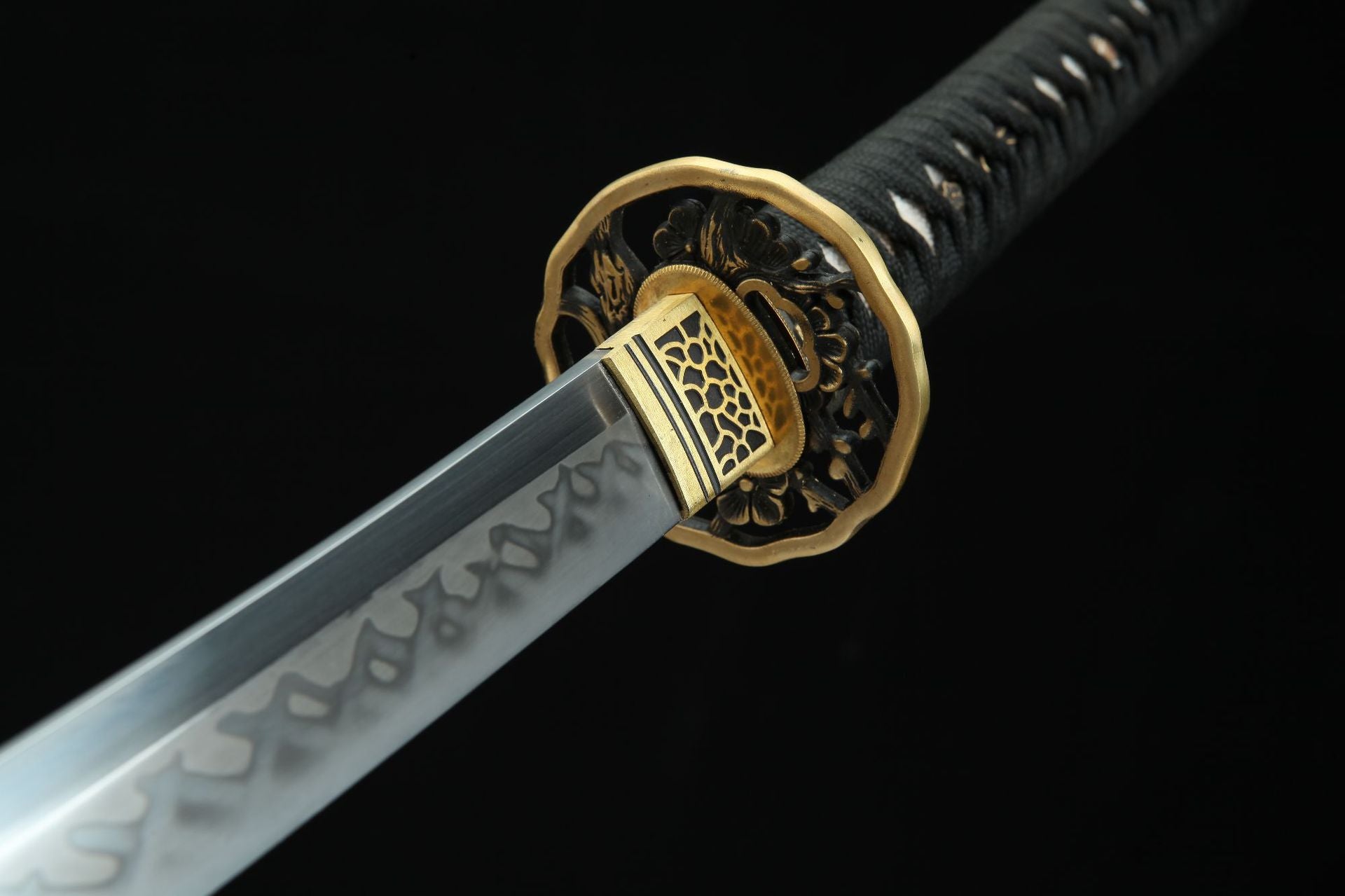
Jiang Tai Gong katana sword featuring a folded steel blade, black tsuka with white details, and a polished wooden saya displayed on a stand.
Sale price$395.00
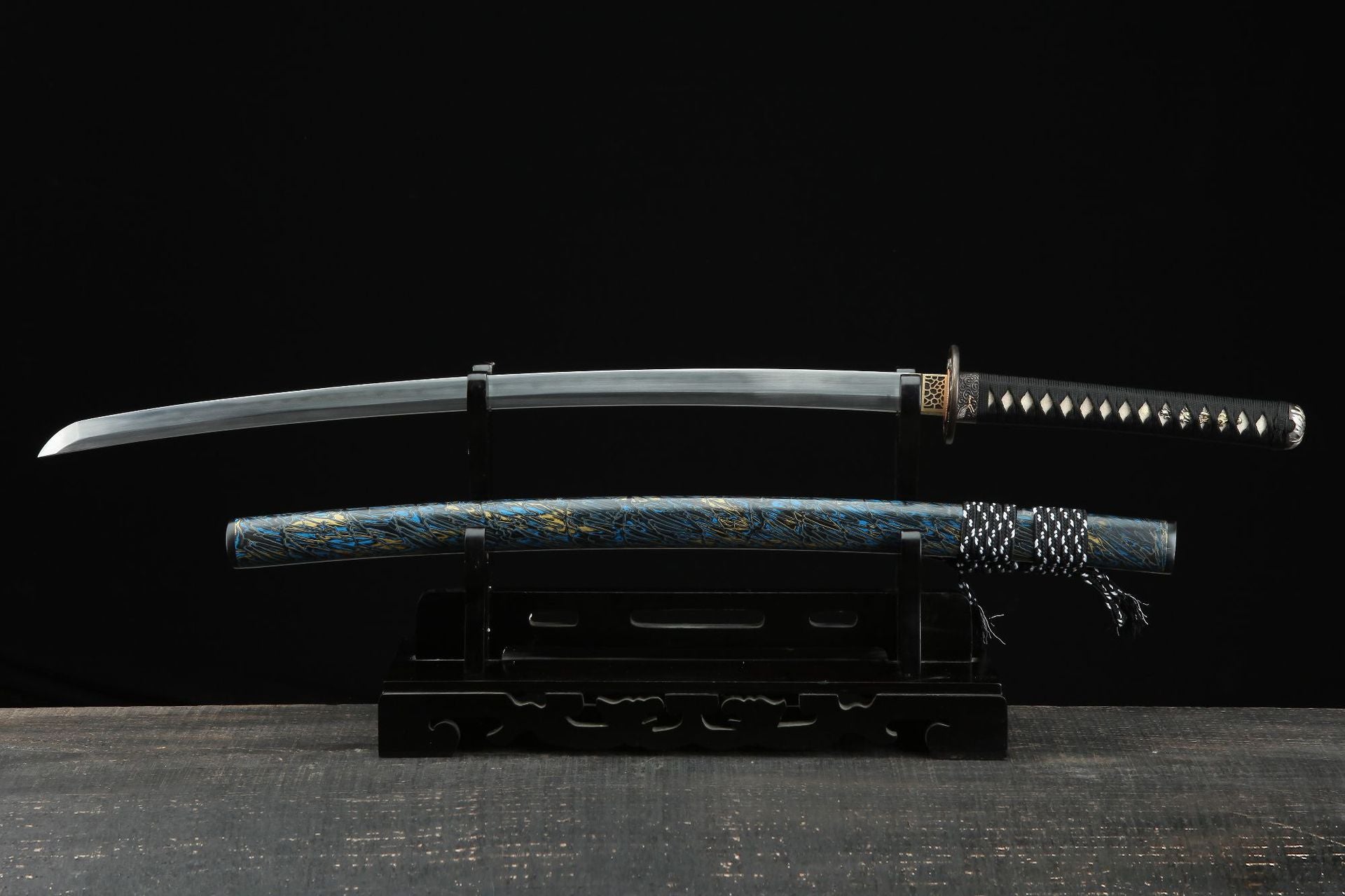
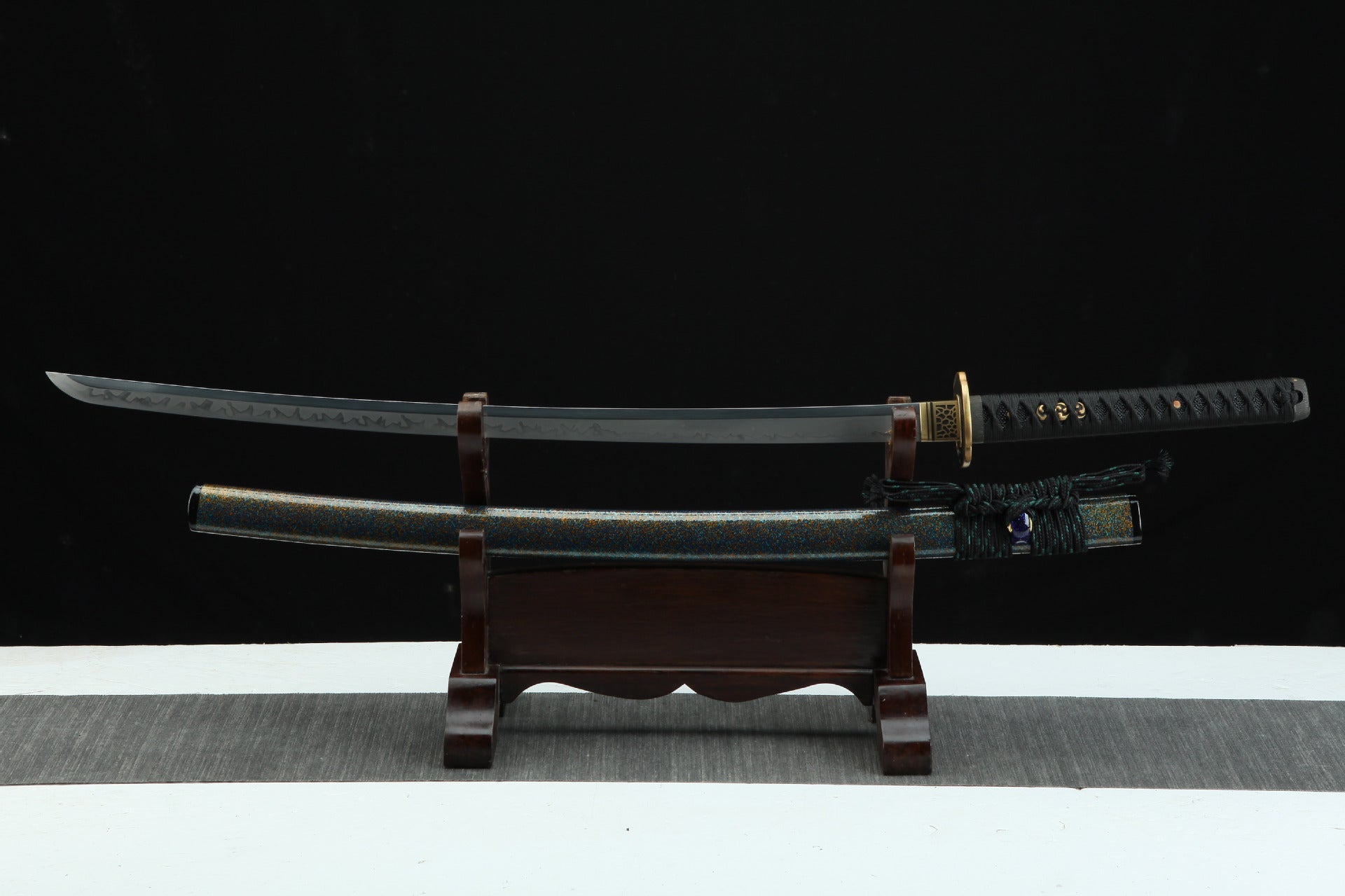
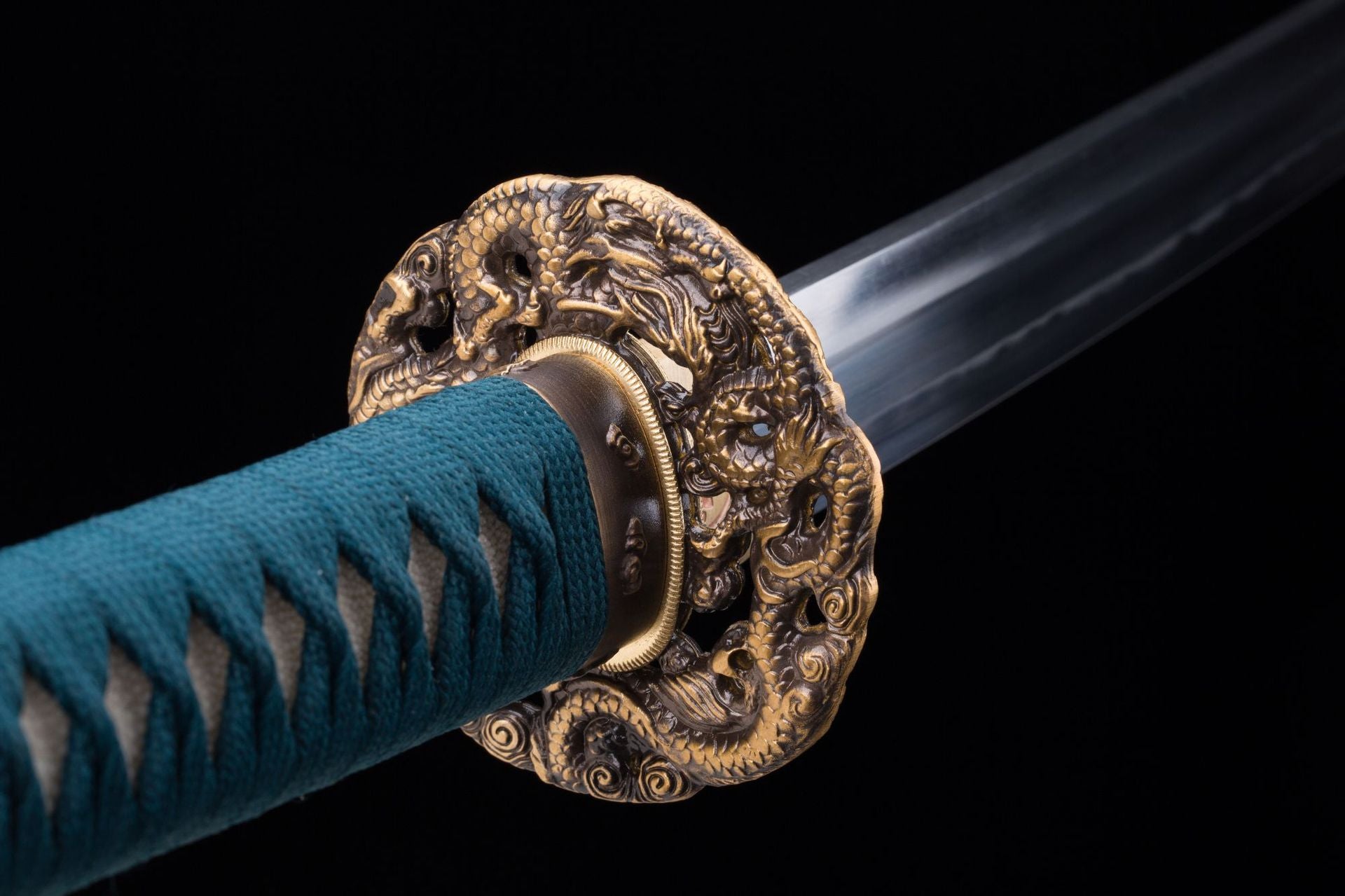
Full view of the Seiryu katana with a unique blue and gold patterned saya and a sharp, curved blade, displayed on a black wooden stand.
Sale priceFrom $449.00
Damascus steel katana with chicken wing wood saya, displayed on a stand
Sale priceFrom $449.00
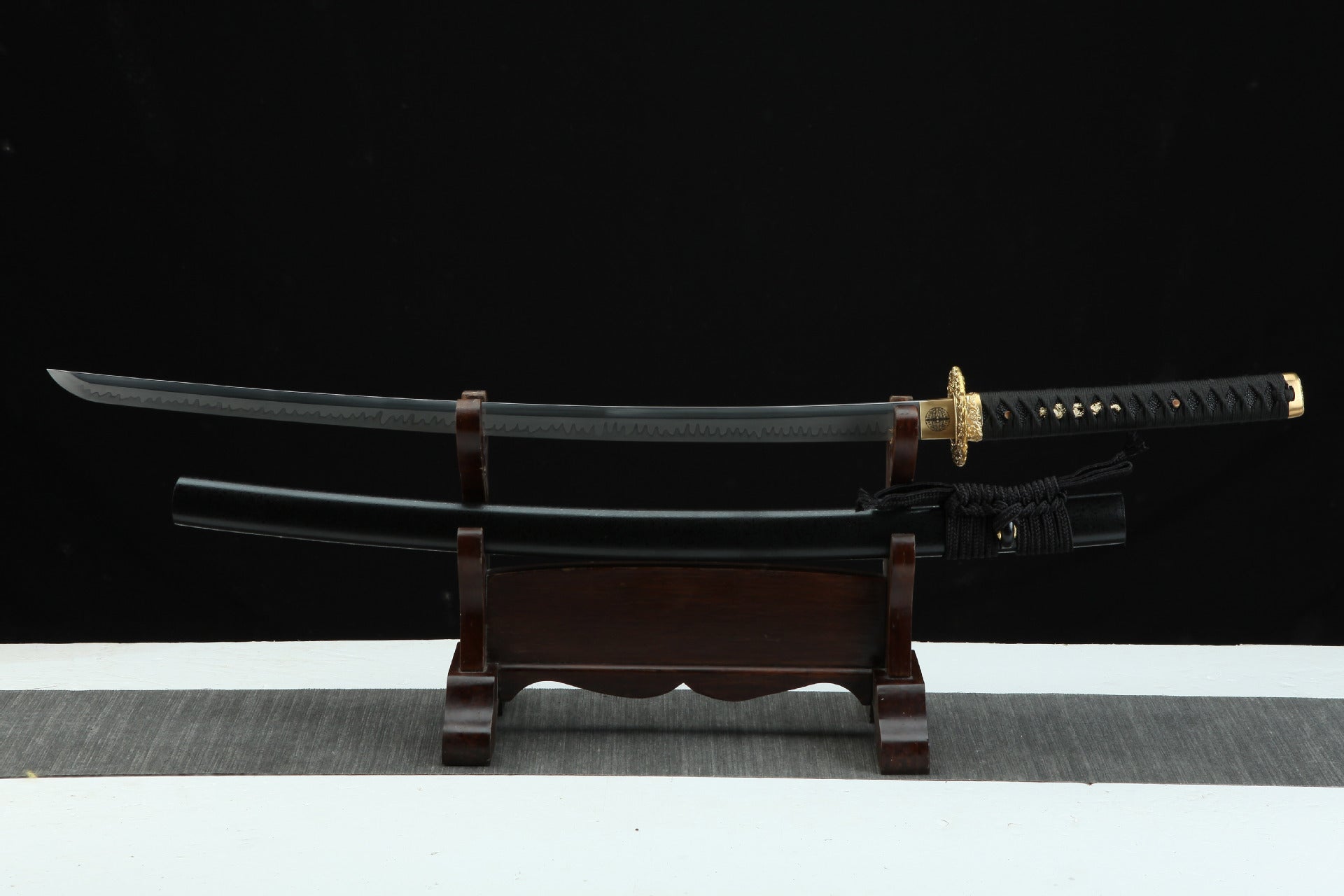
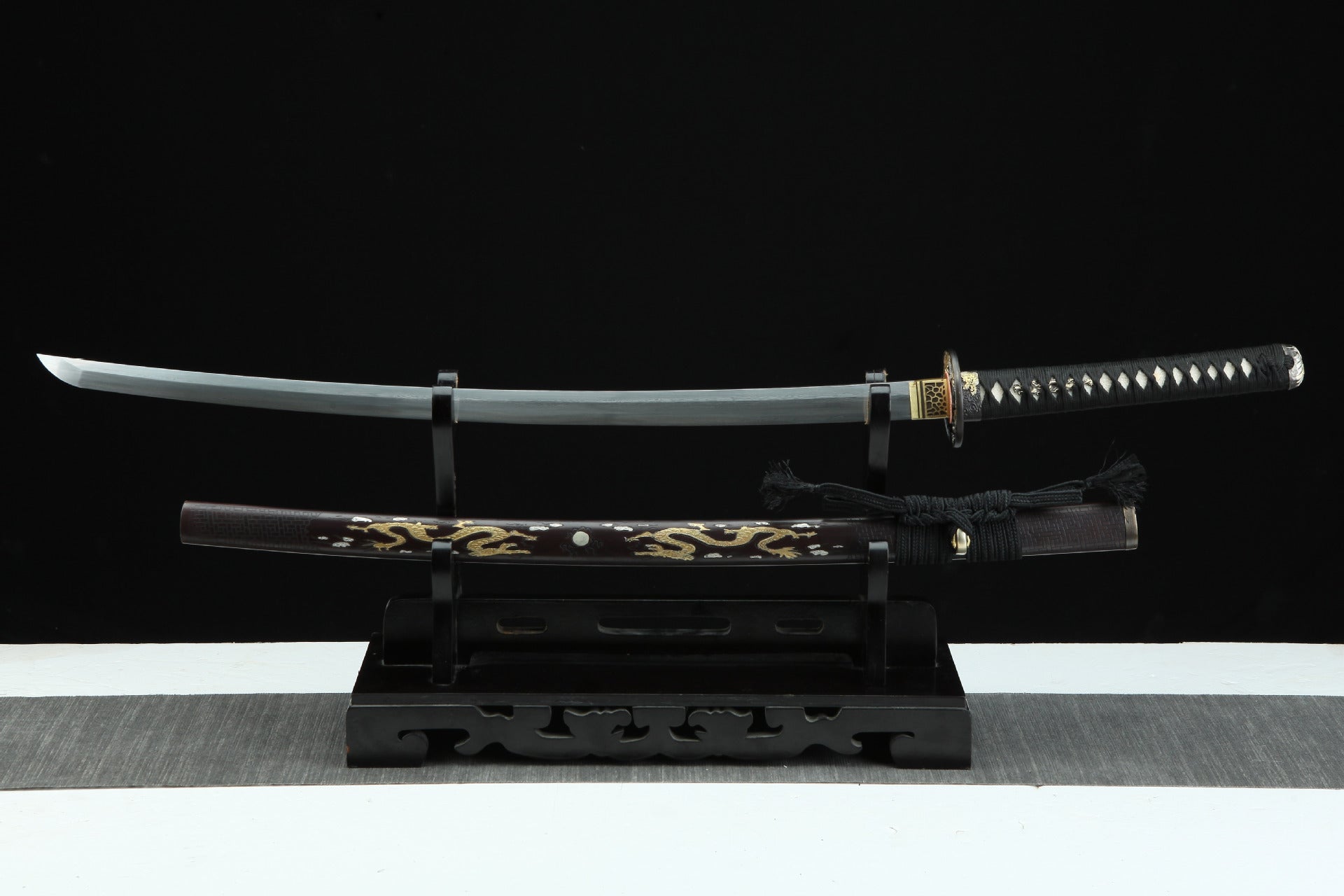
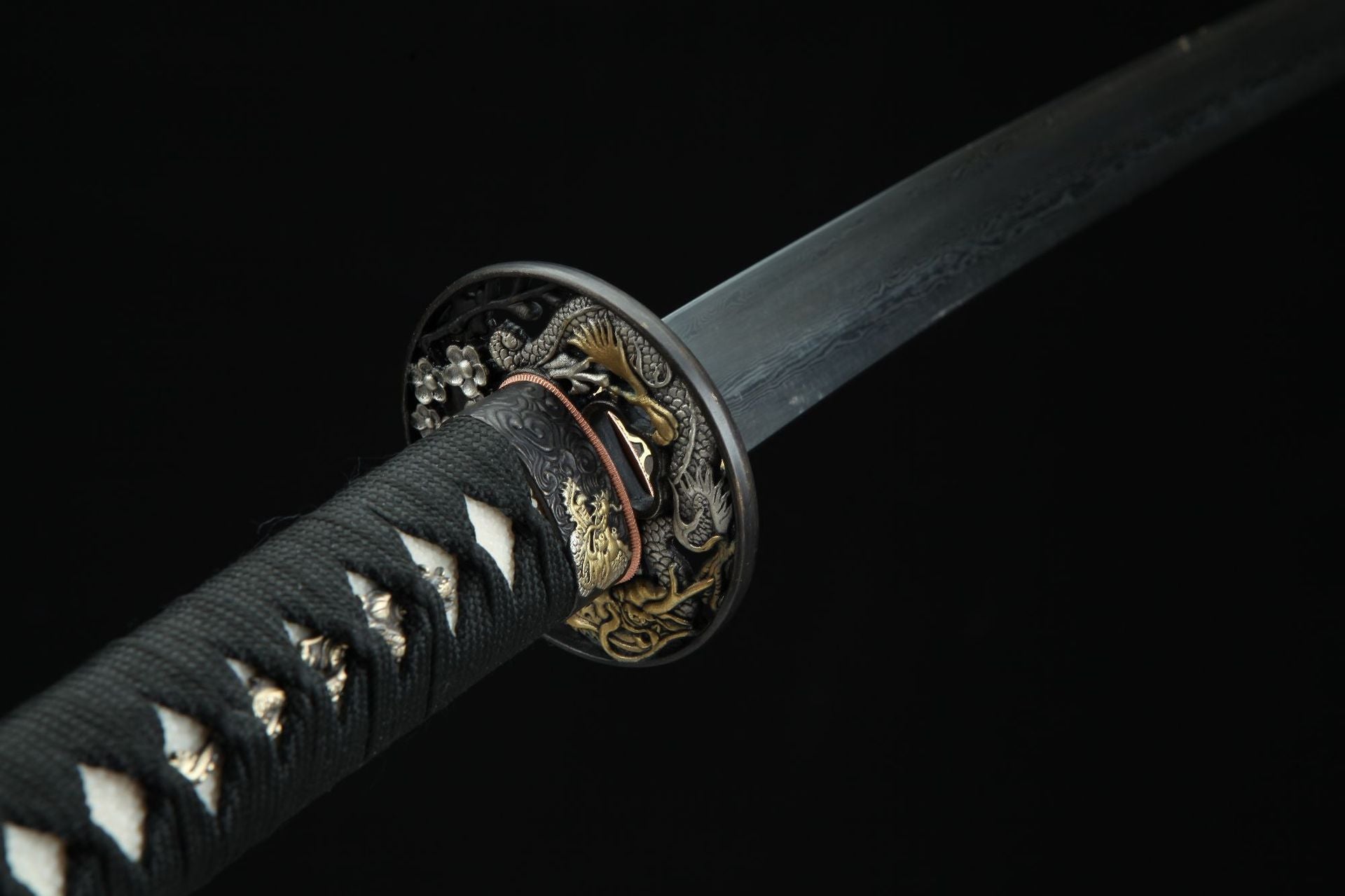
Golden Loong samurai sword with golden guard and black sheath on a wooden stand.
Sale price$449.00
Magatama Katana (Bo-hi)
Sale price$449.00
Full view of Shinrin Samurai Sword with sharp blade, colorful lacquered scabbard, and detailed handle wrapping.
Sale price$449.00
Premium folded steel katana with chrysanthemum and komainu theme, perfect for collectors and fans of Japanese craftsmanship.
Sale priceFrom $449.00
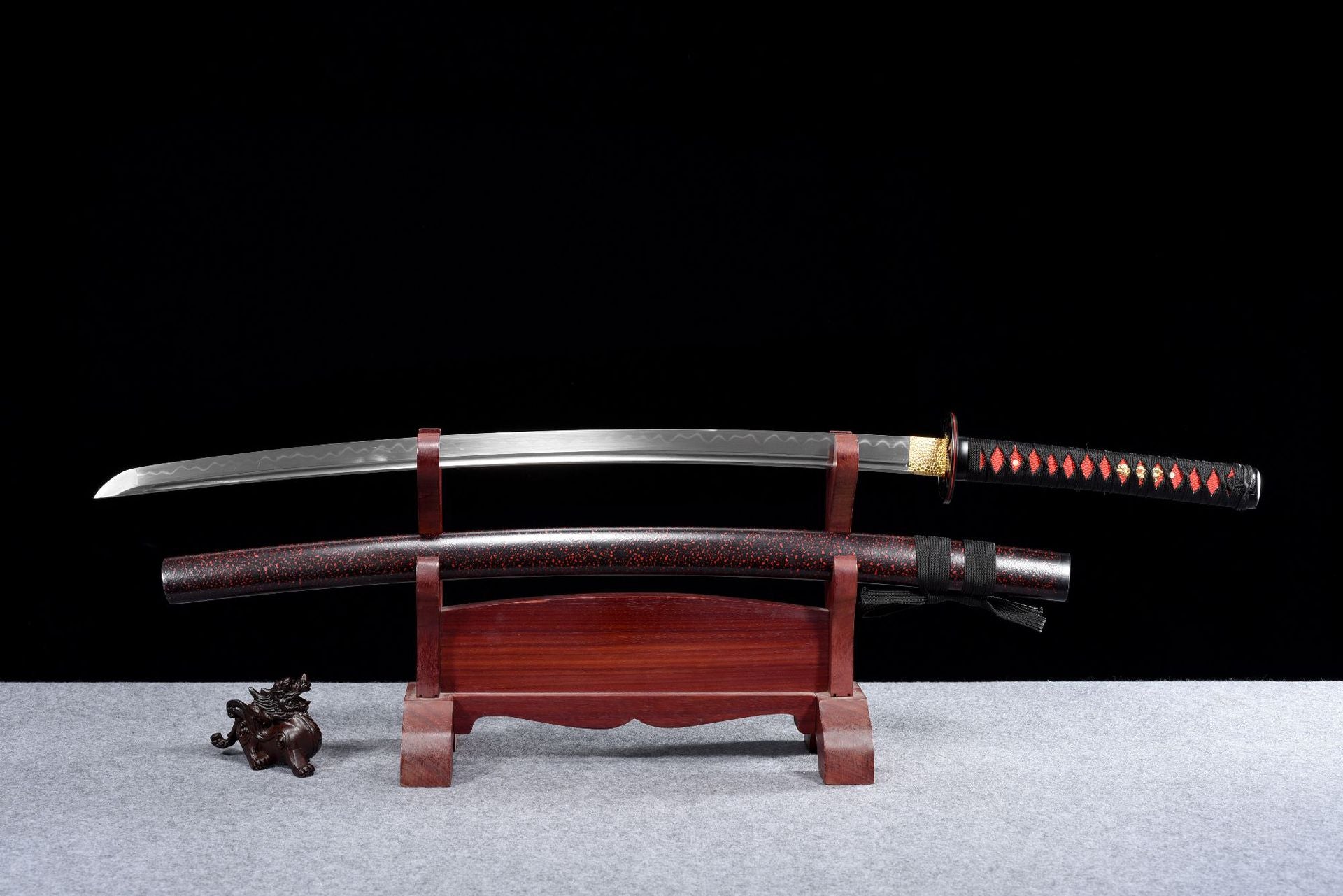
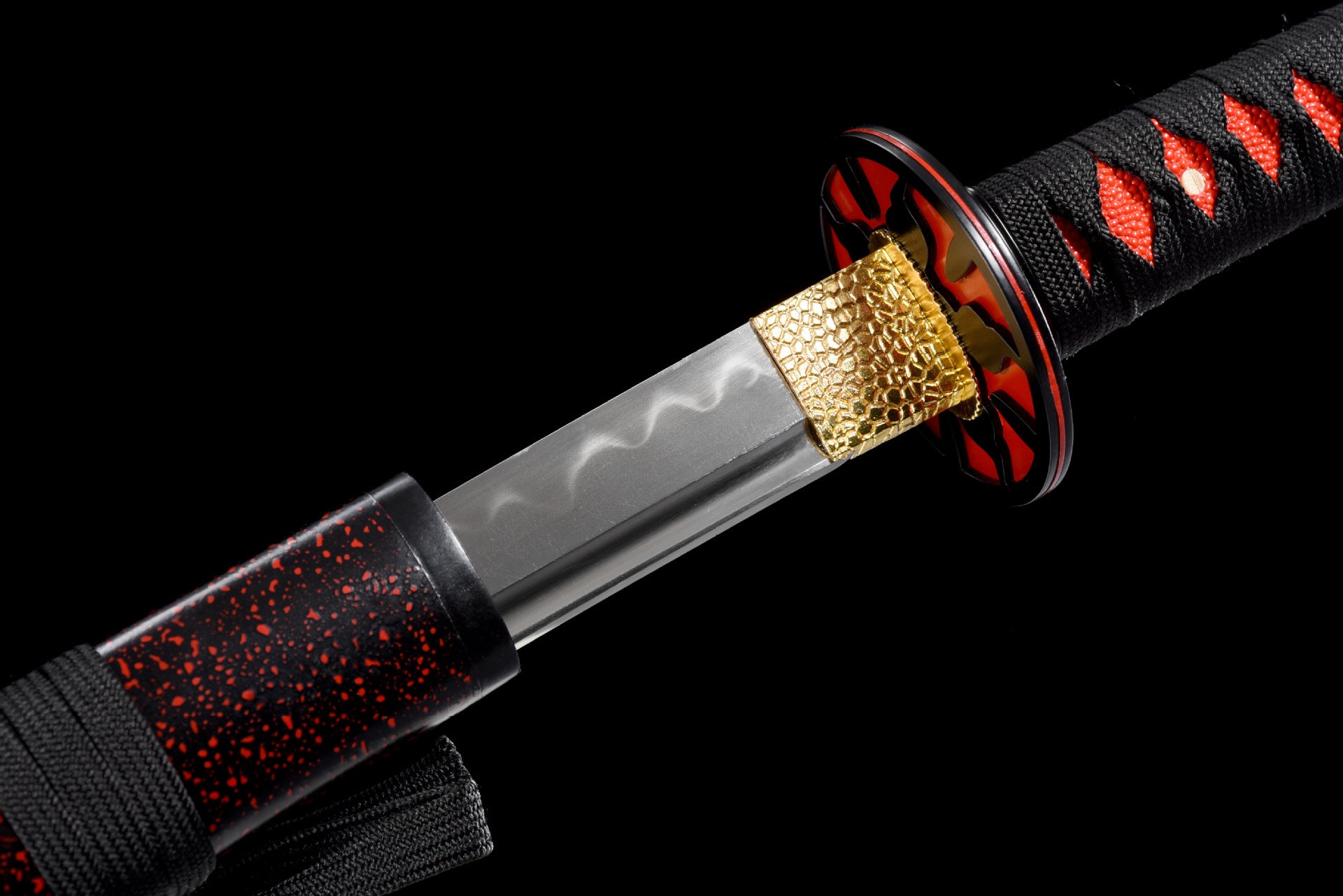
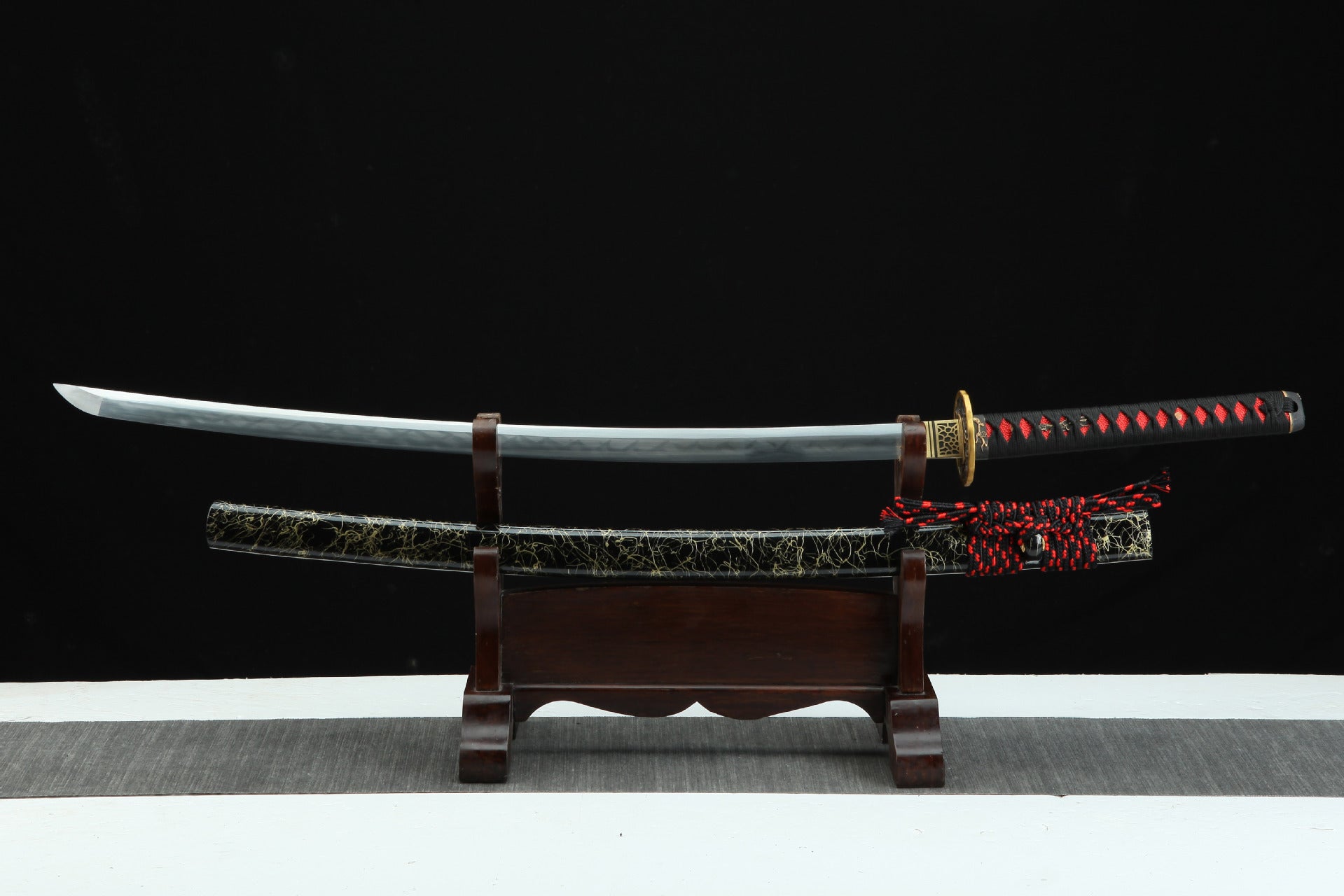
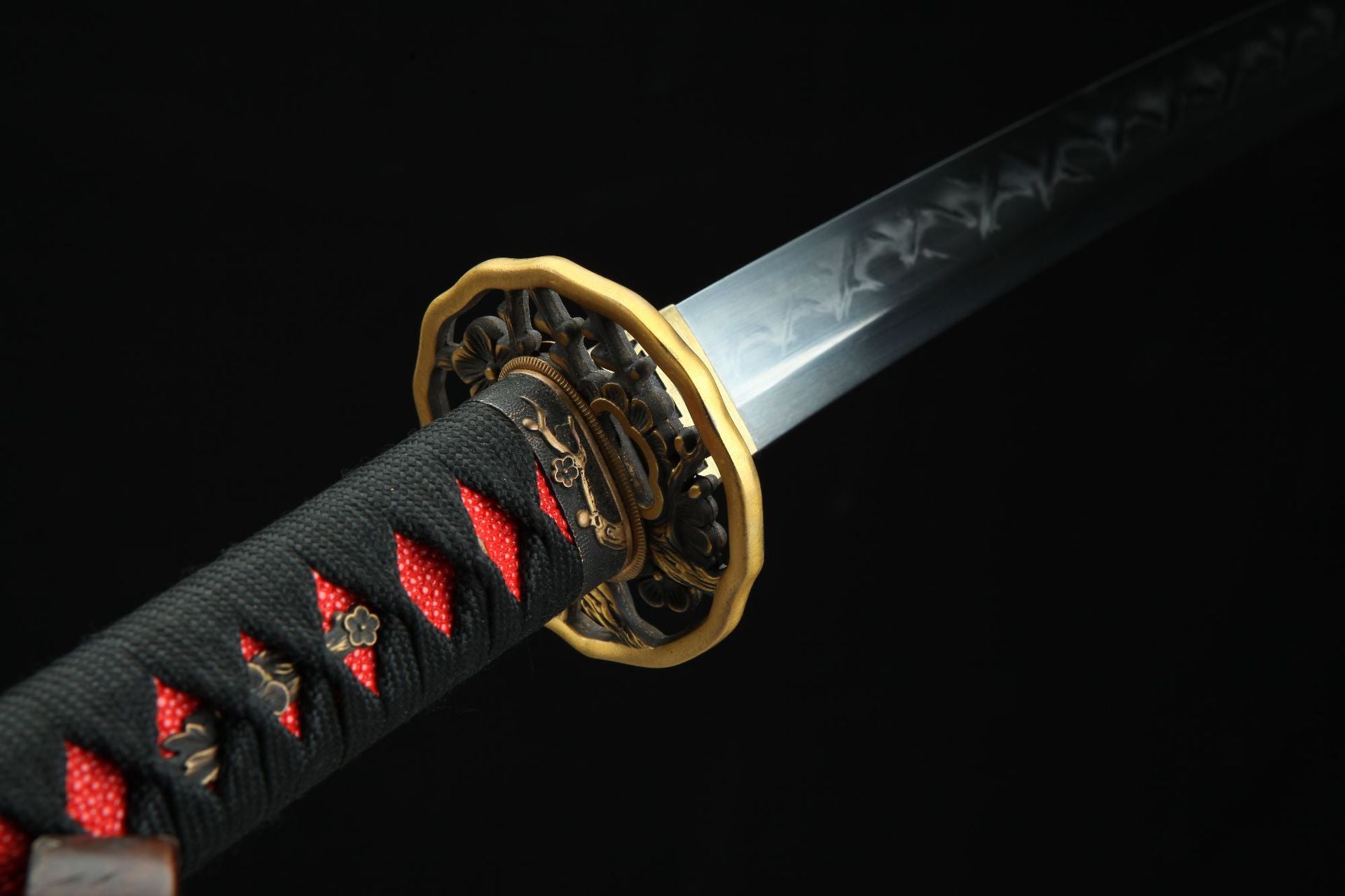
Japanese katana sword with a black and red cracked design saya, featuring a polished blade and intricate tsuka with black and red wrapping.
Sale price$449.00
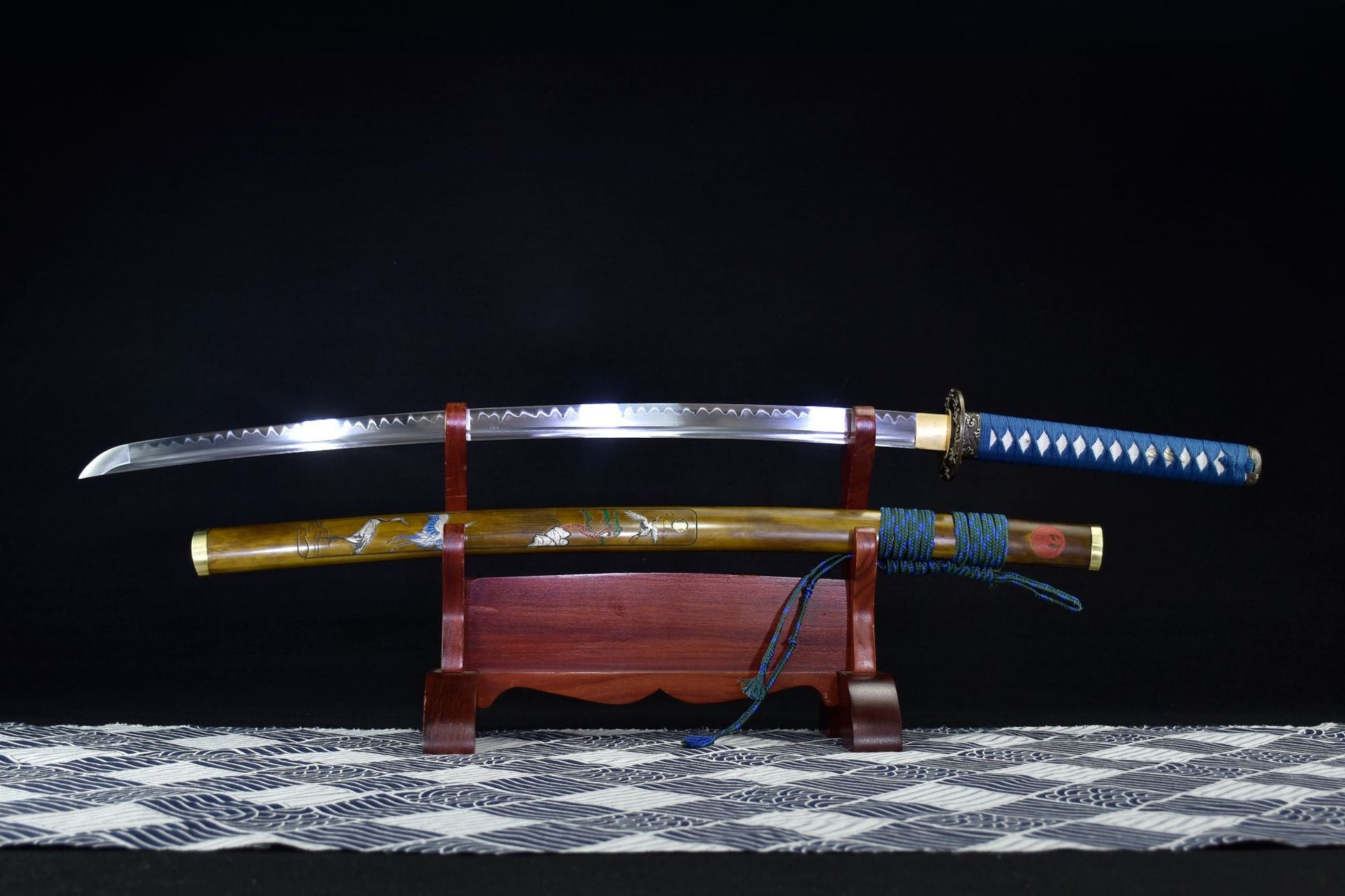
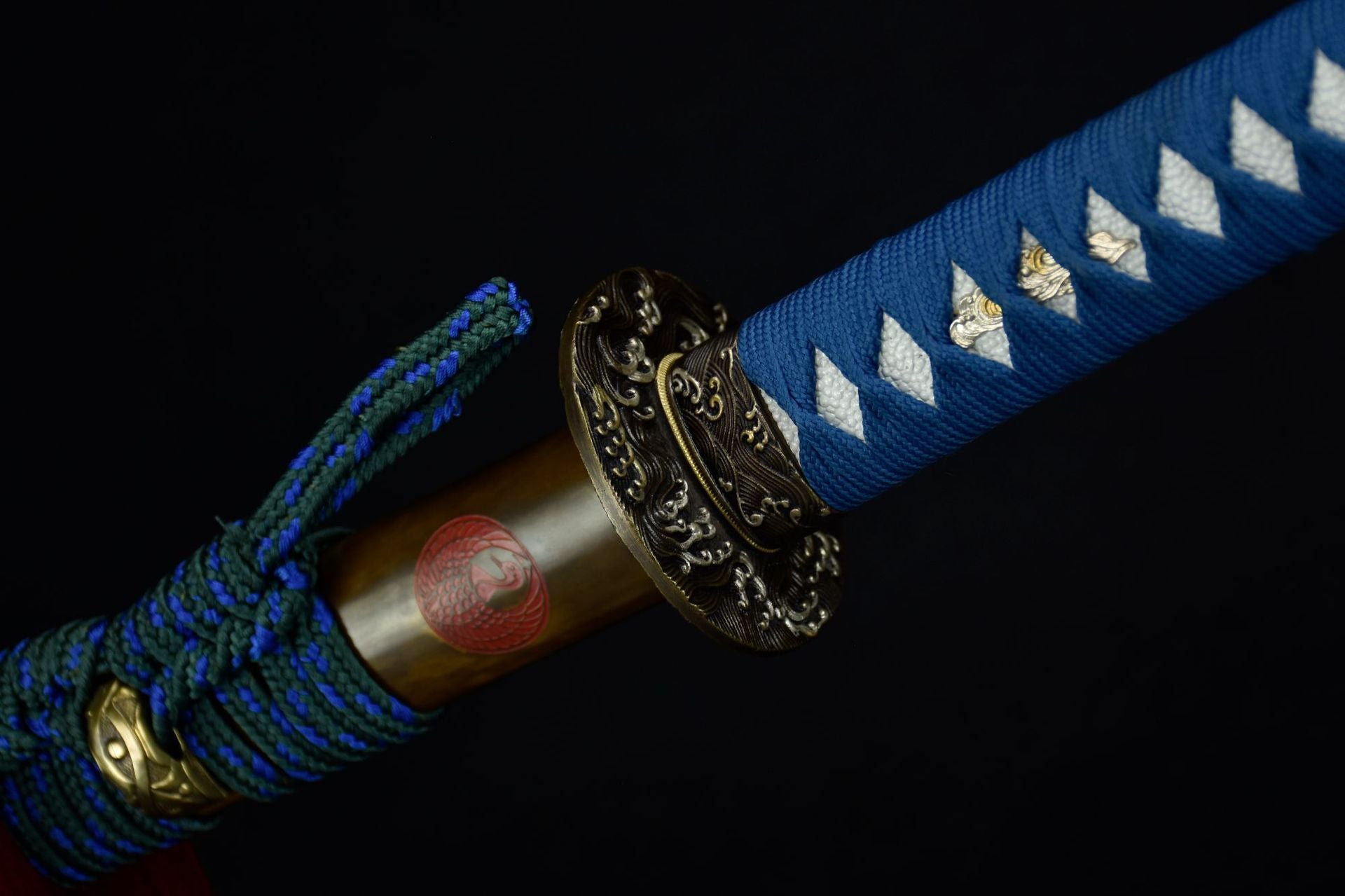
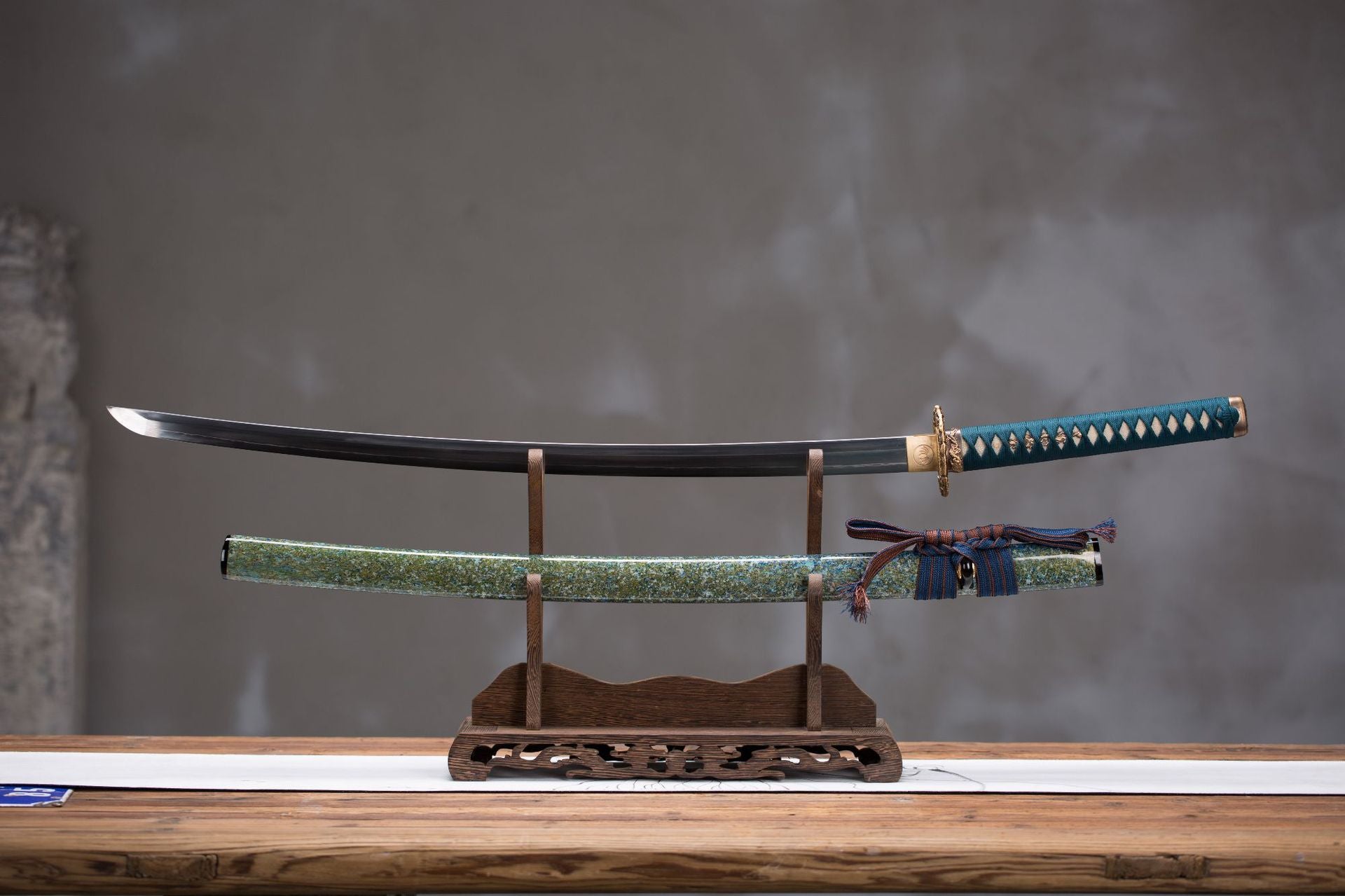
Ichiro Matsuru katana sword with a polished blade, blue wrapped handle, and decorative artistic sheath displayed on a wooden stand.
Sale price$499.00
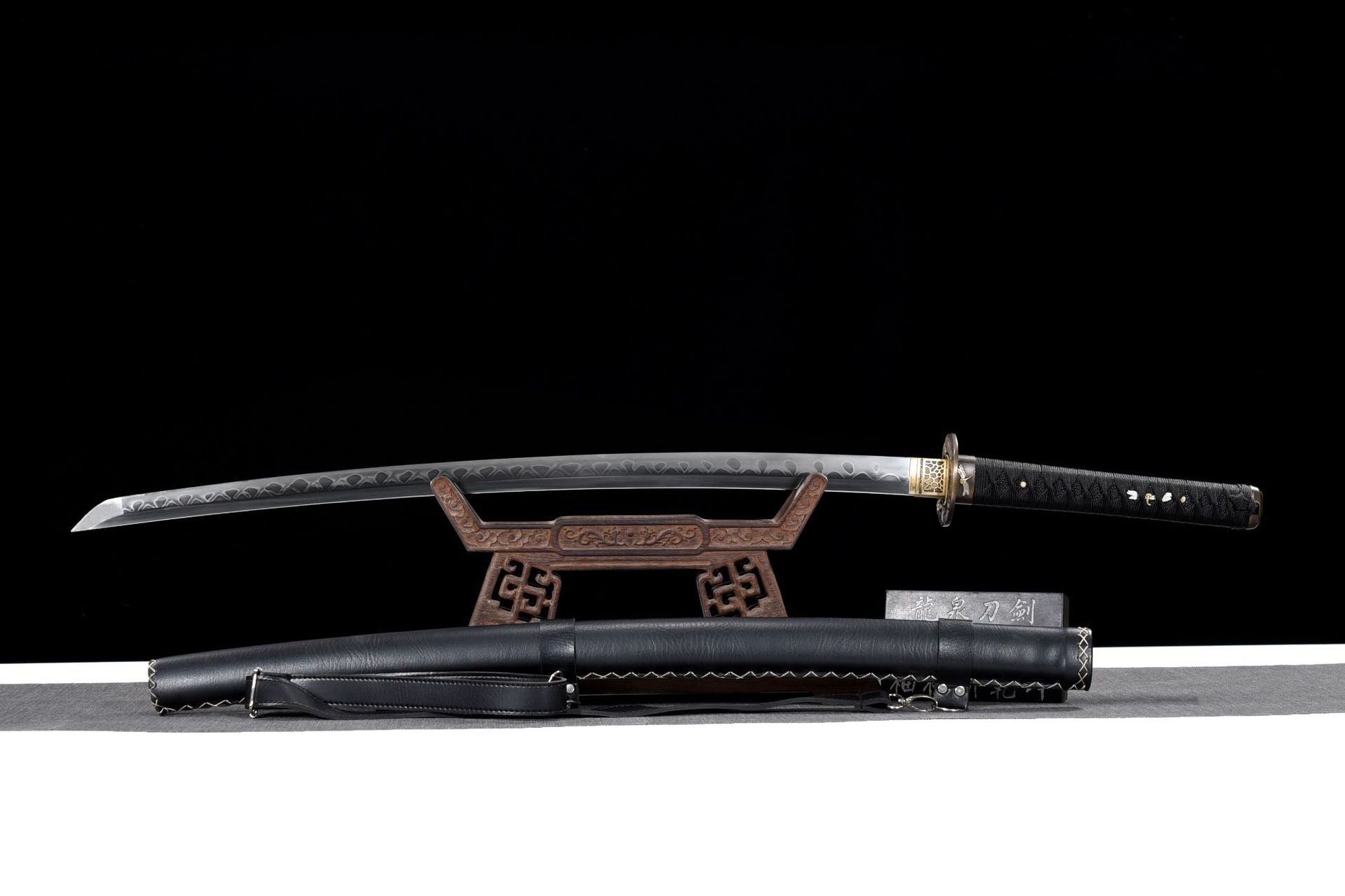
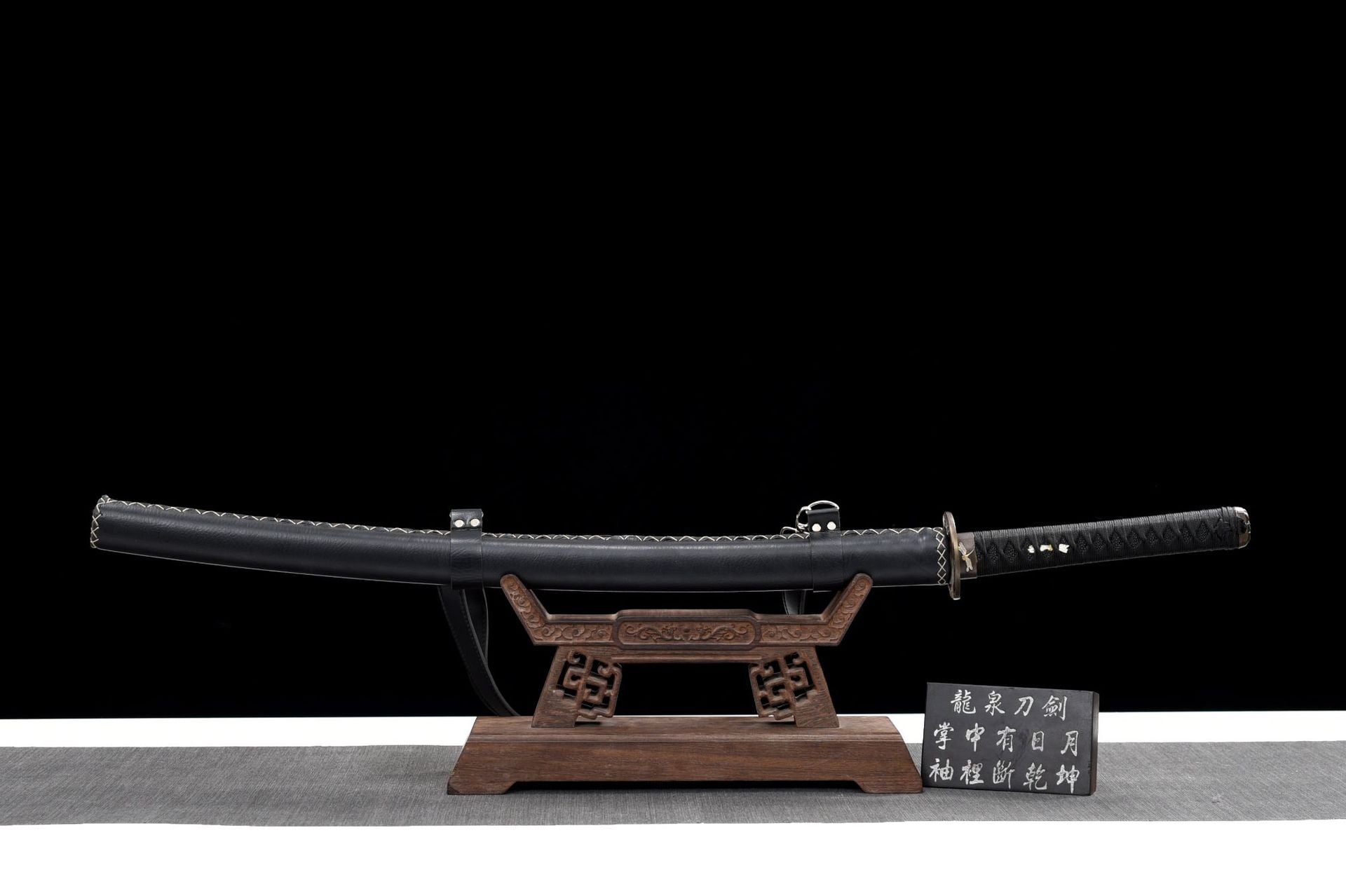
A hand-forged katana with a dragonfly motif, paired with a sleek black leather scabbard, showcasing traditional Japanese craftsmanship.
Sale price$499.00
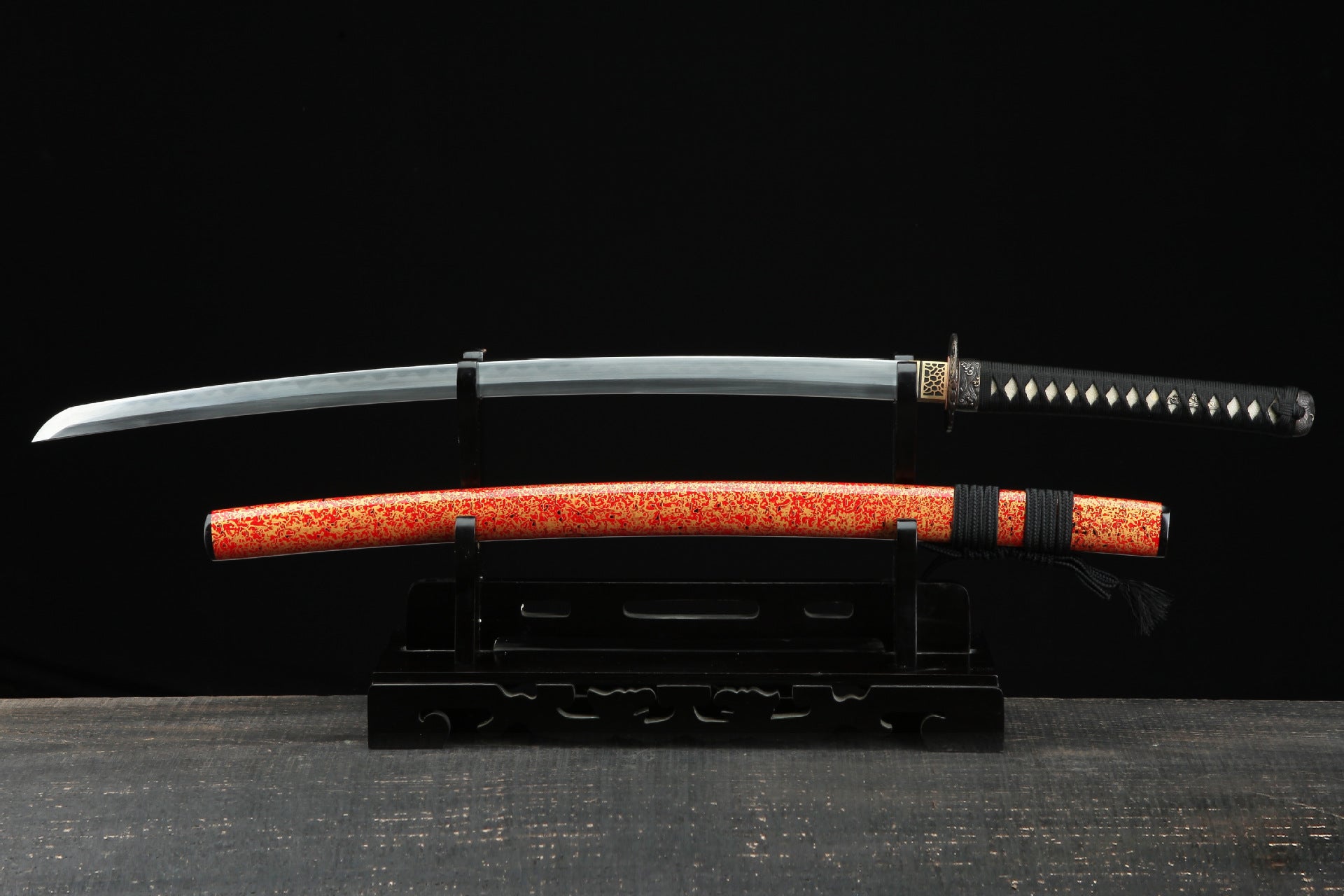
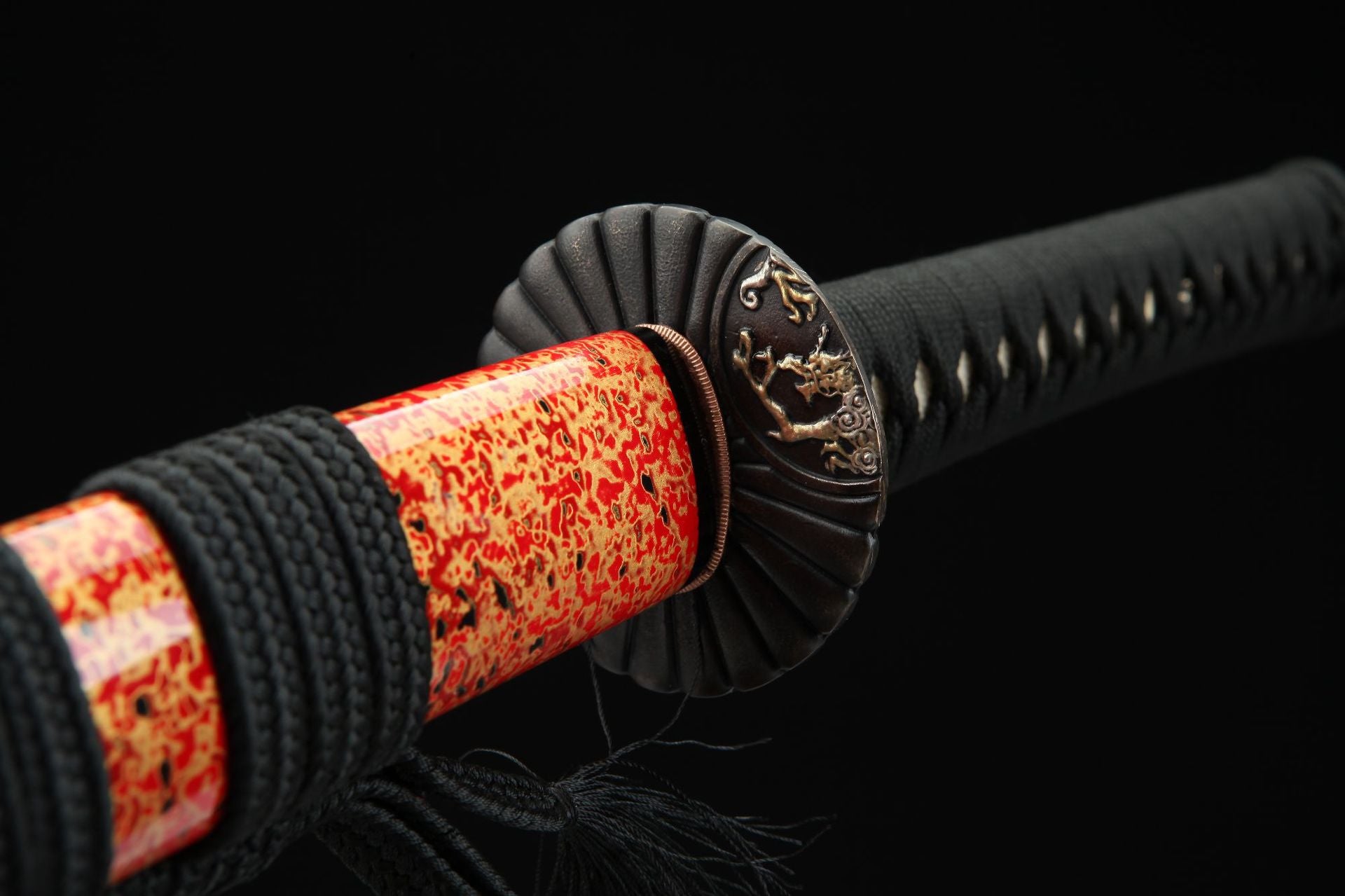
Full view of a samurai sword displayed with a red lacquer saya featuring a unique speckled design, showing the blade and tsuka with a decorative tsuba.
Sale priceFrom $499.00
Magatama katana fully displayed on a wooden stand, showing the black blade, decorative saya, and intricate tsuka wrapping.
Sale price$499.00
A high-end T10 steel katana featuring elegant horn fittings, showcasing premium materials and traditional Japanese craftsmanship.
Sale price$499.00
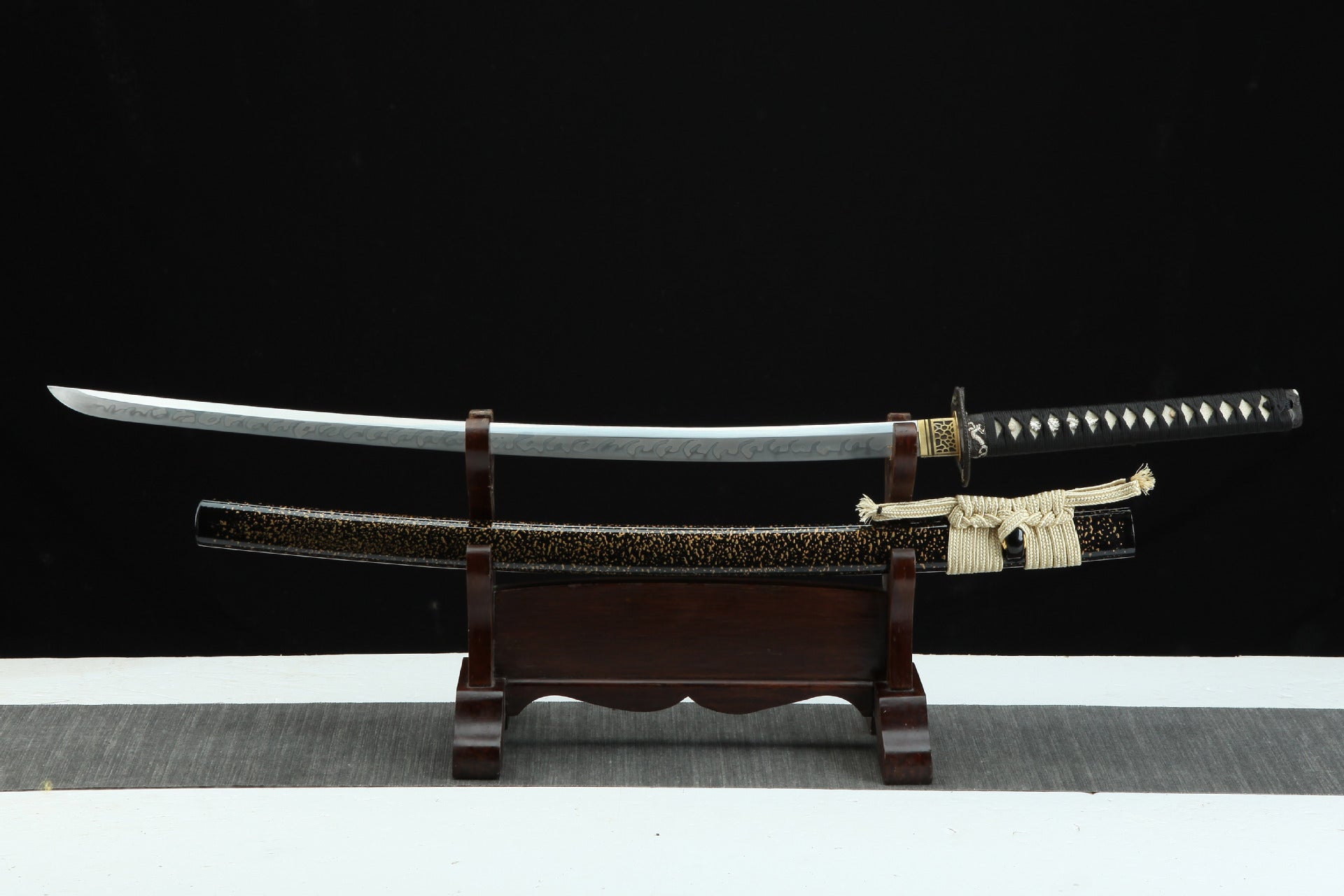
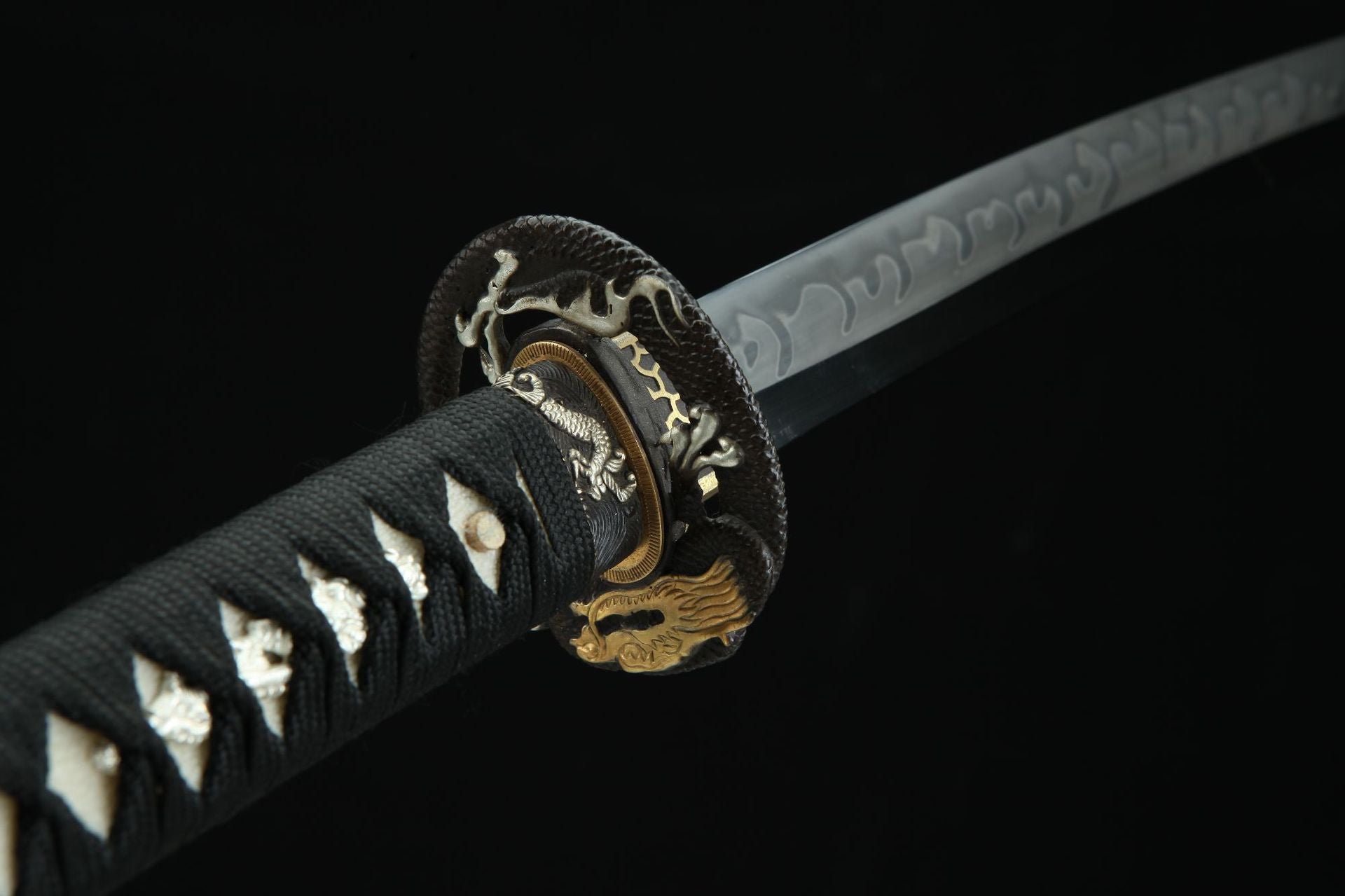
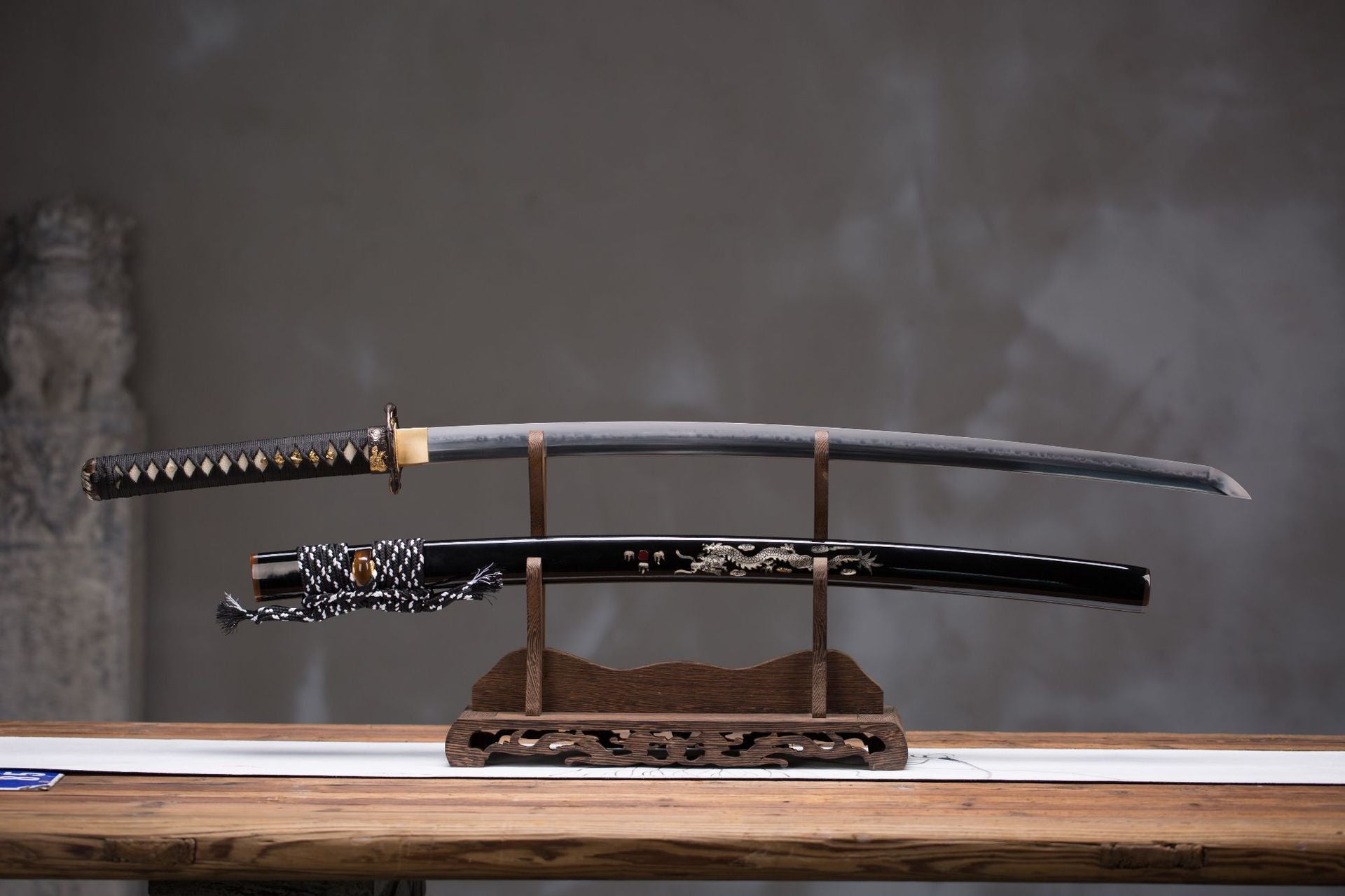
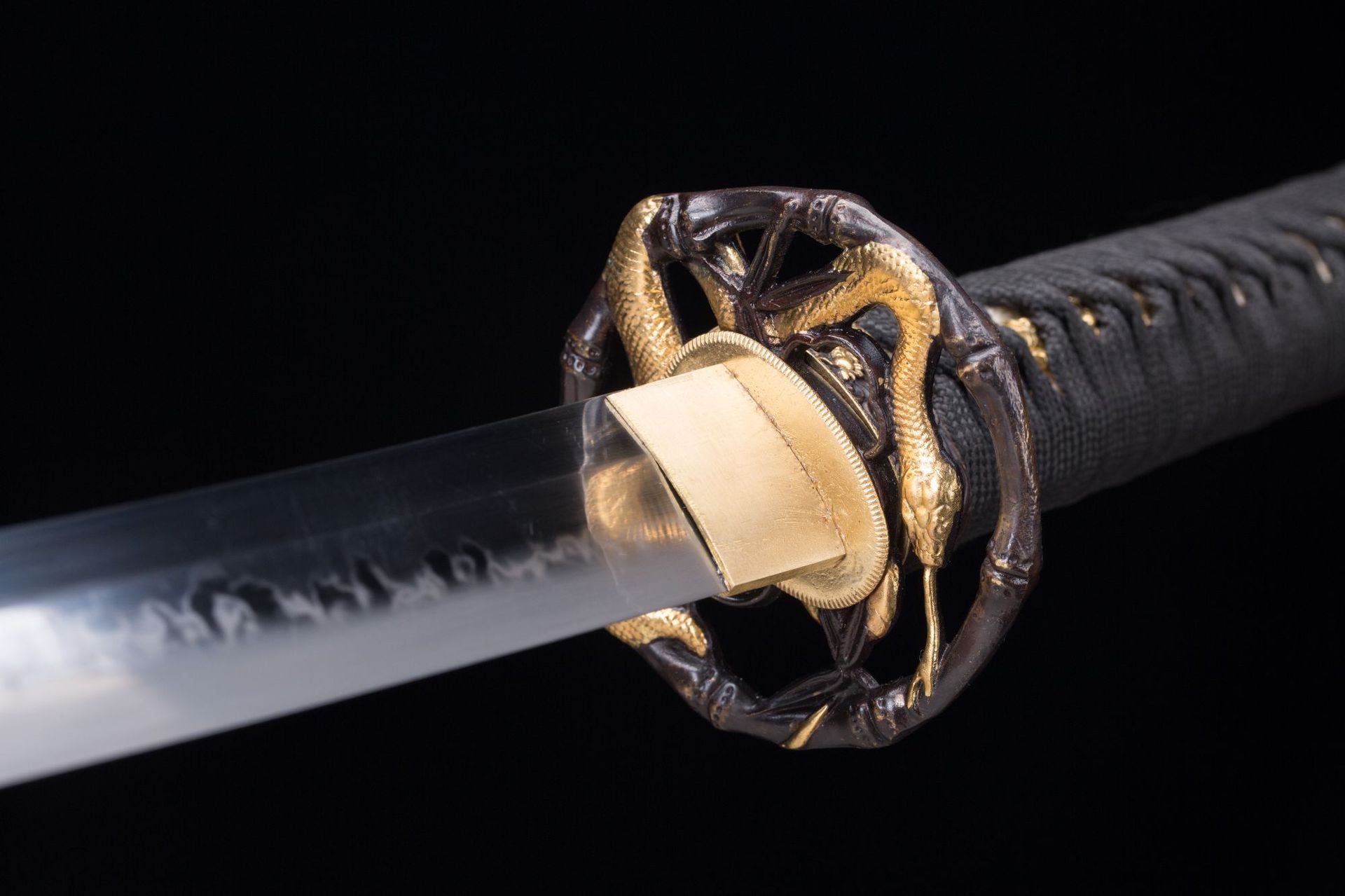
Hand-forged Sakura X katana with T10 high carbon steel blade, featuring copper fittings and a unique hamon created through the clay tempering process.
Sale price$499.00
Full view of the Lion samurai sword with ornate copper fittings and a polished wooden scabbard
Sale priceFrom $509.00
Full view of the Sunflower Ebony samurai sword displayed on a black stand with an ebony scabbard
Sale priceFrom $549.00
Panoramic view of the Ssangyong katana, crafted from Damascus steel.
Sale priceFrom $609.00
Moonlit Sakura samurai sword full koshirae on display, showcasing the intricately designed saya with sakura under moonlight.
Sale price$649.00
Panoramic view of the Loong Clow katana, showcasing the entire sword with its detailed blade, handle, and scabbard.
Sale price$649.00
Orochi katana full view, showcasing detailed craftsmanship and elegant design.
Sale priceFrom $649.00

Quick Clay Tempered Katana Guide

What Is a Clay Tempered Katana?

A clay tempered katana uses clay or a similar insulating layer during heat treatment so different areas of the blade cool and harden differently. The edge is typically hardened more than the spine, creating a different structure across the blade and often producing a visible hamon.

Clay Tempering vs. Differential Hardening

Clay tempering is one way of producing differential hardening. In modern katana descriptions, the two terms are often used together because clay or similar insulating material can be applied before heat treatment to influence how different areas of the blade harden.

The process concerns heat treatment, not a particular steel grade. If you are comparing steel specifically, see our T10 Katana collection.

How Clay Tempering Relates to Hamon

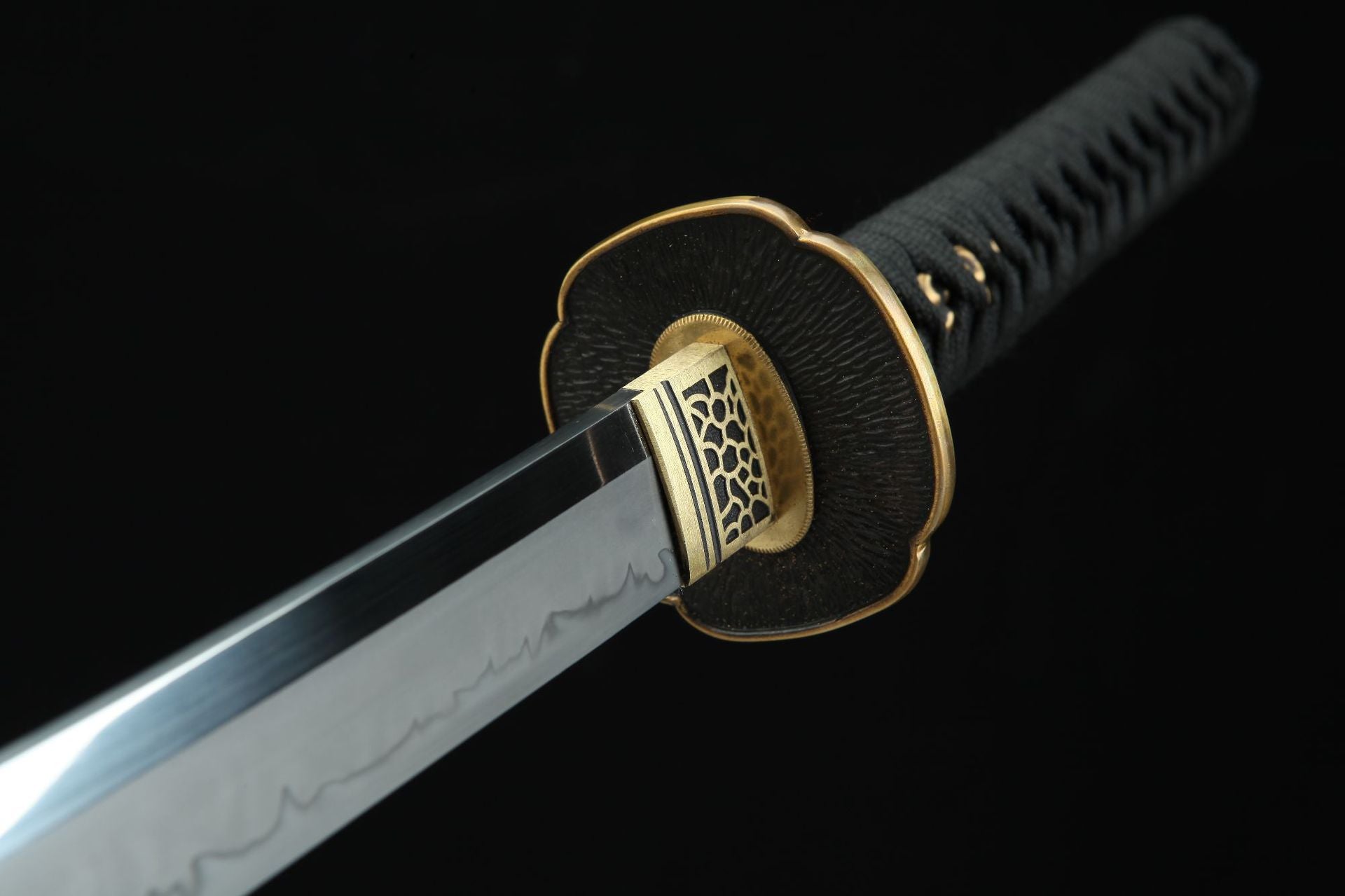
A genuine hamon can appear as a visible transition associated with differential hardening. That is why clay-tempered katana and hamon are often discussed together.

Not every visible line on a blade is formed this way, so product descriptions should distinguish a genuine heat-treatment hamon from decorative or enhanced finishes. If hamon itself is your main interest, browse our Hamon Katana collection.

Does Clay Tempering Make a Katana Better?

Not automatically. Clay tempering is a heat-treatment method, not a universal quality grade. A well-executed differential hardening process can be an important part of a blade, but the finished sword still depends on steel, geometry, polishing, fittings, and overall workmanship.

A useful comparison is therefore between complete swords rather than simply choosing whichever product says “clay tempered.”

Steel Still Matters

Clay tempering does not replace the importance of steel selection. Different steels respond differently to heat treatment, and two clay-tempered blades can still vary significantly in hardness, toughness, finish, and overall construction.

When the steel grade matters to you, compare it together with the heat-treatment method rather than treating one as a substitute for the other. For a broader material-based view, see our Carbon Steel Katana collection.

Look at the Complete Build

A clay tempered katana should be judged as a complete sword. Compare the blade steel, heat treatment, hamon where applicable, polish, blade geometry, tsuka, tsuba, saya, fittings, wrapping, and overall finish.

Higher prices can reflect more involved polishing, fittings, finishing, materials, or craftsmanship, but price and the words “clay tempered” alone do not tell you which sword is the best fit. You can also compare the wider Katana collection if you want to look across different steels and heat-treatment styles.

Frequently Asked Questions

Is clay tempering the same as differential hardening?

They are closely related, but not exactly the same term. Clay tempering is commonly used in modern katana listings to describe a clay-assisted differential hardening process. The key idea is that different areas of the blade are hardened differently during heat treatment.

Does a clay tempered katana always have a real hamon?

A genuine hamon is commonly associated with differential hardening, but the product description should still confirm how the visible line was formed. Do not assume every visible hamon-style line proves the same heat-treatment process.

Is a clay tempered katana better than a through-hardened katana?

Not automatically. They are different heat-treatment approaches, each with its own characteristics. Clay tempering should not be treated as a higher quality grade.

Can T10 steel be clay tempered?

Yes, T10 can be used in clay-tempered katana, but T10 is the steel grade while clay tempering describes the heat-treatment approach. One does not automatically imply the other.

What should I compare when choosing a clay tempered katana?

Compare the steel, heat-treatment details, hamon where applicable, blade geometry, polish, tsuka, tsuba, saya, fittings, wrapping, and overall finish. The heat-treatment label should be one part of the decision, not the only part.

Why do clay tempered katana vary so much in price?

Price can reflect differences in steel, polishing, fittings, finishing, materials, and craftsmanship. Two swords described as clay tempered can still differ substantially in construction and finish.