
The History of the Japanese Sword
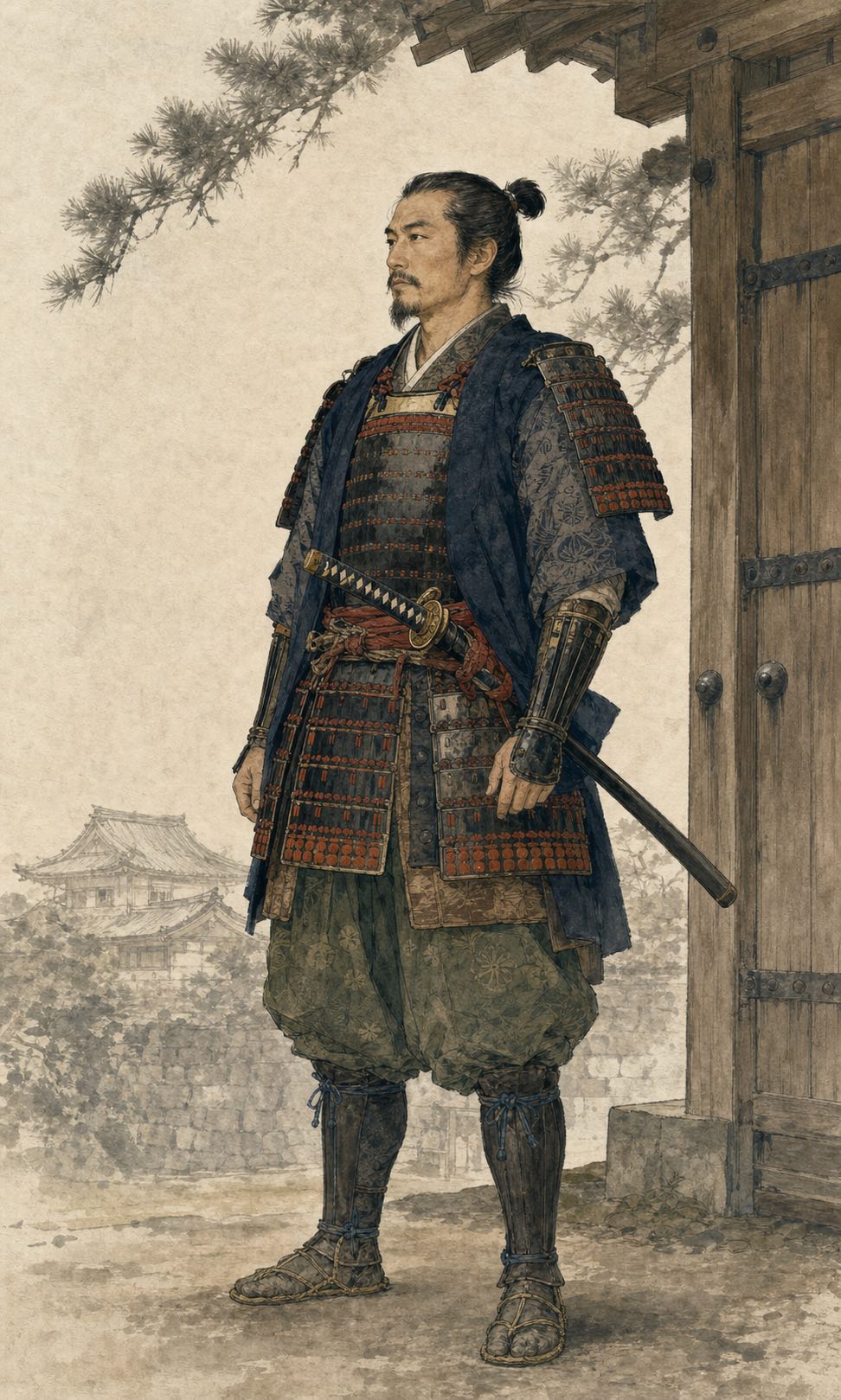
Few objects carry as much historical weight, technical sophistication, and cultural symbolism as the Japanese sword. Often called nihontō in Japanese, the traditional Japanese blade is far more than a weapon associated with samurai. It is a record of changing battlefields, political power, religious belief, craftsmanship, and aesthetic taste.
The Japanese sword is frequently reduced in popular culture to a single image: a curved blade, a wrapped handle, and a samurai drawing it in a moment of perfect calm. That image is memorable, but it is only one chapter in a much longer story. Japanese swords changed repeatedly over the centuries. Their shapes responded to the way people fought. Their construction reflected the materials available to smiths. Their decoration revealed the ambitions and tastes of their owners. Even when the sword was no longer central to warfare, it retained an extraordinary place in Japanese society.
To understand the history of the Japanese sword is to understand how an object can move from battlefield tool to family heirloom, from military equipment to religious offering, and from a symbol of rank to a recognized work of art.
Before the Katana: The Earliest Japanese Blades
The familiar curved Japanese sword did not exist from the beginning of Japanese history. Early Japanese blades were generally straight and were influenced by weapons and metalworking traditions that moved into the Japanese archipelago from continental East Asia.
Archaeological discoveries from the Yayoi and Kofun periods include straight, double-edged and single-edged iron swords. Some were practical weapons; others were ceremonial objects placed in tombs or connected to elite authority. The straight sword, often called chokutō, was common in early Japan. Its form made sense in a world where continental models, courtly exchange, and infantry combat had strong influence.
These early weapons already show an important truth about Japanese swords: their history is not isolated from the rest of Asia. Japan imported technologies, materials, and ideas, then adapted them to local conditions. Ironworking knowledge came through networks of migration, trade, diplomacy, and cultural exchange. Over time, Japanese craftsmen developed distinctive solutions to the challenges of producing durable steel from local iron sand and charcoal-fired furnaces.
The sword also acquired political and spiritual meaning at an early stage. In Japan’s imperial mythology, the sword is one of the Three Sacred Treasures associated with the legitimacy of the imperial house. The sacred sword, known as Kusanagi-no-Tsurugi, belongs to a world of myth and ritual rather than ordinary military history, but its presence is significant. It shows that blades were understood not merely as tools of violence, but as objects connected to authority, protection, and divine order.
In burial sites and ritual contexts, swords could signify status even when they were not intended for practical combat. This dual identity—weapon and symbol—would remain central throughout Japanese history.
The Rise of the Curved Sword
The decisive transformation in Japanese sword design began during the Heian period, especially from the late tenth century onward. As warfare increasingly involved mounted warriors, the straight sword became less suited to the demands of combat. Fighting from horseback favored a blade that could be drawn and used effectively in a cutting motion. The answer was the curved sword.
This new form developed into the tachi, a long, curved blade traditionally worn edge-down from a belt. The curve of the tachi was not simply decorative. It reflected practical changes in the way warriors moved and fought. A curved blade could support powerful cuts from horseback and was more adaptable to the changing conditions of elite warfare.
The tachi is one of the key ancestors of the later katana. It was often longer and more deeply curved than many later swords, with the curve concentrated closer to the handle. This profile suited mounted combat and helped define the visual language of the Japanese sword.
The rise of the curved blade coincided with the growing importance of provincial warrior families. During the Heian period, political power was still centered in the imperial court at Kyoto, but military authority increasingly rested with armed clans in the provinces. Families such as the Minamoto and Taira became major political actors. By the end of the twelfth century, military rule had become a defining force in Japan.
The sword evolved alongside this new warrior culture. It was no longer simply a courtly or ritual object. It became part of the equipment of a social class whose identity was shaped by military service, loyalty, lineage, and status.
Yet even in this period, swords were never merely standardized tools. A blade could be valued for the name of its maker, the character of its steel, the elegance of its shape, or the quality of its fittings. The Japanese tradition of judging a sword as an individual work of craftsmanship began early and became increasingly sophisticated over time.
The Kamakura Period and the Classical Age of Swordmaking
For many collectors and historians, the Kamakura period is regarded as one of the great high points of Japanese swordmaking. This was an age of active warfare, political change, and artistic achievement. The military government established by the Kamakura shogunate gave the warrior class a lasting role in national politics, while the need for dependable weapons encouraged technical innovation.
During this era, swordsmiths produced blades that were both effective and visually refined. The great schools and lineages of Japanese swordmaking became more clearly associated with particular regions. Among the most celebrated were traditions linked to Yamashiro, Yamato, Bizen, Sagami, and Mino. Each developed characteristic approaches to blade shape, steel texture, tempering patterns, and overall style.
Bizen Province, in present-day Okayama Prefecture, became especially famous for sword production. Its access to raw materials, transportation routes, and skilled labor helped make it one of the most productive and influential swordmaking regions in Japan. Blades associated with Bizen often display elegant forms and distinctive tempering patterns. Other regions developed their own reputations, and the diversity of schools remains one of the most fascinating aspects of sword study today.
The Mongol invasions of 1274 and 1281 are often mentioned in discussions of Kamakura-period swords. These invasions challenged Japanese warriors with unfamiliar military conditions, including large formations, massed archery, explosive weapons, and different styles of armor. Although it is too simple to claim that one event transformed every sword overnight, military experience undoubtedly encouraged attention to durability, cutting ability, and blade strength.
Some blades from the period became broader and more powerful in appearance. Swordsmiths adjusted proportions, construction, and hardening methods to meet the needs of warriors who expected their weapons to survive hard use. The ideal was not just sharpness. A blade had to balance hardness and resilience. If it was too hard, it could break. If it was too soft, it could bend or fail to hold an edge.
This balance lies at the heart of traditional Japanese swordmaking. A fine blade is not simply a piece of hard steel. It is a carefully managed combination of different material qualities. The visible features of a Japanese sword—its grain, its temper line, its curvature, and its polished surface—are connected to this complex process.
The Kamakura period also produced many of the names that later generations treated with deep reverence. Smiths such as Masamune became almost legendary. Masamune’s historical reputation is linked not only to technical excellence but also to the aesthetic power of his blades. In later centuries, swords attributed to famous masters could become treasured heirlooms, political gifts, temple offerings, or symbols of family prestige.
From Tachi to Katana: The Changing Battlefield
The sword continued to change as Japan entered the turbulent centuries of the Muromachi period. Warfare became more frequent, more regional, and eventually more intense. The large-scale conflicts of the fifteenth and sixteenth centuries, often grouped under the term Sengoku or “Warring States” period, transformed both Japanese politics and military equipment.
The tachi did not disappear immediately, but another form became increasingly important: the uchigatana. Unlike the tachi, which was generally suspended edge-down, the uchigatana was worn edge-up through the sash. This made it easier to draw the blade quickly and allowed the sword to become more closely integrated with the wearer’s body and movement.
Over time, the uchigatana developed into what is now widely recognized as the katana. The katana was generally shorter than the classic tachi and better suited to combat on foot. As armies relied more heavily on infantry, spears, bows, and later firearms, the sword’s role changed. It remained important, but it was not always the main weapon of the battlefield.
This is an essential correction to modern myth. Samurai did not fight every battle primarily with swords. In many periods, the bow, spear, and later the matchlock firearm were more decisive in organized warfare. The sword was often a secondary weapon, a sidearm, and a marker of status. Its importance was real, but its symbolic power was often greater than its tactical role.
The practical realities of war nevertheless affected sword production. During the Sengoku period, demand for weapons increased sharply. Some blades were made with great care by respected smiths; others were produced more quickly to supply armies. This difference matters to collectors and historians. Not every old Japanese sword was made to the same standard, and not every blade was intended as an elite work of art.
The period also saw the widespread use of the paired sword arrangement known as daishō: a long sword paired with a shorter companion blade. The long sword might be a katana, while the shorter sword was often a wakizashi. This pairing later became strongly associated with the samurai class.
The wakizashi was not simply a smaller katana. It had its own functions and social meanings. It could be worn indoors where a longer sword might be left behind. It could serve as a personal sidearm. In some cases, people outside the samurai class were permitted to wear a shorter sword even when they could not carry a long one. Sword length, style, and manner of wearing could therefore communicate social position.
The Peace of Edo and the Sword as Status
In 1603, Tokugawa Ieyasu established the Tokugawa shogunate, beginning the Edo period. Japan entered a long era of relative internal peace that lasted more than two centuries. This peace changed the role of the sword again.
For samurai, the sword remained a legal and cultural marker of status. The paired swords of the daishō became a visible sign of the warrior class. Yet many samurai were no longer full-time battlefield fighters. They served as officials, administrators, teachers, guards, or retainers within a highly structured social order.
As warfare declined, the sword increasingly became an object of ceremony, identity, and artistic appreciation. This did not mean that swords lost all practical meaning. Martial traditions continued, and the possibility of violence remained part of social life. But the sword’s place in society became more formalized.
The Edo period encouraged an extraordinary flowering of sword fittings and decorative arts. The blade remained central, but its surrounding components could become highly elaborate. The guard, or tsuba, might feature scenes from literature, plants, animals, religious symbols, or episodes from history. The small ornaments on the handle, known as menuki, could be shaped into dragons, insects, waves, masks, or other motifs. Lacquered scabbards, metal fittings, and textile wrappings created a complete visual language around the blade.
This was not mere luxury. The fittings expressed family taste, artistic fashion, social rank, and personal identity. A sword was both a functional object and a portable work of art. It could be restrained and austere, or richly ornamented. It could refer to classical poetry, Buddhist imagery, seasonal motifs, military achievement, or local tradition.
The Edo period also strengthened the culture of sword appreciation. Experts developed vocabularies for evaluating blade shape, forging patterns, temper lines, tang inscriptions, and the styles of particular schools. To appreciate a Japanese sword properly was not simply to notice that it was sharp or old. It involved learning how to observe the relationship between form, material, history, and workmanship.
A polished blade reveals much to a trained eye. The surface may show the layered structure of the steel, known as jihada. The hardened edge, or hamon, can appear as a line of light and activity along the blade. This pattern is created during the differential hardening process, when the edge and body of the blade cool at different rates. The form of the hamon may be straight, wave-like, irregular, or highly complex. It is both a technical result and an aesthetic feature.
For this reason, Japanese sword appreciation often moves beyond the idea of “decoration.” The beauty of the blade is not simply applied to the surface. It emerges from the material itself, from the smith’s choices, and from the final polishing process.
Steel, Fire, and the Work of the Swordsmith
The Japanese sword is inseparable from the story of steel. Traditional swordmaking relies on tamahagane, a type of steel produced in a clay furnace called a tatara. The furnace uses iron sand and charcoal. Over the course of a smelt, the materials produce a bloom of steel with varying carbon content.
This variation is important. The raw steel is not uniform, and the swordsmith must select, combine, and refine pieces according to their intended use in the blade. The familiar image of repeated folding is real, but it is often misunderstood. Folding is not a magical ritual that automatically produces perfection. It is a method for refining and distributing the material, reducing impurities, and creating a more consistent working steel.
Different swordmaking traditions use different constructions. In many traditional blades, harder steel is placed where a durable cutting edge is needed, while softer or tougher steel supports the core or spine. The exact arrangement varies, but the principle is consistent: the blade must balance edge retention with structural resilience.
After forging the basic shape, the smith applies a clay mixture to the blade before heating and quenching it. A thinner layer along the edge allows that area to cool more rapidly, producing a harder structure. A thicker layer on the body slows cooling and leaves the spine tougher. The result is differential hardening, which creates both the functional properties of the blade and the visible hamon.
This process also contributes to the curvature of many Japanese swords. During quenching, the blade can curve as the differently treated sections respond to rapid cooling. The exact outcome depends on the blade’s geometry, the steel, the clay application, temperature, and the smith’s control. It is one of the moments in swordmaking where technical knowledge and experience are especially visible.
The smith does not work alone. Traditional sword production involves multiple specialists. A polisher reveals the blade’s structure and surface. A scabbard maker creates the wooden core of the saya. A handle maker, lacquer artist, metalworker, and textile specialist may all contribute to the final mounting. The finished sword is therefore the result of a craft ecosystem rather than the achievement of one individual alone.
The End of the Samurai Era
The nineteenth century brought profound change to Japan. The Meiji Restoration of 1868 ended the Tokugawa shogunate and began a rapid program of political modernization, industrialization, and military reform. The samurai class lost its old privileges, and the wearing of swords in public was increasingly restricted.
The Haitōrei Edict of 1876 prohibited most people from wearing swords in public. For many former samurai, this was not a minor change in fashion. It marked the loss of a visible social identity that had shaped Japanese life for centuries.
The sword did not disappear, however. It remained present in private collections, religious institutions, family traditions, and artistic practice. Some swords were preserved as heirlooms; others were sold, lost, exported, or destroyed. Swordmaking itself entered a difficult period, as the old economic foundations of the craft weakened.
At the same time, the Japanese sword gained new meanings. It became an object of national heritage, historical study, and art collecting. During the twentieth century, swords were also caught up in modern nationalism and military culture. Mass-produced military swords appeared alongside traditionally made blades, creating another complex chapter in the history of Japanese edged weapons.
After the Second World War, many swords were confiscated or surrendered under occupation policies. Yet recognition gradually grew that traditionally made Japanese swords were important cultural artifacts rather than merely weapons. Preservation organizations, museums, scholars, and licensed craftsmen played major roles in protecting surviving works and sustaining traditional skills.
Today, Japanese swordmaking continues under strict regulation in Japan. Modern swordsmiths study historical methods while producing new blades within a living craft tradition. Collectors, museums, martial artists, and researchers around the world continue to study nihontō as art objects, historical evidence, and examples of highly specialized craftsmanship.
Why the Japanese Sword Still Matters
The enduring appeal of the Japanese sword does not come from a single quality. It is not only its curve, its cutting edge, its connection to samurai, or its famous forging process. Its power lies in the way these elements intersect.
A Japanese sword is shaped by history. The long, curved tachi reflects the world of mounted warriors. The katana reflects changing methods of warfare and the growing importance of the warrior class. The paired swords of the Edo period reveal a society in which weapons also functioned as markers of rank. The survival of old blades through political upheaval shows how deeply people valued them as inherited objects.
A Japanese sword is also shaped by craft. Its surface records the choices of a smith, the behavior of steel, the effect of heat, and the work of the polisher. Its fittings reveal the skills of artists working in metal, lacquer, wood, and silk. To study a sword is to study a network of human knowledge accumulated over centuries.
Finally, the Japanese sword matters because it complicates the boundary between utility and art. It began as a weapon, but it became something more. It could embody military power, religious meaning, family continuity, and aesthetic judgment at the same time. Its history is not a simple story of technological progress or martial glory. It is a story of adaptation: to new forms of combat, to peace, to social change, and to the need to preserve difficult skills.
The best way to look at a Japanese sword, then, is not as an isolated object frozen in a display case. It is to see it as a historical document in steel. Its curve, its surface, its inscriptions, and its fittings all carry traces of the world that made it.
Read more
When did the “katana” become, well, the katana? Short answer: not on Day One. The story starts with straight blades at ceremonies and ends with masterpieces that make museum glass fog up with en...
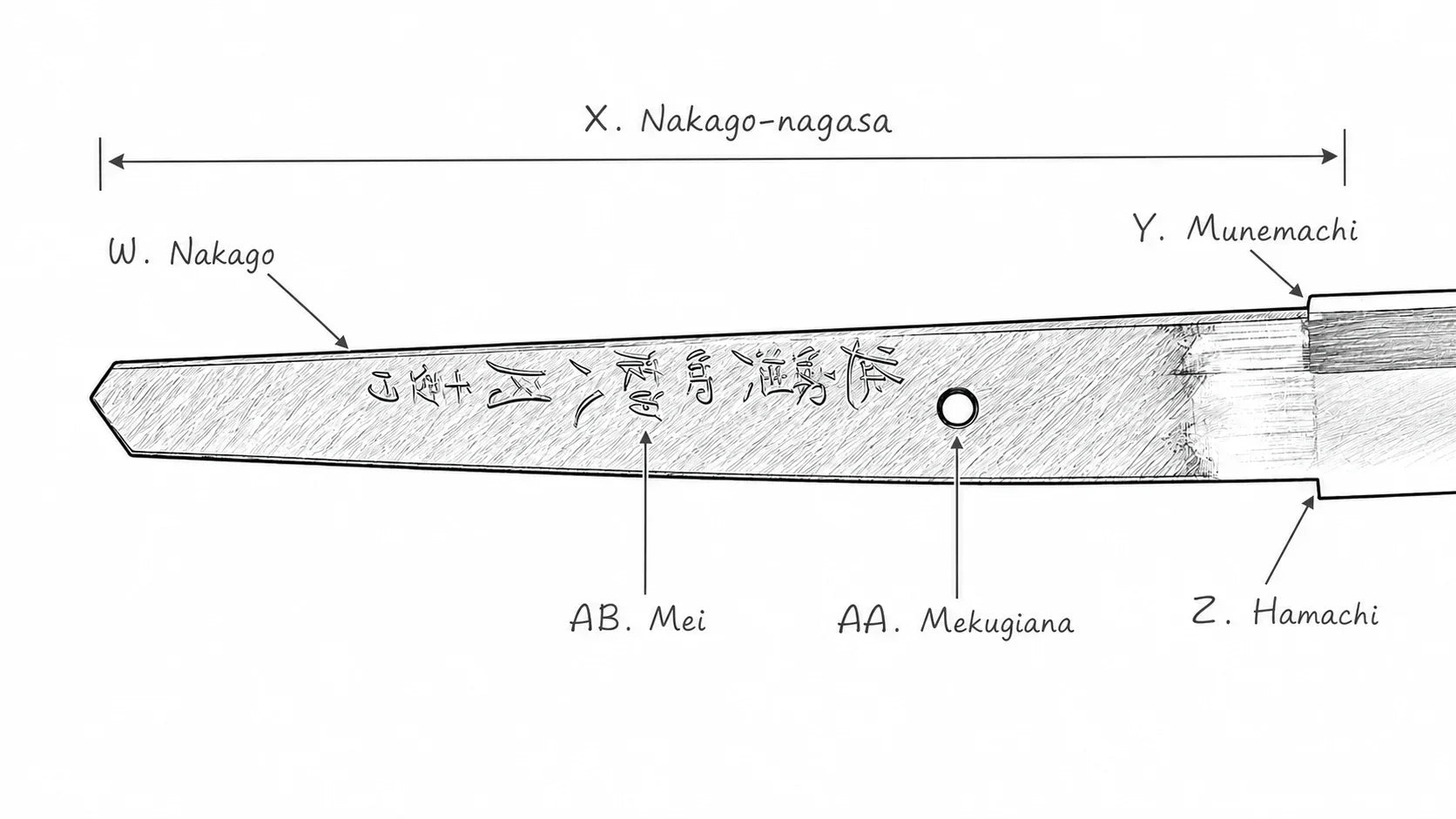
Japanese sword terms can feel overwhelming because the blade has names for areas that look almost identical at first. The easiest way to begin is to read a sword in four parts: its overall shape, i...
Leave a comment
All comments are moderated before being published.
This site is protected by hCaptcha and the hCaptcha Privacy Policy and Terms of Service apply.