
Katana vs Wakizashi: Which One Should You Choose?
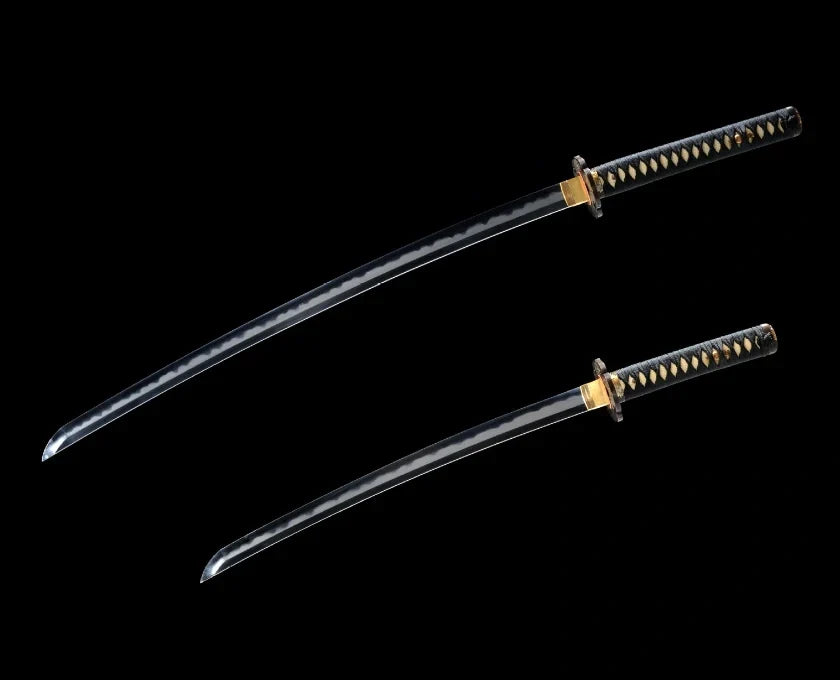
The katana is the sword most people recognize first. Its long curved blade, wrapped handle, and lacquered scabbard have become the familiar image of the samurai sword. The wakizashi is shorter, but it is not a lesser katana or a decorative substitute. It is a distinct traditional sword type with its own proportions, history, and appeal.
Choose a katana when you want the classic full-length Japanese sword and the strongest visual presence. Choose a wakizashi when you prefer a compact sword, have less display space, or want to build a traditional long-and-short pairing.
The difference is simple on paper. The decision is more personal in real life.
Katana and Wakizashi: The Essential Difference
Traditionally, a katana has a blade longer than about 60 centimetres. A wakizashi has a blade between roughly 30 and 60 centimetres. Both can have a curved, single-edged blade, a tsuba guard, a wrapped handle, and a lacquered scabbard.
| Katana | Wakizashi | |
|---|---|---|
| Traditional category | Long sword | Short sword |
| Blade length | Over 60 cm | About 30–60 cm |
| Overall impression | Full-length, bold, familiar | Compact, balanced, restrained |
| Historical place | The longer sword in a daishō pair | The shorter sword in a daishō pair |
| Best first impression | The classic samurai sword | A more compact Japanese sword |
The two swords share the same visual language, but they do not create the same feeling. A katana stretches through the room. A wakizashi asks you to look closer.
A katana has a longer line from handle to tip. Its curve is easier to see, its blade surface has more room to show a hamon or bo-hi, and its proportions feel expansive. A wakizashi compresses those same elements into a shorter form. The blade, guard, handle, and scabbard feel closer together. Its beauty often lies in proportion rather than scale.
Why They Are Often Seen Together
Katana and wakizashi are closely linked because they were historically worn as a pair called a daishō, literally “large-small.” The long sword and short sword could have matching or coordinated scabbards, guards, handle wraps, and decorative fittings.
By the Edo period, the daishō had become closely associated with samurai status. The pair was not simply two swords carried for convenience. It was also a visible expression of rank, identity, and taste.
That history still shapes the way collectors see these swords today. A katana and wakizashi displayed together have a natural balance. The katana gives the arrangement length and presence. The wakizashi adds contrast and detail. Together, they look intentional in a way that two unrelated swords often do not.
Still, you do not need both. A single katana can feel complete. A single wakizashi can feel equally complete. The choice depends on what you want your first sword to say.
Choose a Katana If You Want the Classic Experience
A katana is usually the right choice when you want the full, familiar image of a Japanese sword. It is the sword that works best as a centrepiece. On a stand or wall mount, it creates an immediate visual line. Even someone with little knowledge of Japanese swords will understand what they are looking at.
For a first collection, that matters. A katana does not need much around it. It can sit alone on a stand, above a desk, in a cabinet, or as the main object in a room. Its length gives it enough presence to hold attention without relying on elaborate fittings or a complicated display.
The katana also suits buyers who are drawn to the grandeur of the form itself. A longer blade allows the curvature to open up. A simple black scabbard can look formal and calm. A decorated tsuba can become a focal point without making the whole sword feel busy. The sword has room to breathe.
A katana is also the natural starting point if you know that you may want a daishō later. Beginning with the long sword gives you a clear foundation. You can later look for a wakizashi that matches the same colour, fittings, period inspiration, or overall mood. Browse the Katana collection to compare full-length styles and proportions.
The main consideration is space. A full-length katana needs room to be displayed well. If the sword has to be squeezed into a narrow shelf or placed where it cannot be seen properly, its strongest quality, its long presence, is lost.
Choose a Wakizashi If You Prefer a More Personal Piece
A wakizashi is often the better choice for someone who values compact proportions. It has less visual scale than a katana, but that does not make it less impressive. It simply creates a different kind of impression.
A wakizashi fits more naturally into a smaller room, a cabinet, a bookshelf display, or a collection with several objects already competing for attention. It can sit beside art books, armour, prints, or other swords without making the display feel crowded. The shorter length gives it flexibility.
It also encourages a closer look. On a katana, the blade often takes the eye first. On a wakizashi, the guard, handle wrap, scabbard finish, and small fittings can feel just as important as the blade itself. That makes it a rewarding choice for buyers who care about the entire object rather than only the iconic silhouette.
A wakizashi can also feel more individual. Katana are everywhere in popular culture. A well-chosen wakizashi can feel like a more deliberate choice, especially for someone who already knows they do not need the largest possible sword in the room.
It is the obvious choice if your goal is a daishō-inspired display, but it does not need a katana beside it to justify itself. A wakizashi can stand on its own as a collector piece. Its shorter form can feel elegant, practical, and complete. Explore the Wakizashi collection to compare compact sword styles and fittings.
Which One Looks Better on Display?
Neither always looks better. The question is what kind of display you want.
A katana works best when you want one strong horizontal line. It creates an immediate focal point. It suits a wide wall, a long sword stand, or a display where the sword is meant to be the main subject. A katana looks especially good in an open space where its full length can be appreciated.
A wakizashi works best when the display is closer, more intimate, or more layered. It can be placed in a cabinet without overwhelming the other objects. It can sit above a desk or shelf. It can be paired with a framed print, a tsuba display, or a second sword without turning the room into a weapons display.
Think of the katana as the main painting on the wall. Think of the wakizashi as the piece that makes you step closer.
If you are choosing for a small apartment or a room with limited wall space, a wakizashi may look better simply because it has room around it. A sword should not feel crammed into its display.
Does a Wakizashi Feel Easier to Own?
In one sense, yes. Its shorter overall length makes it easier to place, store, and display. It is less likely to dominate a room. It can feel more manageable as an object in everyday life.
That does not mean every wakizashi is lighter or more comfortable than every katana. The feel of a sword depends on the exact blade, handle, fittings, and proportions. A thick wakizashi can feel substantial. A slim katana can feel surprisingly light. It is better to compare the dimensions of the individual products than to assume that short always means easy.
The difference is less about difficulty and more about presence. A katana asks for space. A wakizashi adapts to the space you already have.
Is a Katana More Authentic Than a Wakizashi?
No. Both are traditional Japanese sword types. A wakizashi is not a modern compromise, and a katana is not automatically more historically meaningful.
The katana is more famous because of its size, visual impact, and place in popular culture. The wakizashi has a quieter reputation, but it has deep historical roots and was an important part of the long-and-short pairing associated with samurai life.
Authenticity comes from the object itself: its form, proportions, workmanship, materials, fittings, and the honesty of its description. It does not come from buying the longest sword available.
A collector who chooses a wakizashi because it fits their space, taste, and interest may be making a more thoughtful choice than someone who buys a katana only because it is more familiar.
Should You Buy Both?
For many collectors, yes. A katana and wakizashi displayed together create a balanced arrangement with a clear historical connection. The katana provides scale; the wakizashi adds detail and contrast.
The best way to build that pair is usually to begin with the sword you genuinely prefer. If you are drawn to the classic long form, begin with a katana and add a wakizashi later. If compact proportions appeal to you more, begin with a wakizashi and wait for the right long sword to join it.
If you want a coordinated long-and-short design, explore the Kobayashi Ise Katana set. It gives a direct example of how a matching katana and wakizashi can create a more unified display than two unrelated swords.
A matched pair does not need to be perfectly identical. In fact, a little variation can make the display more interesting. The two swords may share a colour palette, fitting style, or historical character while still showing their different proportions.
There is no reason to rush. One carefully chosen katana or wakizashi is enough to begin a collection.
Katana or Wakizashi: The Final Choice
Choose a katana if you want the classic full-length Japanese sword, a strong visual centrepiece, and the familiar form most people associate with the samurai. It is the better choice when you want one sword to define the display.
Choose a wakizashi if you prefer compact proportions, have less room, want a more intimate collector piece, or are building toward a daishō-inspired pair. It is the better choice when you care as much about the complete object as the length of the blade.
The katana is grander. The wakizashi is more contained. Both can be beautiful, meaningful, and worth owning. The right one is the sword that feels at home in your collection before it ever arrives.
Read more
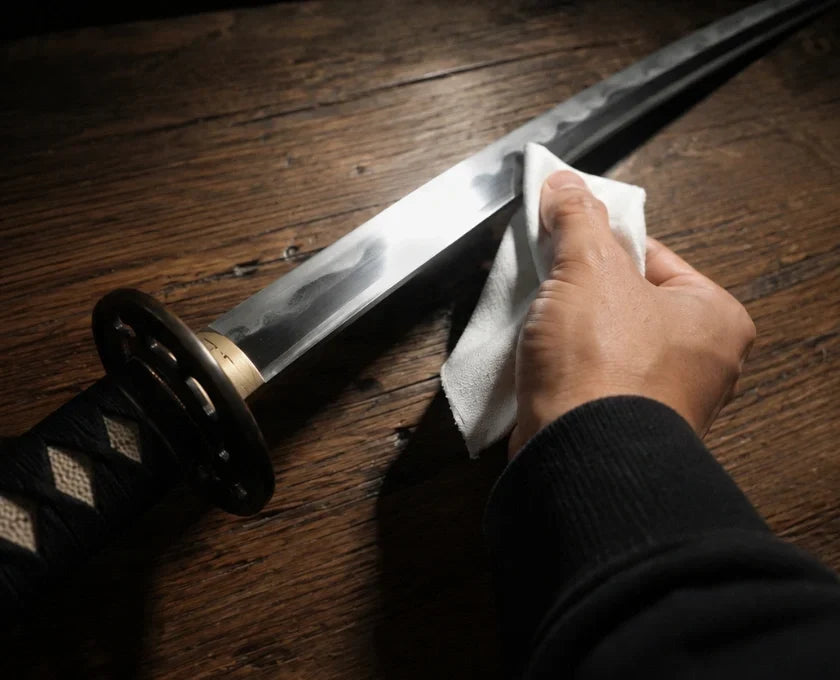
A katana does not need a complicated ritual every time you take it out. It does need regular, careful attention. For most modern katana owners, the basics are simple: keep the blade clean, keep it ...
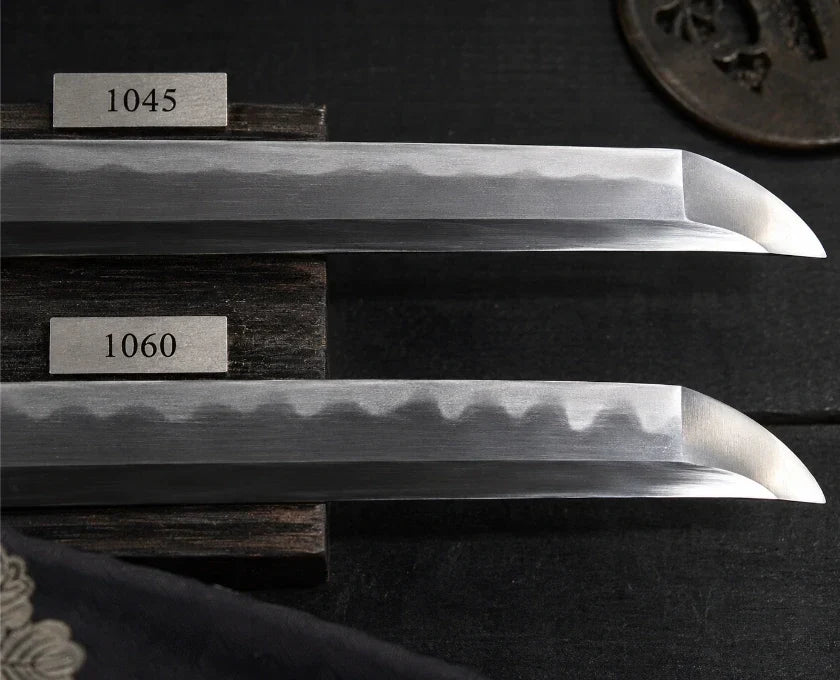
If you're comparing two equally well-made katana, 1060 is usually the better choice for a sword you intend to use. It contains more carbon than 1045, so the maker can develop a harder edge that hol...
Leave a comment
All comments are moderated before being published.
This site is protected by hCaptcha and the hCaptcha Privacy Policy and Terms of Service apply.