
The Complete Guide to Katana Care and Maintenance
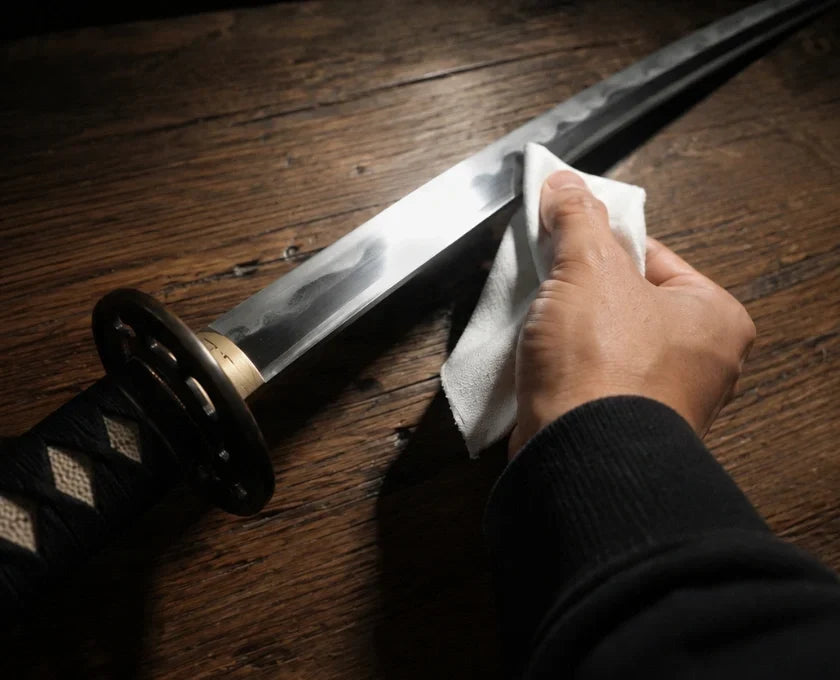
A katana does not need a complicated ritual every time you take it out. It does need regular, careful attention.
For most modern katana owners, the basics are simple: keep the blade clean, keep it dry, apply a very light protective oil when appropriate, and store it somewhere stable. Problems usually begin when a blade is put away with fingerprints, moisture, cutting residue, or too much oil on it.
This guide is written for modern, commercially sold katana. It is not a restoration guide for antique Japanese swords. If you own an antique, a certified nihonto, or a blade with serious rust or damage, do not experiment with abrasives, polishing compounds, or home repairs. Speak with a qualified specialist.
First, know what kind of blade you own
“Katana” describes a shape and style. It does not tell you exactly what the blade is made of or how much care it needs.
Most functional modern katana use carbon steel, such as 1060, 1095, T10, or spring steel. Carbon steel can rust when moisture and oxygen reach the surface, so it should be kept clean and lightly protected. Stainless steel decorative swords are more resistant to corrosion, but they still benefit from wiping and dry storage. Aluminum-zinc alloy iaito do not rust like carbon steel, although their saya, wrapping, and fittings still need sensible care.
If you are unsure what you own, check the product specifications or contact the seller before choosing oils or cleaning products.
What you need for routine care
You do not need a cabinet full of specialist tools for ordinary maintenance. A simple setup is enough:
-
A clean, soft, lint-free cloth or suitable wiping paper
-
A light blade oil approved for sword care
-
A clear, stable work surface
-
Good light for inspection
Traditional Japanese sword-care kits often include choji oil, wiping paper, a mekugi tool, and uchiko powder. Choji oil is a familiar option, but the important point is the thin protective film it leaves behind, not the fragrance or ceremony around it.
Uchiko deserves a little caution. It is part of traditional Japanese sword care, but it contains very fine polishing powder. Used too often or too aggressively, it can leave microscopic scratches on a highly polished surface. For a modern katana owner, routine wiping and a light coat of oil are the safer default unless the seller or a qualified professional advises otherwise.
After handling your katana
The blade can pick up fingerprints even when it looks clean. Skin oils, salts, and moisture are not friendly to carbon steel.
After handling the sword, place it on a stable surface and inspect the blade under good light. If you see fingerprints, dust, or moisture, wipe them away gently with a clean cloth. Do not scrub back and forth with pressure. Keep your movements controlled and stay aware of the edge.
If the blade is carbon steel, put a small amount of oil on the cloth and spread it over the blade in a thin, even layer. The blade should have a faint protective sheen. It should not look wet, drip, or leave excess oil at the base of the blade.
The Japanese Sword Museum describes the traditional principle in the same straightforward way: remove old oil and contamination, then apply fresh oil thinly and evenly. It also warns that excessive oil can run into and damage the saya. Read its handling and storage guidance here.
Only return the blade to the saya once it is clean and dry.
After cutting practice
A katana used for tameshigiri or other cutting practice needs more attention than a sword that has only been displayed. Cutting targets can leave moisture, plant fibers, residue, and grime on the blade. Even if the blade looks clean at first glance, do not assume it is ready to go back into the saya.
Start by removing all visible residue. Wipe the blade carefully and make sure it is completely dry. Then inspect the edge and surface under good light. Look for small chips, rolls, fresh marks, loose fittings, or rust-colored spots.
Once the blade is clean and dry, apply a very light oil coat before storage.
Avoid treating sharpening, polishing, or dismantling the handle as ordinary post-cutting maintenance. Those tasks require more judgment than a short online checklist can provide. If a blade has edge damage or a structural concern, stop using it and contact the seller or a qualified sword specialist.
How often should you oil a katana?
There is no single schedule that fits every sword and every climate.
A carbon-steel blade should be wiped and protected after direct handling or cutting. A sword kept in storage should still be checked periodically, especially during humid weather, near the coast, or after major temperature changes. A displayed blade also deserves more frequent inspection because it is exposed to room air and dust.
The point is not to create a weekly chore for its own sake. It is to catch problems early. A quick look under strong light takes very little time and can reveal a developing rust spot before it becomes a larger repair.
For traditional Japanese swords, the Japanese Sword Museum suggests more frequent oil changes for freshly polished blades and periodic care for older polished blades. That is useful background, but modern commercial swords should follow the maker’s instructions and the reality of their storage environment. See the museum’s preservation notes.
The saya matters too
The saya is not just a cover for the blade. It is part of the storage system.
A clean, well-fitted saya helps protect a blade from accidental contact and dust. A saya that holds moisture, old residue, or rust particles can create repeat problems. If corrosion repeatedly appears in the same area of the blade, the issue may be inside the saya or at the saya mouth, not simply a missed oiling session.
Never place a wet, dirty, or heavily oiled blade into the saya. Keep the sword in a dry, stable indoor space, away from damp basements, hot attics, direct sunlight, and large temperature swings. Do not lean it against a wall where it can fall or where oil can collect toward the tip.
The Japanese Sword Museum specifically notes that rust can recur when a blade contacts the saya or when an older saya retains rust and dirt inside. It recommends a low-humidity storage environment and cautions against leaving a sword standing upright for long periods. Its guidance is worth reading before planning long-term storage.
What to do if you find rust
Rust is the moment to become more cautious, not more aggressive.
Do not use sandpaper, metal polish, steel wool, or a scraping tool on the blade. These methods can leave deep scratches, change the surface finish, and make later professional work harder. This matters especially for traditional Japanese swords, where the polish, hamon, and surface details carry historical and monetary value.
For a modern commercial katana, stop using the sword, take clear photographs in good light, and contact the seller or a reputable specialist for advice. If the sword is an antique, certified nihonto, or otherwise valuable collectible, consult a specialist polisher rather than a general knife sharpener. The Japanese Sword Museum makes the same point clearly: rust on a Japanese sword should be referred to a qualified polisher, not treated with amateur scraping or abrasion. Read the museum’s advice on rust.
Common mistakes to avoid
The most common maintenance errors are simple:
-
Leaving fingerprints on a carbon-steel blade
-
Returning a damp blade to the saya
-
Applying enough oil to make the blade greasy
-
Assuming stainless steel needs no attention
-
Letting a displayed blade sit for months without inspection
-
Using abrasives to remove discoloration
-
Treating an antique nihonto and a modern production katana as if they need the same home-care routine
A modern katana can stay in good condition for many years with calm, consistent care. The goal is not to polish the blade every time you see it. The goal is to keep moisture, dirt, and unnecessary damage away from the steel.
A simple katana care checklist
After handling:
-
Inspect the blade for fingerprints and moisture.
-
Wipe it with a clean cloth.
-
Apply a thin oil coat if it is carbon steel.
-
Return it to the saya carefully.
After cutting:
-
Remove all cutting residue.
-
Dry the blade completely.
-
Inspect the edge, surface, and fittings.
-
Apply a light oil coat before storage.
During storage:
-
Check the blade regularly.
-
Keep the storage location dry and stable.
-
Inspect the saya if rust reappears in one spot.
-
Ask for professional help before attempting rust removal or repair.
Good katana care is quiet, routine work. Keep the blade clean, dry, lightly protected, and stored sensibly. That will do far more for the sword than an overcomplicated cleaning ritual.
Read more
Steel is usually the first thing people notice when they shop for a katana. You see names like 1060, 1095, T10, folded steel, Damascus, or clay tempered, and it is tempting to treat them as a simpl...
The katana is the sword most people recognize first. Its long curved blade, wrapped handle, and lacquered scabbard have become the familiar image of the samurai sword. The wakizashi is shorter, but...
Leave a comment
All comments are moderated before being published.
This site is protected by hCaptcha and the hCaptcha Privacy Policy and Terms of Service apply.