
How to Store a Katana Properly
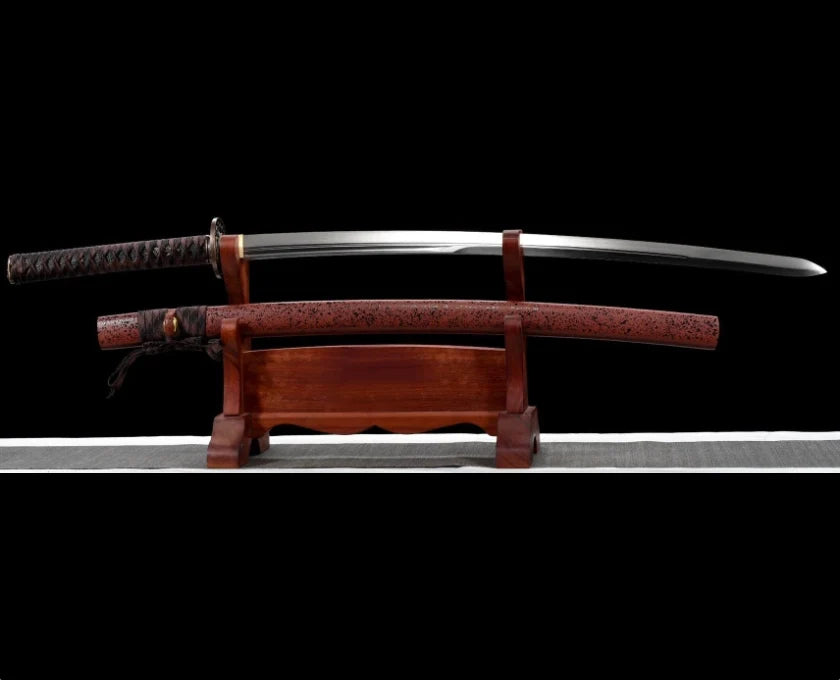
Daily and short-term storage for a modern katana
The sword stand looks right. The room looks dry. You slide the katana into its saya and place it where you can see it. So far, so good—unless the blade went back into the scabbard with a fingerprint on it.
Storage begins before you choose a stand, cabinet, or wall. For a modern carbon-steel katana you plan to inspect within the next three months, the useful routine is simple: put it away clean and dry, use a thin protective oil film when appropriate, keep it in a sound saya and a stable indoor space, and check it again. A sword you will leave untouched for longer needs a more deliberate storage plan.
This advice is for modern production katana. An antique, traditionally made, signed, or potentially valuable Japanese sword deserves specialist advice if you find rust or damage.
First, check the blade
After handling or cutting practice, look along both sides of the blade in good light. Bare hands can leave moisture and salts; cutting can leave residue. Neither becomes less troublesome because the sword is out of sight.
Remove anything left on the steel and let the blade dry completely. If the maker recommends oiling, apply a thin, even layer of suitable oil before sheathing it. You want a protective film, not drops that can run into the saya. If you need the detailed cleaning steps, read our katana care and maintenance guide.
Check the saya, too
A clean, well-fitted saya protects the blade from dust and accidental contact. It does not clean or dry the blade on the way in. Slide the sword in gently; if it suddenly feels tight or gritty, do not force it and call that a secure fit.
Pay attention if a rust spot returns in the same area. Moisture or debris inside the saya may be involved, especially near a place where it contacts the blade. Pushing a cloth or household cleaner into the scabbard is unlikely to tell you what is happening in there. Ask the maker or seller about a modern sword, or a qualified specialist about a valuable one.
Give it a steady place indoors
Choose somewhere reasonably dry, clean, and stable. An interior room or cabinet is usually easier to manage than a garage, attic, basement, car, or a spot beside an open window. Avoid direct sun, heating vents, damp exterior walls, and places where the temperature changes sharply.
A display stand is fine when it supports the sheathed sword securely and the room is suitable. A bag can keep dust off, but it cannot remove moisture from a blade or fix a damp room. Neither the stand nor the bag deserves credit for work it cannot do.
If you store the katana horizontally, edge upward is the customary orientation for a sheathed katana. It keeps the edge from resting against the inside of the saya. Do not leave the sword leaning unsupported in a corner, where a small knock can turn storage into an entirely different problem. Keep a sharpened sword where children and visitors cannot reach it.
Decide when you will look again
There is no inspection date that fits every sword and every home. Check after handling, cutting, travel, or exposure to rain, condensation, or unusual humidity. During ordinary storage, inspect it periodically rather than assuming that last month's dry room is still dry today.
Look for fingerprints, changes in the oil film, reddish-brown spots, moisture, or a change in how the saya fits. If rust appears, resist the urge to scrub it with sandpaper, steel wool, or a polishing wheel. For prevention and next steps, see our rust-prevention guide.
The easiest storage routine is also the easiest to repeat: clean blade, dry blade, light protection where appropriate, sound saya, stable room, another look later. The stand may be the part everyone notices. The quiet checks are what let the sword stay there.
Read more
A decorative katana is not a bad katana. In fact, it may be exactly the right choice if you want a display piece, a collectible, a gift, or a replica that looks good on a stand. Problems start when...

Most beginner katana advice starts with steel. “Get 1060.” “No, get 1095.” “Actually, T10 is better.” That is not a terrible conversation to have, but it is a terrible place to begin. When you are ...
Leave a comment
All comments are moderated before being published.
This site is protected by hCaptcha and the hCaptcha Privacy Policy and Terms of Service apply.