
Battle Ready vs Decorative Katana: How to Choose the Right Sword
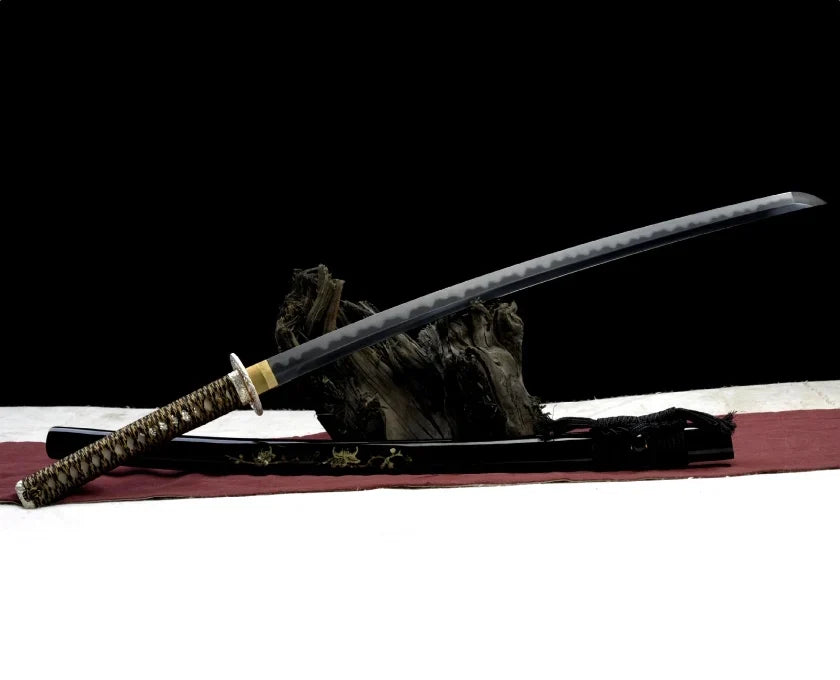
A decorative katana is not a bad katana. In fact, it may be exactly the right choice if you want a display piece, a collectible, a gift, or a replica that looks good on a stand.
Problems start when buyers assume that “Battle Ready” is an official grade of quality. It is not. The phrase is used widely in the modern sword market, but there is no single certification body that tests a katana and awards it that label. Treat it as a seller’s claim about intended function—not proof that a sword is safe for every kind of use. Even retailers that use the label acknowledge this lack of certification.
The useful question is not “Which one is better?” It is: What do you want the sword to do, and does the product information actually support that use?
Battle Ready vs Decorative Katana: The Short Answer
A decorative katana is made primarily for display. A battle-ready or functional katana is marketed as a sword intended to withstand controlled handling or cutting—but the label only means something when the seller also gives clear information about the blade, tang, mounting, edge, and intended use.
| Factor | Battle Ready / Functional Katana | Decorative Katana |
|---|---|---|
| Main purpose | Controlled training or cutting, if explicitly stated | Display, collecting, cosplay, gifting |
| Product information | Should explain construction and intended use | May focus mainly on appearance and theme |
| Blade and handle | Needs credible information about tang and mounting | Not intended to carry cutting or impact loads |
| Maintenance | Often needs regular care, especially if carbon steel | Depends on finish and materials |
| Best for | Buyers with a lawful, controlled use case | Buyers who want visual appeal without a functional need |
The most important point is simple: a sword that is appropriate for a shelf is not automatically appropriate for practice. And a sword described as battle ready is not automatically appropriate for every martial-art activity.
What Does “Battle Ready” Actually Mean?
In today’s market, “Battle Ready” usually means that a seller considers a sword functional rather than display-only. The phrase often points to a blade with a substantial tang, a more serious mounting system, and materials or heat treatment intended for real loads.
That is a useful starting point, but it is still only a starting point.
One seller may use the phrase for a sword meant for light, controlled target cutting. Another may use it for almost any sharp-looking blade with a full-length tang. Neither description tells you whether the sword is suitable for sparring, striking hard objects, theatrical combat, or unsupervised use.
A better way to read the label is this:
“Battle Ready” should lead you to ask better questions. It should not end the conversation.
If a listing cannot explain what the sword is designed to do, what its limits are, and how it is built, the phrase itself adds very little value.
What Makes a Katana More Than a Display Piece?
A functional katana is not defined by one feature. It is a complete object: blade, heat treatment, tang, handle, fittings, assembly, and intended use all matter.
The Tang and Handle Connection
The part of a Japanese sword that extends into the handle is called the nakago, or tang. The handle, called the tsuka, is attached over it. In traditional mounting, a mekugi peg passes through the handle and tang to secure the assembly. Nihonto Club’s terminology reference explains this relationship clearly.
Modern product pages often use “Full Tang” as shorthand for a blade that continues through the length of the handle. That is worth checking, especially when you do not want a display-only sword. But “Full Tang” should not be treated as a complete safety certificate.
A good listing should also explain how the handle is mounted and secured. It should not leave buyers guessing about the most important connection on the sword.
You do not need to dismantle a new sword yourself to investigate it. Ask the seller for clear construction details or photographs, and be wary of vague phrases such as “premium build” or “high-quality handle” when no actual mounting information is provided.
Steel Grade Is Only One Part of the Story
Steel names attract a lot of attention: 1060, 1095, T10, 65Mn, folded steel, Damascus steel, and more. They can be useful clues, but none of them tells the whole story.
A named steel grade tells you something about the material used to begin the process. It does not, by itself, tell you how well the blade was heat-treated, whether its geometry suits its claimed use, or how carefully the finished sword was assembled.
Traditional Japanese swordmaking makes this point especially well. The Metropolitan Museum of Art’s overview of Japanese blade manufacture describes how different parts of a blade can be treated for different properties: a hard edge for sharpness and a more flexible body to help resist breakage under stress.
That does not prove that every modern katana with a visible hamon or a high-carbon steel label performs well. It does show why a simple steel ranking is too shallow. A sword is a finished system, not a grade of steel.
Fitment and Condition Matter Too
Even a well-designed sword can become unsafe if parts loosen, wear, crack, or shift over time. The tsuba, handle, blade collar, pegs, and blade itself should all be treated as parts of one working assembly.
This is not just theoretical. A Japan Society of Mechanical Engineers study examined impact response in a mounted Japanese sword and considered how the blade, handle, and mekugi area respond together. The paper is useful because it reinforces the importance of the whole mounting—not simply the blade in isolation. It is not, however, a universal pass-or-fail test for modern retail katana. Read the study here.
For buyers, the practical takeaway is straightforward: a sword should not be treated as functional merely because the blade looks impressive. The mounting needs to be sound, and its condition still needs attention after purchase.
Why Full Tang Does Not Settle the Question
Full tang construction is an important buying criterion, particularly if you are comparing a functional sword with a wall-hanger. It gives you a more meaningful basis for evaluating the connection between blade and handle.
But it does not answer every question.
A full tang cannot compensate for poor heat treatment. It cannot correct weak fitment, loose hardware, poor blade geometry, or a product page that never states the sword’s intended use. It also does not make a sharp sword appropriate for sparring.
Think of full tang as one of the first things to verify, not the only thing to verify.
The same caution applies to impressive-looking features. A folded pattern may be attractive. A hamon may be beautiful. Elaborate fittings may make a katana feel more special. None of those details automatically tells you whether the sword was designed and assembled for a particular functional purpose.
Decorative Katana Is Not a Lesser Choice
There is a strange tendency in sword marketing to present decorative swords as if they are somehow dishonest or inferior. That misses the point.
A decorative katana can be a great choice when its purpose is clear. It may be bought for its finish, its historical inspiration, a film or game reference, its color scheme, or how it looks in a room. If that is what you want, there is no reason to pay for specifications you do not need.
In many cases, a decorative or unsharpened option is the more sensible choice for a first-time buyer who has no supervised training environment, no lawful reason to own a sharp blade, or no practical plan for safe storage.
The issue is not whether decorative swords deserve respect. The issue is whether they are represented honestly. A display piece should be sold as a display piece, and it should not be swung or used for cutting simply because it is made of metal or appears to have an edge.
Choose the Katana That Matches Your Use
If You Want a Display Piece
Choose based on appearance, finish, scabbard design, theme, dimensions, and how the sword will be stored or displayed. Decorative katana are often the most appropriate option for collectors, gifts, and cosplay-focused buyers.
If You Want to Practice Forms
Do not assume that a sharp battle-ready katana is the correct training tool. Iaido and other sword arts may have specific requirements for length, weight, balance, edge condition, and training equipment. Follow the guidance of your dojo or instructor before buying.
If You Want to Do Test Cutting
Look for a seller that clearly states the sword’s intended cutting use and gives specific construction information. More importantly, recognize that cutting is a controlled activity, not a casual product test.
Toyama Ryu’s tameshigiri guidance emphasizes inspecting the mekugi before use, which is a good reminder that functional equipment still requires care and oversight. See its tameshigiri guidance here.
If You Want to Spar
A sharp katana is not sparring equipment.
A sword being described as battle ready does not make it suitable for person-to-person practice. Sparring requires equipment designed for that purpose, appropriate protective gear, agreed rules, and qualified instruction. Use the training tools required by your school or training group.
A Buyer’s Checklist Before Ordering
Before you buy a katana marketed as battle ready or functional, ask these questions:
-
Does the seller state the sword’s intended use clearly?
-
Is the blade described as sharp, unsharpened, or display-only?
-
Does the listing explain the tang or nakago and how the handle is secured?
-
Does it name the steel and describe the heat treatment, rather than relying on generic phrases?
-
Does it provide meaningful dimensions and weight?
-
Does it explain maintenance needs and any use restrictions?
-
Can the seller answer basic construction questions directly?
-
Do you have a lawful, controlled, and safe reason to own a functional sharp sword?
If the answer to the last question is no, a decorative or unsharpened katana may be the better purchase.
Final Verdict
The difference between battle ready and decorative katana is not a contest between “real” and “fake.” It is a difference in purpose.
A decorative katana is made to be seen. A battle-ready katana is marketed as a functional sword, but that claim must be backed by clear details about construction, condition, and intended use.
Do not buy a sword because a label sounds impressive. Buy the sword that fits your purpose, then judge it by the information the seller is willing to provide.
Frequently Asked Questions
Is a battle-ready katana always sharp?
No. The phrase does not reliably define the edge condition. Some sellers use it for sharp cutting swords, while others use it more broadly for functional construction. Always check the product page for a direct statement about whether the blade is sharpened, unsharpened, or display-only.
Does full tang mean a katana is safe to use?
No. Full tang construction is an important positive sign, but it is not a complete safety guarantee. Heat treatment, blade geometry, handle mounting, fitting quality, maintenance, and the sword’s intended use all matter. A full tang should be part of your evaluation, not the entire evaluation.
Can I swing a decorative katana?
You should treat decorative katana as display-only unless the manufacturer clearly states otherwise. Do not assume that a metal blade, a sharp-looking edge, or a sword-like shape means it can safely handle swinging, impact, or cutting.
Is stainless steel automatically a decorative sword?
Not automatically. Steel type alone does not define a sword’s purpose. For a long-bladed katana, however, a listing should provide more than a material name: look for clear intended-use guidance, construction details, and mounting information before treating it as a functional product.
Can I use a battle-ready katana for sparring?
No. A sharp katana is not suitable for sparring. Functional cutting swords and sparring tools are built for different risks and different activities. Follow your instructor’s equipment rules and use training gear designed for supervised practice.
What should I ask a seller before buying a functional katana?
Ask about intended use, edge condition, tang and handle construction, steel, heat treatment, dimensions, weight, maintenance, and warranty coverage. If the seller cannot provide clear answers, treat the “battle ready” label as unverified marketing rather than evidence of suitability.
Read more
A practical guide to cleaning, oiling, and storing a modern carbon-steel sword You put the katana away after handling it for a few minutes. The blade looked clean. A week later, you draw it and fin...
Daily and short-term storage for a modern katana The sword stand looks right. The room looks dry. You slide the katana into its saya and place it where you can see it. So far, so good—unless the bl...
Leave a comment
All comments are moderated before being published.
This site is protected by hCaptcha and the hCaptcha Privacy Policy and Terms of Service apply.