
Why Use Spring Steel for a Katana?
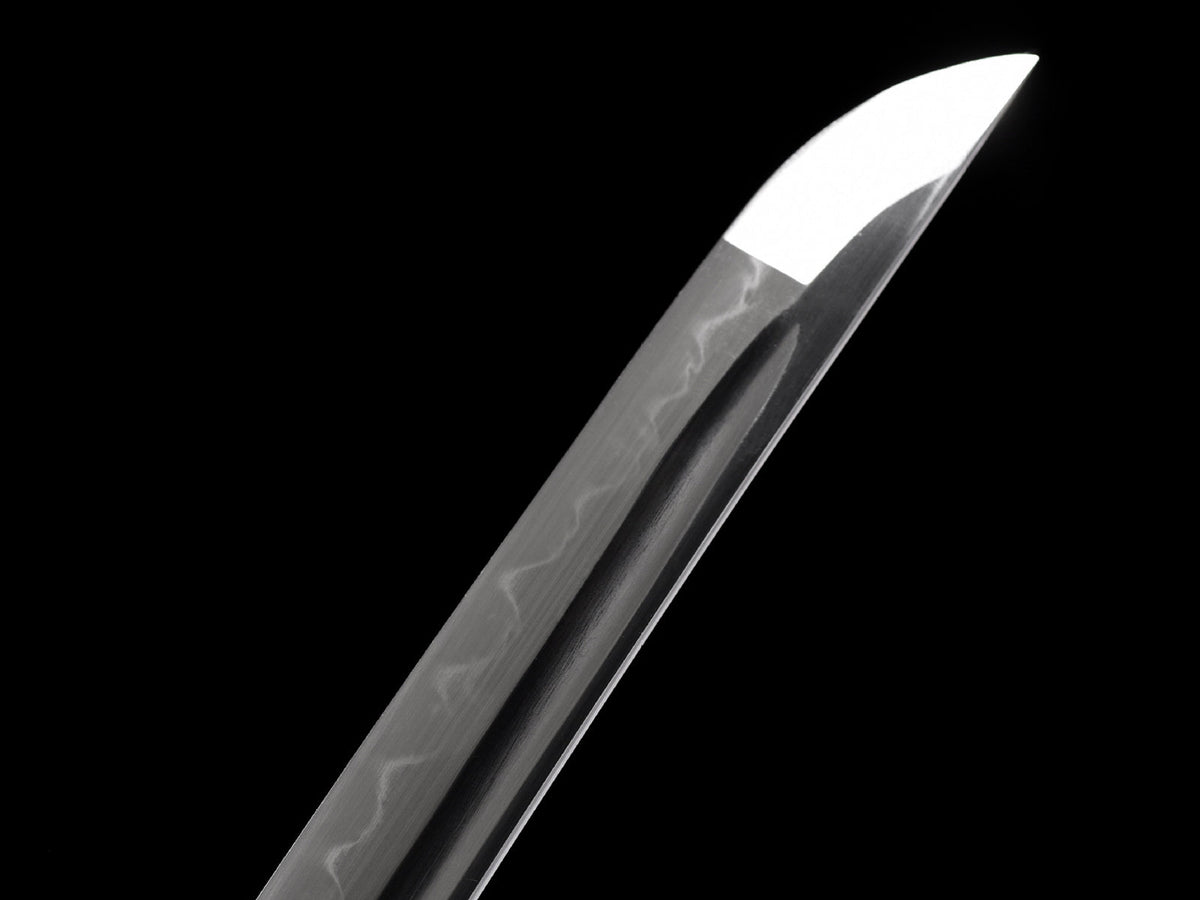
A katana has a long, narrow blade. If a cut puts sideways force on it, the blade can bend. One of the main reasons to use spring steel is to give the blade room to flex and still return to its original curve. For a sword that sees regular use, that means a cut that puts an awkward load on the blade is less likely to leave it permanently bent.
What is spring steel?
Spring steel is a family of steels suited to parts that flex under load and recover their shape when the load comes off. Think of a flat spring in a suspension. It needs to bend under weight and come back when the weight is lifted. A katana takes a different kind of load, but it benefits from the same ability to recover.
You may also see the term spring tempered. Spring steel describes a material suited to spring service. Spring temper describes the condition a maker is aiming for through heat treatment, where the steel retains enough strength to flex and recover in its intended use. The condition of the finished blade depends on how the maker treats the steel.
Why does spring steel spring back?
When a blade bends, the outside of the bend stretches and the inside compresses. At first, that changes the spacing between atoms by a tiny amount. Take the load away and the bonds between the atoms pull them back toward their original spacing. The blade returns to its original curve. That’s elastic deformation, and it’s how steel in general behaves under a small enough load.
Push farther and the picture changes. Steel’s crystals contain small disruptions in how the atoms line up, called dislocations. When enough of those dislocations move through the crystal, layers of atoms can slip past one another and stay shifted. Some of the bend still springs back when you release the load. The part that remains is plastic deformation. The stress at which the steel begins to deform permanently is roughly what engineers mean by yield strength.
Here’s where composition comes in. When a maker heats and rapidly cools suitable steel, some carbon can become trapped in a newly formed crystal structure called martensite. The trapped carbon distorts that structure and makes dislocations harder to move. The maker then reheats the blade at a lower temperature, a step called tempering, to improve toughness while keeping the strength the blade needs. Depending on the composition, elements such as silicon can help the steel keep more of that strength during tempering.
Of two otherwise similar blades, the one with the higher yield strength can generally bend farther before taking a permanent bend. How much the blade flexes under a given force is a question of stiffness, which depends strongly on the blade’s thickness and cross-section. A blade can feel stiff in the hand and still have room to flex and recover under load.
Why does springback matter in a katana?
A sideways load can temporarily push a katana out of its original curve. If the bend stays within the blade’s elastic range, both the curve and the line of the edge recover when the load comes off. The practical benefit is that some loads can flex the blade without leaving a bend you’d have to straighten.
A blade’s ability to spring back and its ability to resist cracking are separate properties. The second is a matter of toughness. In one destructive test, a spring steel katana returned to its original shape after the first bend. The tester then increased the load and concentrated it over a short section of the blade. The blade eventually broke. A spring steel katana can still break under extreme loads, although it can generally withstand more bending than a carbon steel katana. In many cases, a carbon steel katana breaks while a spring steel blade can still return fully to its original shape.
Should you choose a spring steel katana?
If I’m buying a katana for regular cutting, I put blade toughness and the ability to spring back high on my list. Properly heat-treated spring steel can offer both while keeping the edge hard enough for everyday cutting practice. I’d look at the blade profile and specs such as hardness and weight. If those suit me, the extra room to flex and recover may tip the decision toward a spring steel katana.
How well does spring steel hold an edge?
A well-made spring steel katana has an edge that’s up to regular light cutting. Plain carbon steel can also be used to make springs. Here I’m comparing the finished blade setups you typically see in sword shops. A plain high-carbon steel blade with a harder edge can stay sharp longer when wear is the main cause of dulling. A spring steel blade that retains good edge toughness is less likely to chip under impact or sideways force.
Wear gradually rounds off a sharp edge. A roll is a section of the edge that has bent over. A chip is a piece that has broken away. With similar edge shapes, a harder edge generally resists rolling better, and a tougher edge resists chipping better. Even if two blades have similar edge hardness, the steel’s internal structure and the edge geometry still affect durability. When someone says a blade is more “durable,” ask whether they mean slower wear, less rolling, or less chipping. A high-carbon steel edge may stay sharp longer, while spring steel can have an advantage when keeping the edge free of chips is the priority.
Should you choose spring steel for your first practice sword?
If I were buying my first katana primarily for cutting practice, spring steel would be high on my list. Say the edge is out of line with the swing when it hits a tatami mat. The mat can push sideways on the blade or even twist it. A blade with more room to flex and recover is less likely to take a permanent bend from that cut. That’s what makes it more forgiving while you’re learning.
For occasional light cutting, I’d look first at build quality, whether the weight and balance make the sword easy to handle, and whether the price fits my budget. Two swords labeled “spring steel” can still feel very different in a swing. For more on what to look for, see the beginner’s guide to choosing a katana.
Spring steel katana FAQ
Does spring steel feel lighter?
Look at the weight and where that weight sits. Two swords can weigh the same, yet the one with more weight toward the tip can feel heavier in motion. Blade length, thickness, and the distribution of material help explain how heavy a katana feels in the hand.
Can spring steel rust?
Yes. The spring steels commonly used in modern katana can rust. Clean off fingerprints and cutting residue, dry the blade, and apply a light coat of blade oil before putting it away. Pay particular attention after cutting fruit, since juice can leave moisture and acidic residue. See the guide to preventing rust on a katana.
Can a spring steel katana have a real hamon?
Yes. A hamon forms through differential hardening, when the edge and the rest of the blade cool differently and develop different structures. A through-hardened blade is hardened through its cross-section. If the line matters to you, look for a maker’s description of how it was formed.
Can you tell it’s spring steel by looking at it?
The practical starting point is the maker’s specification or any material paperwork supplied with the sword. A polished blade’s appearance and the way it flexes give too little information to identify its composition.
Leave a comment
All comments are moderated before being published.
This site is protected by hCaptcha and the hCaptcha Privacy Policy and Terms of Service apply.