Skip to content

Cart

Your cart is empty

Continue shopping

Yoriichi Tsugikuni Katana

Sale price$199.00
  • Full-tang hand-forged real katana. Not just to sit pretty.
  • True katana luster and texture come after sharpening.
  • Display. Practice. Room collection. You call.
Edge: Sharpened

Description

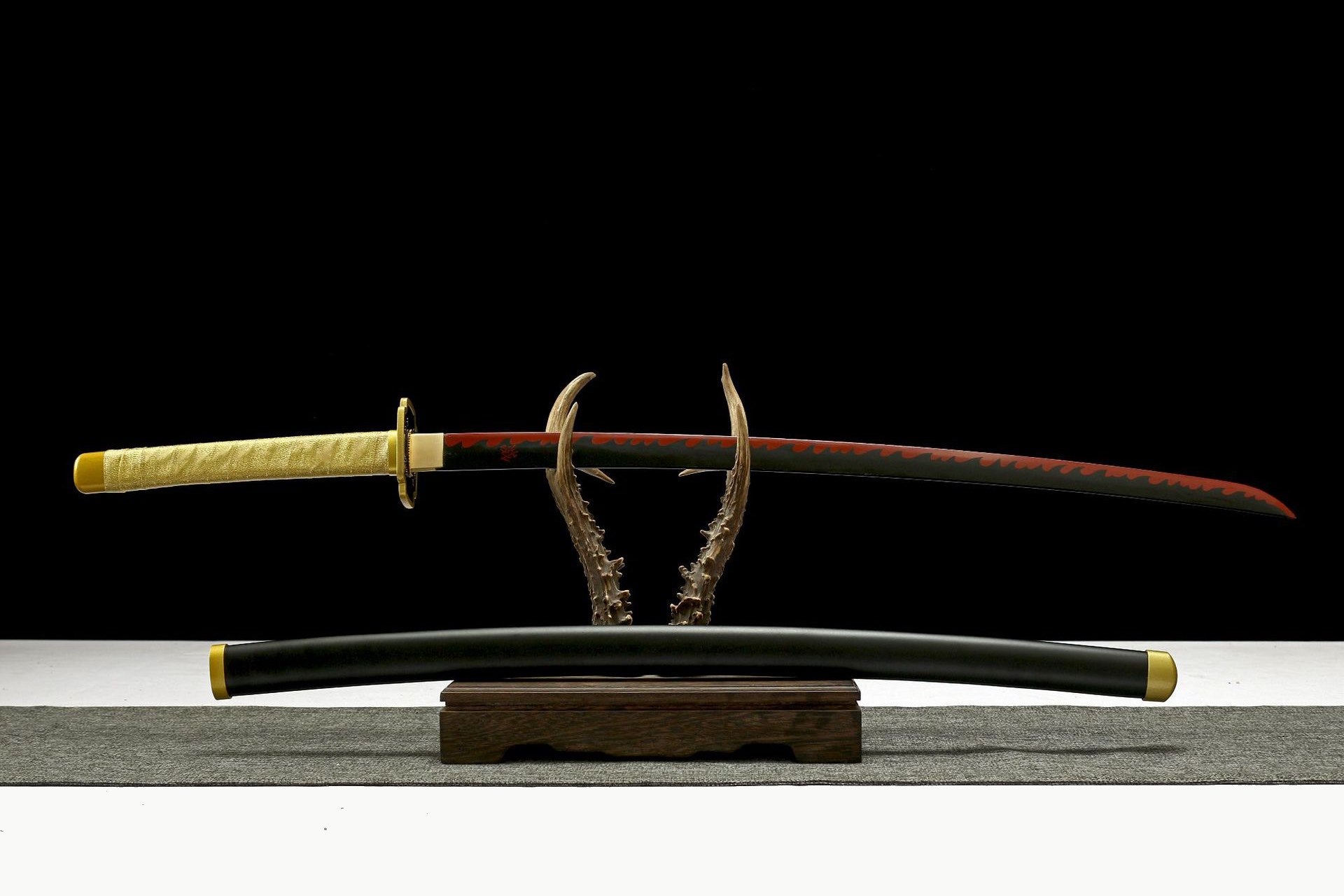
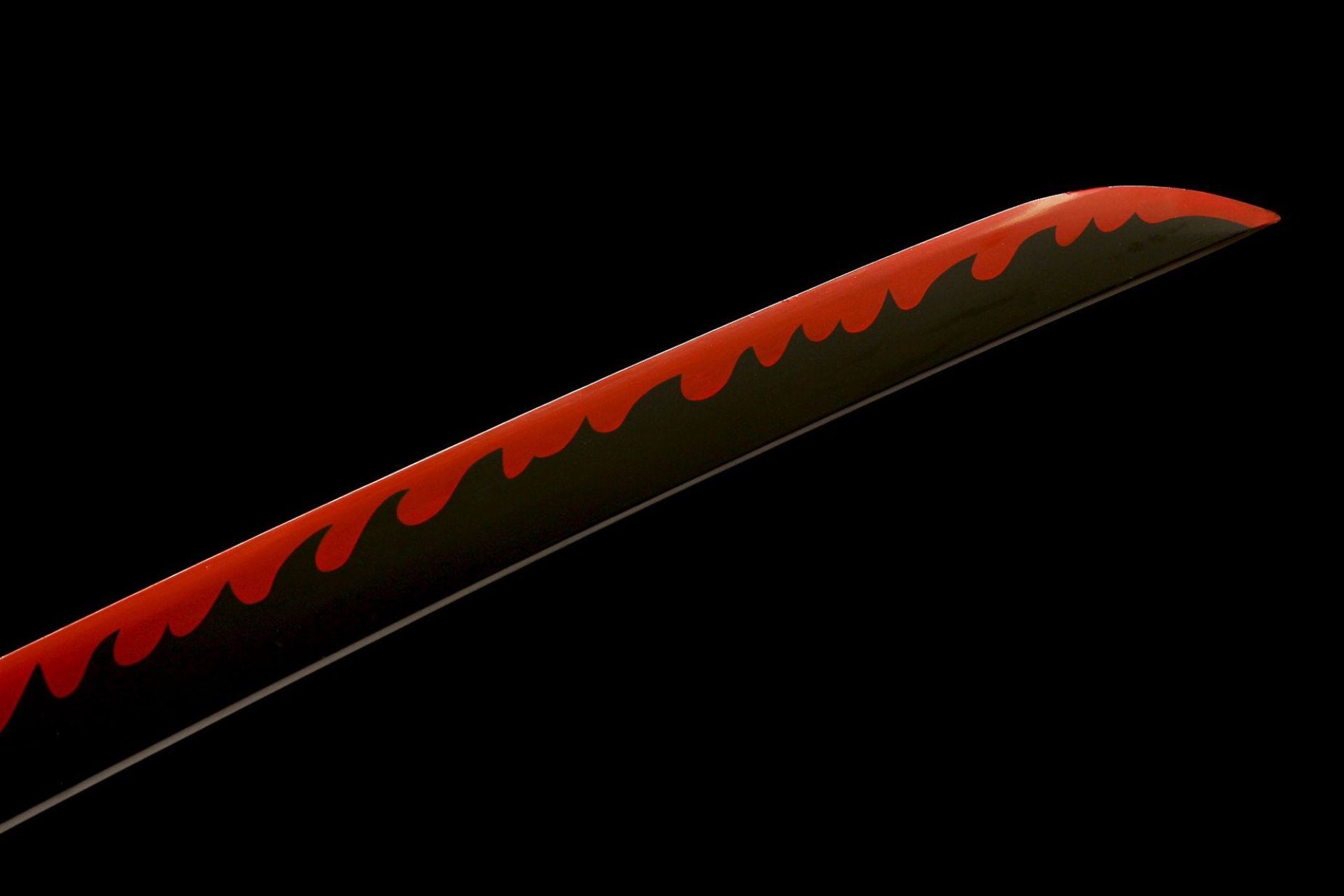
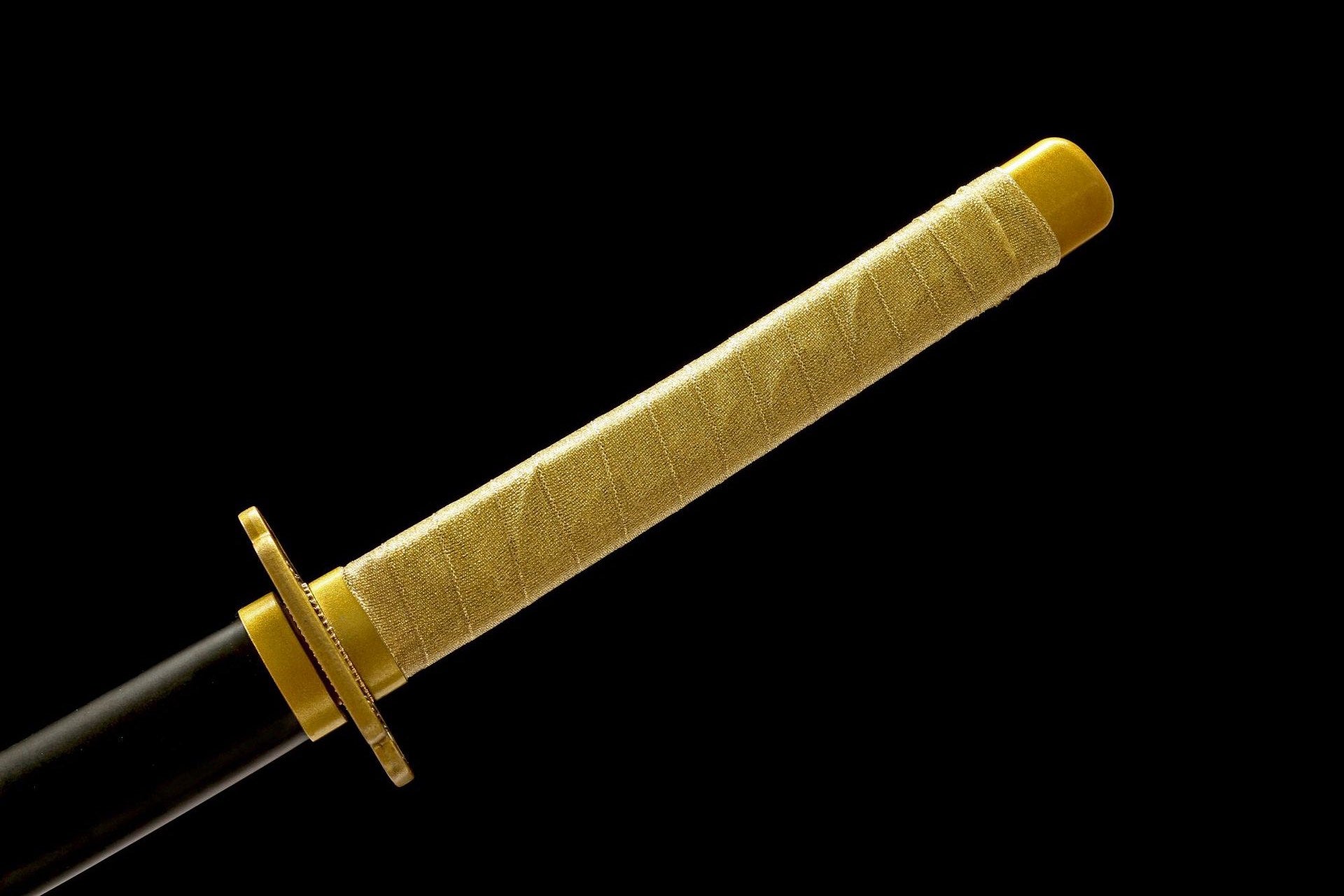
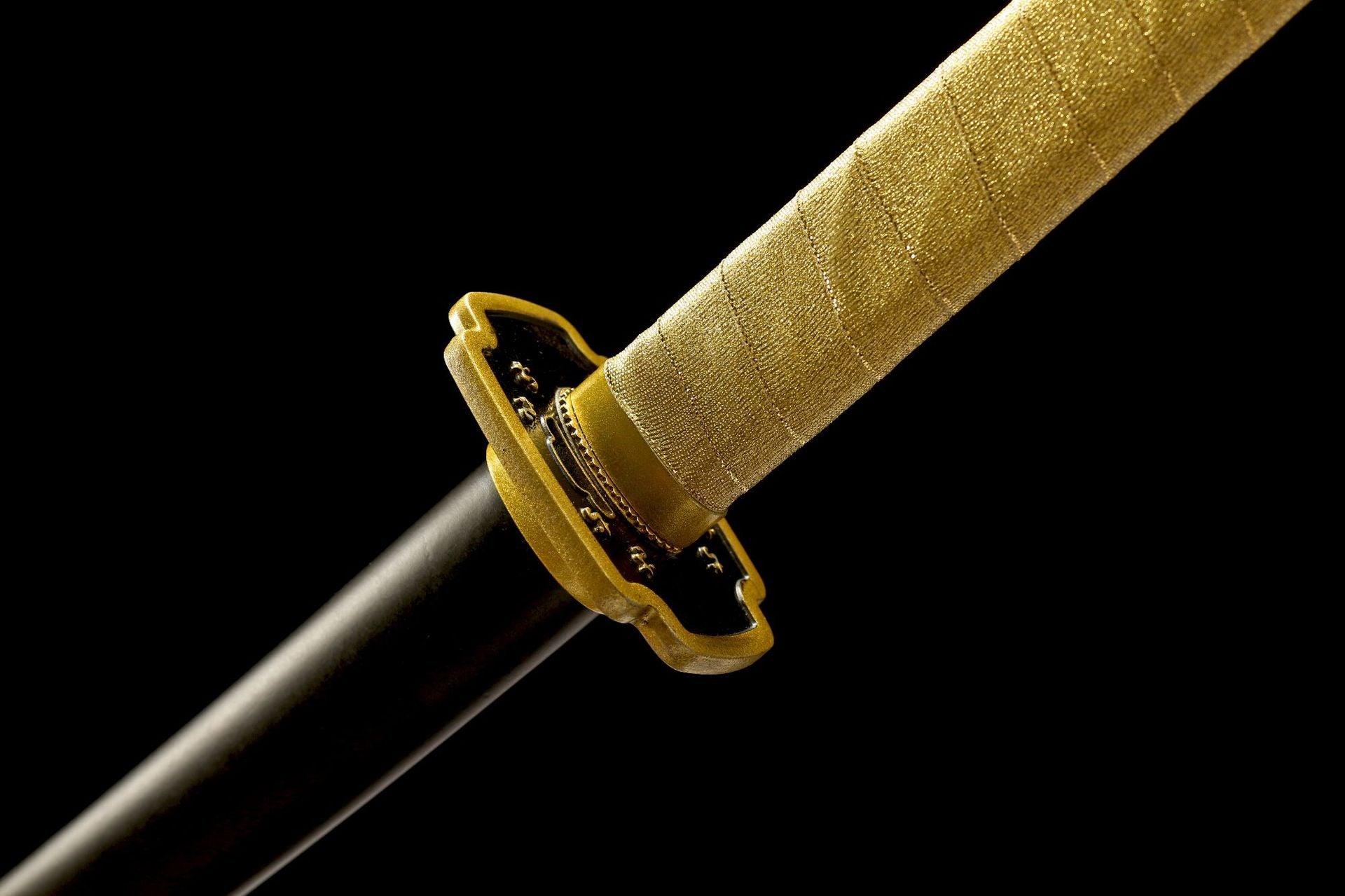
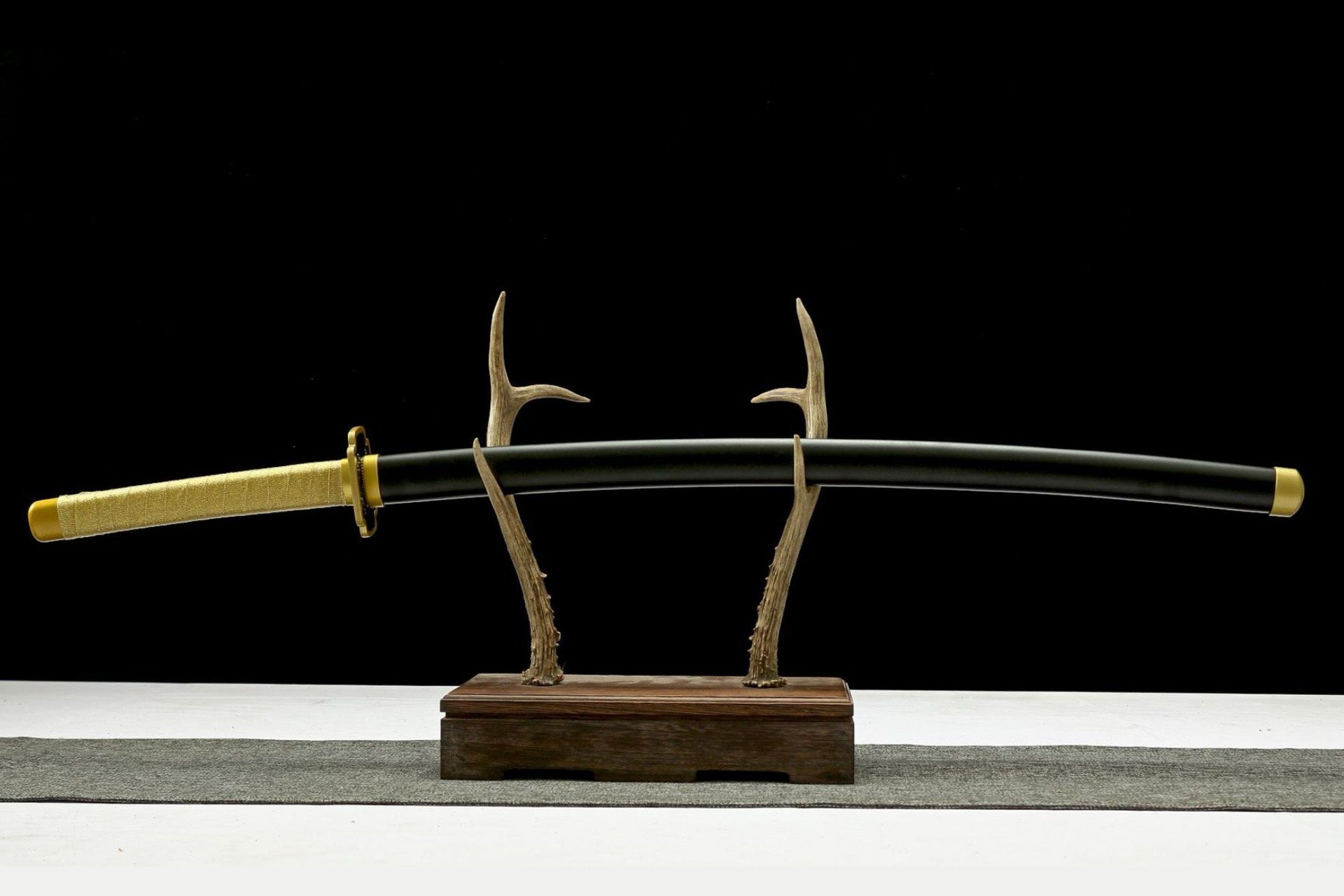
Yoriichi Tsugikuni Katana is built around the black-and-red visual language of Yoriichi's Nichirin sword. Its 1045 carbon steel blade is made from a medium-carbon steel, with the black surface carrying a red flame-shaped decorative design along its length. Full tang construction continues through the gold-wrapped handle. The black scabbard and black-and-gold Yoriichi Nichirin sword guard keep the color and form closely tied to the character.

Details

  • 1045 carbon steel blade
  • Full tang construction
  • Black blade surface with red flame-shaped decorative design
  • Black-and-gold Yoriichi Tsugikuni Nichirin sword guard
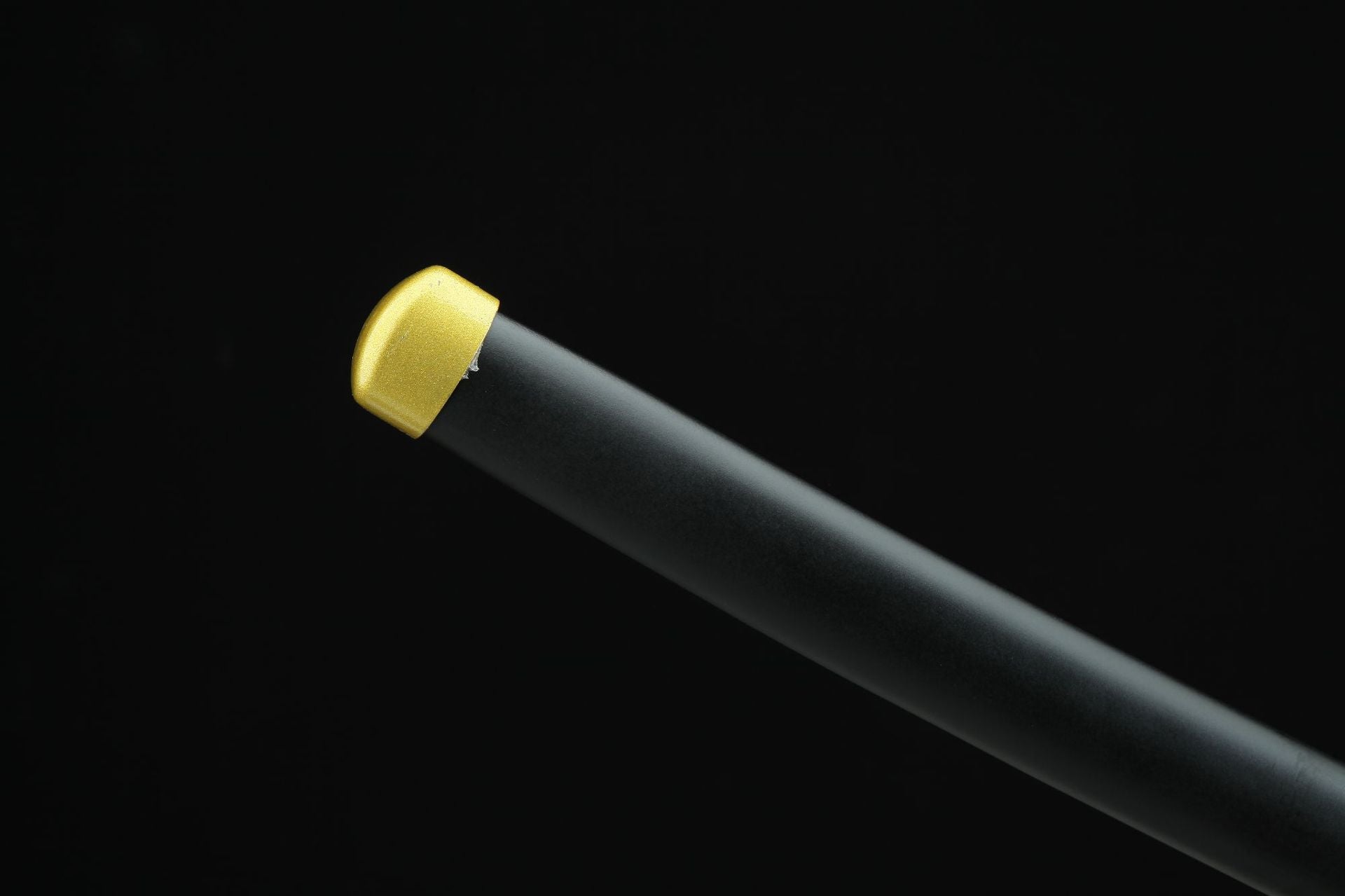
  • Gold-wrapped handle and black scabbard with gold-toned fittings

General Specifications

Specification Value
Product Type Manga Katana
Blade Material 1045 Carbon Steel
Blade Geometry Curved blade
Blade Finish Black surface with red flame-shaped decorative design
Tang Construction Full Tang
Tsuba Yoriichi Tsugikuni Nichirin sword guard

Dimensions

Measurement Value
Overall Length 105 cm
Blade Length 72 cm
Tsuka Length 30 cm
Blade Width 3.2 cm
Blade Thickness 0.7 cm

Care

Keep the blade dry and wipe away fingerprints after handling. Keep the gold handle wrap and black scabbard clean and dry, away from prolonged moisture and direct sunlight.

Questions

What steel is used?
The blade is made from 1045 carbon steel.

What is the construction?
The blade has full tang construction.

Does the assembled product match the photographs?
Yes. The assembled product corresponds to the product photographs.

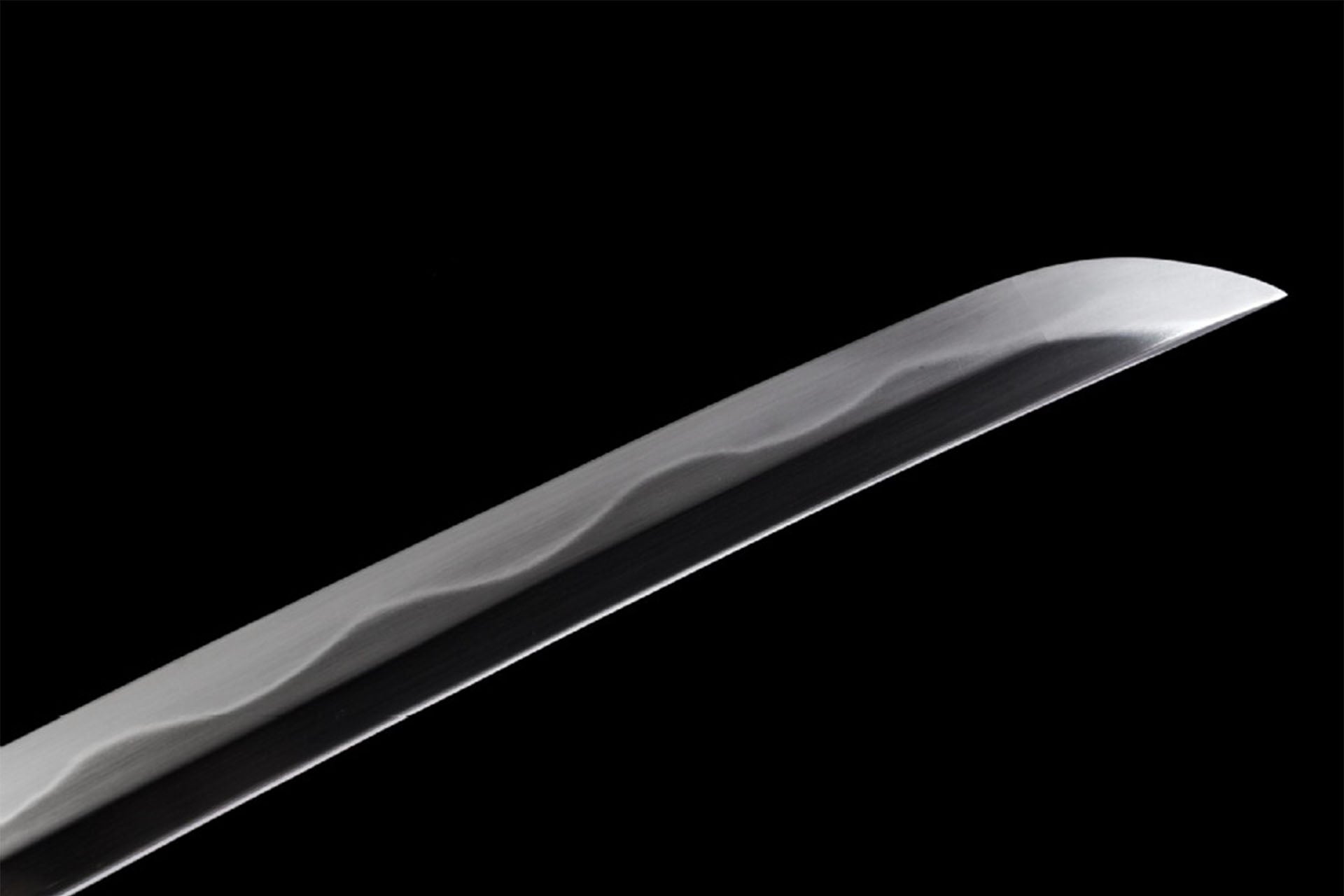
What does the blade look like?
The blade has a black surface with a red flame-shaped decorative design and a red '灭' character detail near the guard.
Package Includes
  • 1 × Wakizashi
  • 1 × Saya (Scabbard)
  • Packed in a carton box
Please Note
  • This product is intended for display, collection, or training purposes.
  • Minor variations in color, grain, or finish may occur due to the handmade process.
  • Buyers are responsible for complying with local laws and regulations regarding sword ownership and use.
  • Keep out of reach of children.
Warranty

This product is covered by a30-day limited warrantyagainst manufacturing defects in materials or workmanship, effective from the date of delivery. This warranty does not cover normal wear, cosmetic variation, improper handling, misuse, unauthorized modification, accidental damage, or damage caused by improper storage or maintenance. To request warranty service, please contact customer support with your order number and clear photos of the issue within the warranty period.

Share
Full view of Yoriichi Tsugikuni Katana with black-and-red blade, gold handle wrap, and black scabbard
Yoriichi Tsugikuni KatanaSharpened Sale price$199.00

How is a katana forged?

Understand how a piece of steel becomes a valuable samurai sword worth collecting.

Katana steel

The soul of every katana begins with the perfect choice of steel.

Whether forged from modern alloys or traditional steels, each selection reflects our pursuit of performance in harmony with artistry.

This careful beginning sets the stage for extraordinary quality and a blade that honors both craftsmanship and tradition.

Folding & forging

The swordsmith forges the steel into a rectangular billet.

It is heated until red-hot, hammered to half its thickness, folded, reheated, and hammered again.

This process is repeated many times.

With each cycle, impurities are removed, the material’s composition becomes uniform, and unique grain patterns begin to emerge.

Katana takes shape

Forged steel varies — some types offer excellent flexibility but lower hardness, while others provide high hardness but can be brittle.

To achieve both hardness and toughness, a high-hardness outer jacket is carefully wrapped around a flexible core steel.

This step requires exceptional skill, as poor fusion between the steels can trap air bubbles, compromising the blade’s integrity.

Once combined, the steel is forged into the basic shape of the katana.

Engraving katana

If engraving is required, it is done at this stage — not at the final step as commonly believed.

Once the katana is quenched, it becomes too hard to carve.

This stage allows the swordsmith to incorporate symbols of personal belief or spiritual significance into the blade.

Quenching katana

Quenching is a highly skilled process.

At this stage, the katana’s performance, hamon (temper line), and elegant curvature are all set permanently.

Any mistake at this point would mean the loss of all previous work.

Polishing katana

Once forging is complete, the blade is entrusted to the polisher — a master of patience and precision.

With whetstones of many grits, the polisher carefully removes the surface layers, much like a sculptor.

Through this painstaking process, the katana’s hidden beauty emerges.

Its strength, sharpness, and the distinctive hamon — the sword’s signature — are finally unveiled.

Katana buying FAQ

Choosing the right katana is important. If you have any questions, reach out to us at support@ironpoet.com — we’re always ready to assist.

Is a katana the same as a samurai sword?

The term katana is commonly used to refer to a samurai sword, but more precisely, it is the most popular type of samurai sword, professionally known as the uchigatana.

Is the katana functional?

Yes, all our katanas are fully functional and battle-ready unless stated otherwise. They are hand-forged using traditional techniques and meticulously polished.

How is a katana made?

It begins with carefully selected steel, heated and hammered through countless cycles. A master swordsmith, drawing on years of skill, tempers the blade through precise quenching. The unfinished sword then passes to a dedicated polisher, because in true tradition, forging and polishing are the work of two masters. Finally, only when the blade meets its fittings — the handle, guard, and scabbard — does it become the complete katana you see and hold today.

How should I maintain the katana?

Avoid touching the blade with bare hands. Clean and lightly oil it before storage (machine oil or even cooking oil if necessary).

How I choose the right katana?

All of our katanas are fully functional, but different blades and fittings emphasize different aspects.
You simply need to decide whether you prioritize display and collection or practical functionality.
For functionality, we recommend the affordable and well-balanced manganese steel katanas.
Of course, all other katanas are also fully functional — some are just optimized for specific strengths.
If you're focused on aesthetics, feel free to choose any katana — every piece is crafted for both use and beauty.

Do you ship internationally, and how long does delivery take?

We ship worldwide. Orders are processed within 24 hours, and delivery typically takes 5–10 business days, depending on your location.

What is your return policy?

We offer a 30-day hassle-free return policy. We want you to love your katana. If it’s not exactly what you hoped for, just email us at info@ironpoet.com — we’ll be happy to arrange a refund or exchange, no questions asked.