


Cinnabar Katana
The Cinnabar Katana takes its character from a cinnabar-red lacquered saya and matching red tsuka wrap. Dark fittings with gold relief bring a warmer contrast close to the hand, while the black sageo adds another line of depth against the red wood.
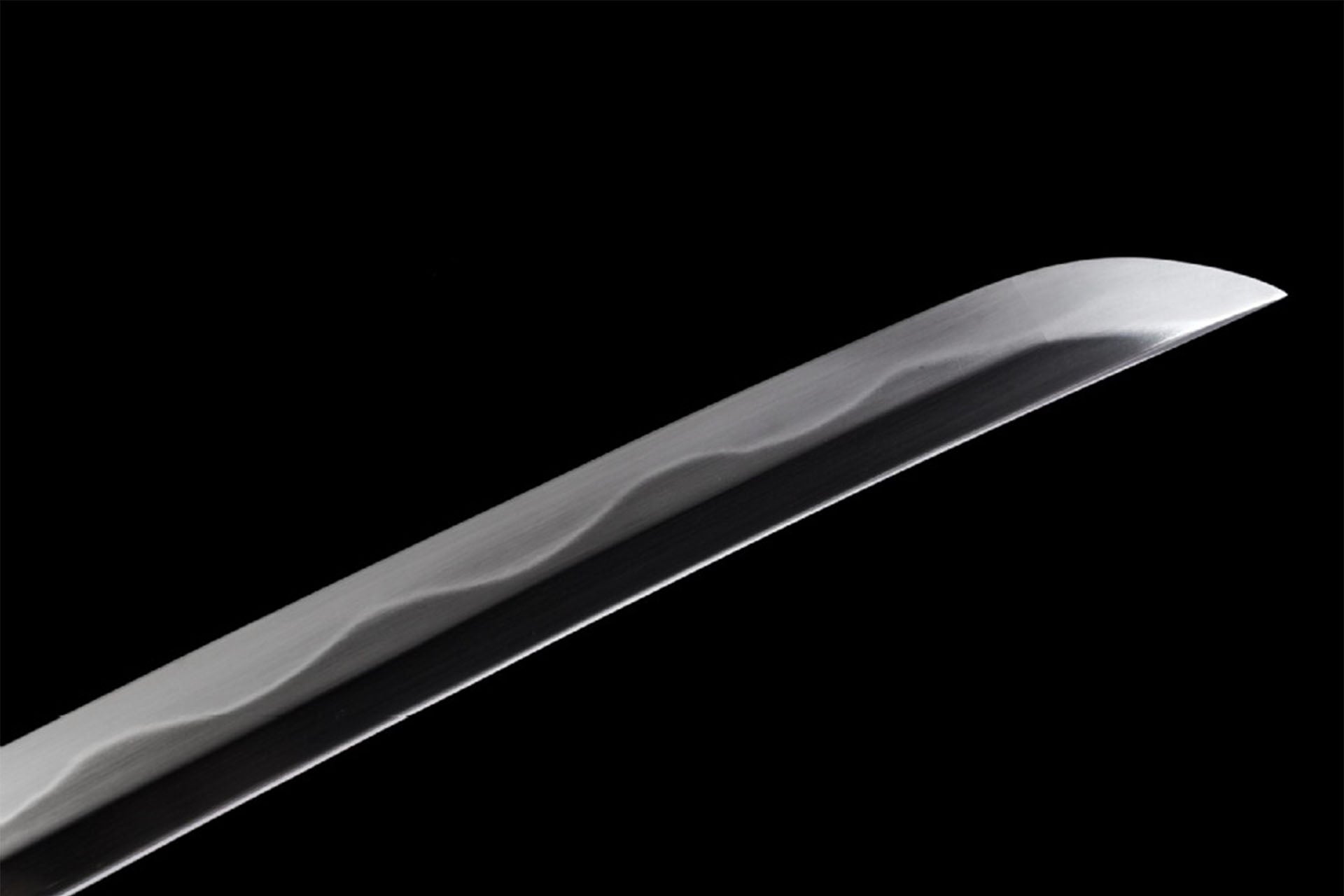
The blade is shaped with a bo-hi and finished with clay tempering, leaving an irregular wavy hamon visible along the polished surface. Spring steel gives it a resilient, toughness-oriented character, and the full-tang build carries through the solid wood handle. Copper fittings complete the mounting.
Details
- Spring-steel blade with clay tempering and a visible wavy hamon
- Bo-hi running along the blade
- Full-tang construction with a solid wood handle and cord wrap
- Cinnabar-red lacquered wood saya with black sageo
- Copper fittings with Sharpened and Unsharpened edge options
General specifications
| Feature | Information |
|---|---|
| Blade steel | Spring steel |
| Heat treatment | Clay tempering |
| Blade feature | Bo-hi |
| Construction | Full tang |
| Fittings | Copper |
| Saya | Lacquered wood |
| Edge options | Sharpened / Unsharpened |
Dimensions & weight
| Measurement | Value |
|---|---|
| Overall length | 103 cm |
| Blade length | 72 cm |
| Tsuka length | 26 cm |
| Blade width | 3.2 cm |
| Total weight | 1,500 g |
| Weight without saya | 1,050 g |
Materials & Craftsmanship
We choose the right steel for each katana—nothing more, nothing less |
|
One continuous piece of steel, from blade to handle |
|
Through-hardened or clay-tempered, years of experience get it just right |
Hand-Fitted Koshirae
Shaped to follow the katana’s curve, with a secure fit for a smooth draw without slipping loose |
|
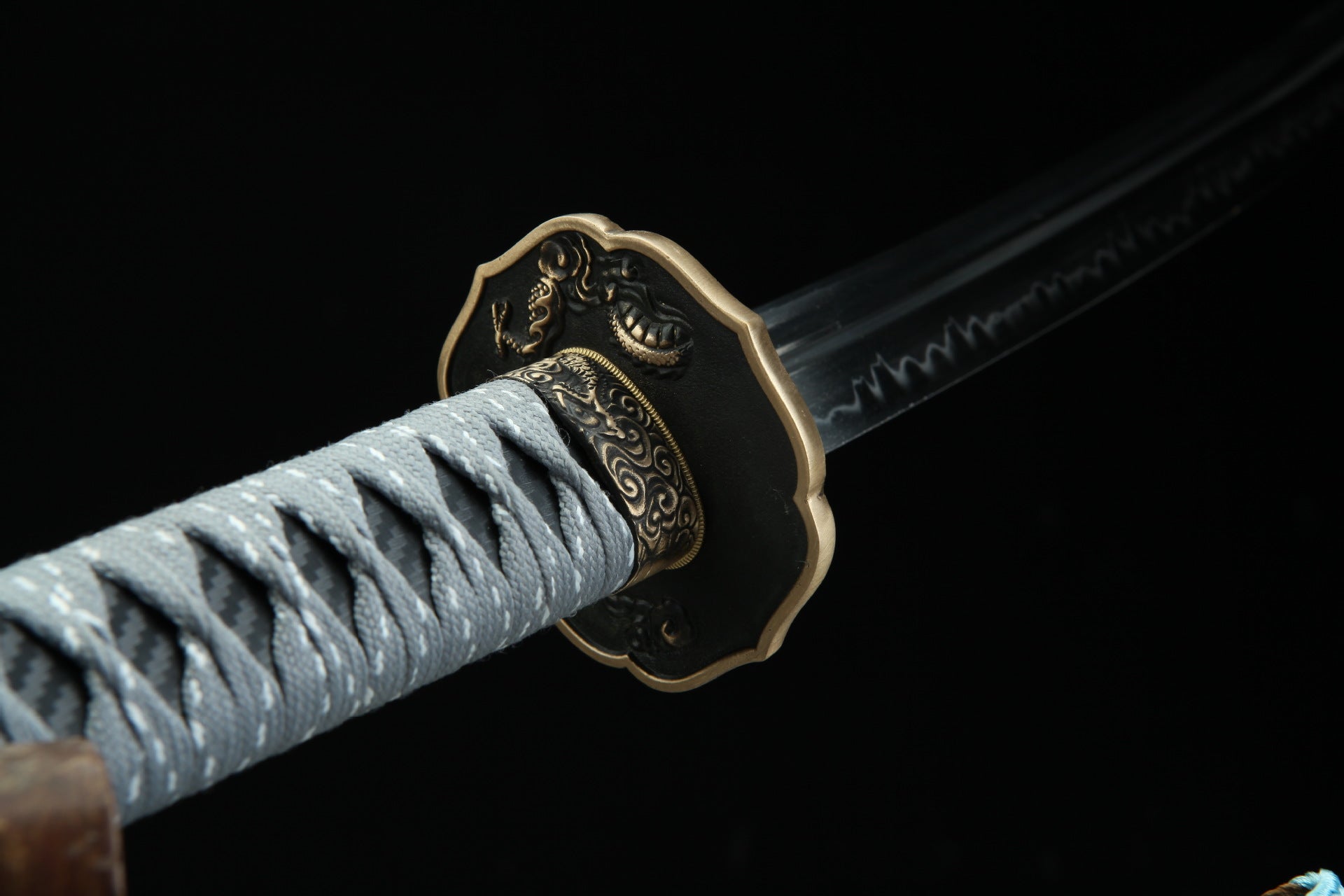
For centuries, the tsuba has reflected its owner’s taste—and is often the first detail to catch the eye |
|
A comfortable shape, a tight wrap—the first step to bringing out a katana’s true power is a firm grip |