Skip to content

Cart

Your cart is empty

Continue shopping

What Is a Bo-Hi on a Katana?
Bo-Hi on a Katana
Sep 10, 202611 min read

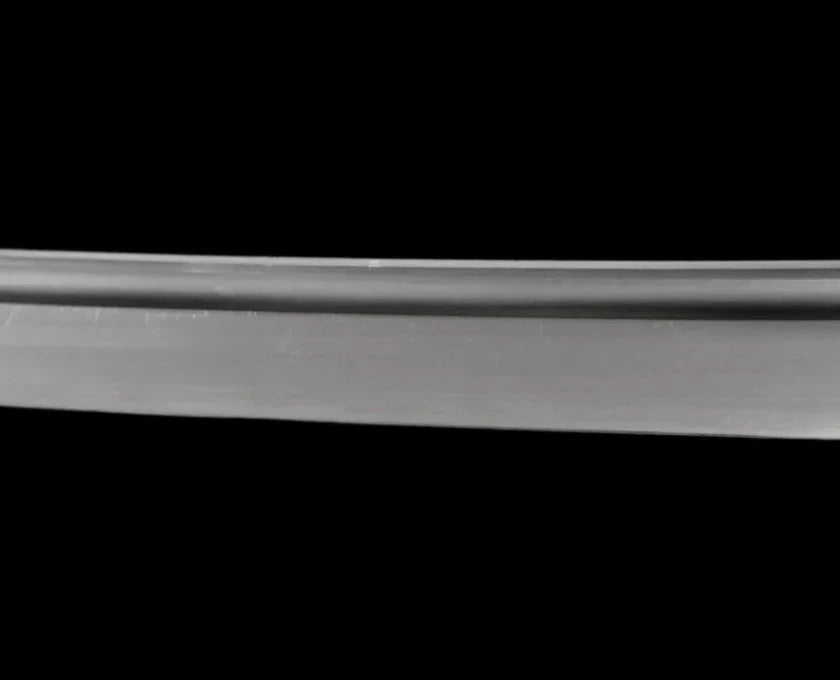
A bo-hi is a long, usually straight groove formed along the blade of a katana. It is most often located on the shinogi-ji, the surface between the shinogi ridge and the mune, or back of the blade.

The word bo-hi comes from Japanese sword terminology. “Bo” refers to the groove’s long, bar-like shape, while “hi” means a groove or channel in a sword blade. In English, the term may also be written as bohi or bōhi.

A bo-hi changes the blade’s geometry, mass distribution, and appearance. It may reduce some blade mass and influence the way the sword feels in the hand. However, it does not automatically prove that a katana is stronger, sharper, authentic, traditionally forged, or made from a particular type of steel.

Bo-Hi at a Glance

Feature What it means
Japanese term 棒樋, usually written as bo-hi or bōhi
Basic form A long, relatively straight blade groove
Usual location The shinogi-ji, between the shinogi and mune
Main effects Changes mass, geometry, balance, and appearance
Common English term Fuller
Common misconception It is not literally a “blood groove”
What it cannot prove Steel type, authenticity, heat treatment, or quality

What Does “Bo-Hi” Mean?

The Japanese term hi refers broadly to a groove formed into the surface of a sword blade. Bo-hi is one particular form of hi, usually recognized by its long and relatively straight shape.

You may see several spellings in English:

  • bo-hi

  • bohi

  • bōhi

These are generally attempts to represent the same Japanese term. The spelling may vary between museums, collectors, martial arts references, and retail listings.

Not every groove on a Japanese sword is a bo-hi. Some blades have additional grooves, paired grooves, shorter grooves, or grooves with different endings. These features may have their own names, such as soe-hi, futasuji-hi, or naginata-hi.

The term fuller is sometimes used as an English equivalent. That comparison is useful because both features involve removing material from a blade. However, “fuller” is a general Western term, while hi belongs to a more specific Japanese sword vocabulary.

Where Is a Bo-Hi Located on a Katana?

To understand the position of a bo-hi, it helps to identify the basic surfaces of a katana blade.

The mune is the back of the blade. The ha is the cutting-edge side. The shinogi is the long ridge that separates the upper and lower planes of a typical shinogi-zukuri blade. The shinogi-ji is the surface between the shinogi and the mune.

A bo-hi is usually formed in this shinogi-ji area. It often follows the same general direction as the mune and may extend along much of the blade.

The exact design can vary:

  • It may begin close to the habaki, the collar at the base of the blade.

  • It may stop before the point.

  • It may taper gradually.

  • It may end in a rounded or angular stop.

  • It may continue toward the tang.

  • It may be accompanied by a smaller secondary groove.

The groove’s width and depth also vary. A narrow, shallow hi creates a different visual and structural effect from a wide, deeply cut bo-hi.

If these blade terms are new to you, our Japanese sword anatomy guide explains the locations of the shinogi, shinogi-ji, mune, ha, kissaki, and nakago.

Is a Bo-Hi Carved or Painted?

A genuine bo-hi is a physical groove in the blade. It is not simply a line painted onto the surface.

On a traditionally made Japanese sword, blade grooves are part of the broader tradition of blade carving and finishing. The work requires the removal and refinement of steel, followed by careful finishing so that the groove sits naturally within the blade’s geometry.

Modern production swords may be made using different processes. A factory-produced katana may have its groove formed through machining, grinding, or another production method. The visible feature alone cannot tell you exactly how it was made.

This distinction matters when discussing authenticity. A bo-hi can appear on both traditionally made swords and modern reproductions. Its presence does not identify the sword’s age, origin, maker, or legal classification.

A bo-hi should also be distinguished from horimono. Horimono refers to carved images, inscriptions, symbols, or religious motifs on a sword blade. A bo-hi is primarily a groove in the blade’s structure, even though both features involve blade carving.

Why Do Katana Have a Bo-Hi?

Reducing Blade Mass

One of the clearest practical reasons for using a bo-hi is to remove some material from the blade.

A groove reduces the amount of steel in that particular section. Compared with an otherwise similar blade without a groove, this can reduce total mass. The actual difference depends on the blade’s length, thickness, width, cross-sectional shape, and the dimensions of the groove.

This is why it is risky to claim that every bo-hi katana is lighter by a fixed amount. A shallow groove in a thick blade will have a different effect from a deep groove in a slim blade.

The NBTHK’s exhibition archive on Japanese sword blade carving explains that early, simple grooves were associated with reducing weight and improving practical utility. In later periods, blade grooves and carvings also developed religious, symbolic, and decorative roles.

Influencing Balance

Removing material from the blade can change how the sword’s weight is distributed.

In some designs, a bo-hi may make the blade feel less forward-heavy than a similar blade without a groove. This can influence the perceived balance and responsiveness of the sword. However, the final handling experience depends on the complete sword, not just the presence of a groove.

Important factors include:

  • Blade length

  • Blade thickness

  • Total weight

  • Point of balance

  • Handle length

  • Shape of the blade

  • Weight of the fittings

  • Construction and heat treatment

Two katana with similar-looking bo-hi grooves may feel completely different if their dimensions and construction are different.

Supporting Visual Design

A bo-hi can also change the visual character of a blade.

The groove creates a long line that emphasizes the sword’s direction and curvature. It may make the blade appear more refined or visually lighter. On a polished blade, the groove can produce changes in reflection that make the geometry easier to see.

On traditionally made swords, the form of the hi may also relate to the style of a particular period, school, or swordsmith. This does not mean that a groove can identify a maker by itself. It is one feature that must be considered together with the blade’s shape, hamon, jihada, nakago, fittings, and other evidence.

Producing a Distinctive Air Sound

Some sword users associate a grooved blade with a characteristic sound when it moves through the air.

A 2015 engineering paper published through J-STAGE examined the hi of a Japanese-style practice sword and simplified blade models. The researchers observed a distinctive sound response from the grooved practice sword under their test conditions.

This is an interesting physical effect, but it should not be exaggerated. The result does not mean that every bo-hi katana will produce the same sound, nor does it prove that the sound has a particular combat function.

What Does Engineering Research Say About Bo-Hi?

The structural effect of a bo-hi is more complicated than simply saying that it makes a sword “stronger” or “weaker.”

The J-STAGE study examined cross-sectional area and flexural rigidity. Flexural rigidity describes how resistant a structure is to bending. It is not the same as ultimate strength, impact resistance, edge durability, or resistance to catastrophic failure.

In one simplified model used by the study, increasing groove depth reduced the modeled cross-sectional area more than it reduced the modeled flexural rigidity. The normalized values changed approximately as follows:

Model condition Relative cross-sectional area Relative flexural rigidity
No groove 1.000 1.000
Shallower groove model 0.941 0.970
Medium groove model 0.887 0.938
Deeper groove model 0.828 0.901
Deepest tested model 0.769 0.858

These numbers belong to the paper’s simplified models. They are not specifications for every katana and should not be used to predict the performance of a particular commercial sword.

The important point is that removing material does not affect every engineering property in exactly the same way. A blade’s response depends on geometry, material, heat treatment, and how forces are applied.

For this reason, the following statements are too broad:

  • “A bo-hi always makes a katana stronger.”

  • “A bo-hi always makes a katana weaker.”

  • “A bo-hi proves that a katana is battle ready.”

  • “A bo-hi makes a sword safe for cutting.”

  • “A bo-hi guarantees better handling.”

A careful explanation should say that a bo-hi changes blade geometry and mass distribution. The result depends on the individual sword.

Is a Bo-Hi a Blood Groove?

In English, bo-hi is sometimes called a blood groove. This nickname is common, but it is misleading when taken literally.

A bo-hi is not a channel designed to carry blood, and it does not make a sword cause more bleeding. The more useful explanations focus on material removal, blade geometry, balance, handling, historical style, and appearance.

The term “blood groove” is often applied to grooves on many different kinds of knives and swords. It is a popular expression rather than a precise explanation of Japanese sword construction.

Common Types of Hi on Japanese Swords

Bo-Hi

A single, long groove that generally follows the length of the blade.

Soe-Hi

A smaller secondary groove placed beside a larger main groove. The additional line can create a more complex visual arrangement.

Futasuji-Hi

A double-groove arrangement. The two grooves may be parallel or positioned according to the blade’s specific design.

Naginata-Hi

A groove form associated with the blade traditions and proportions of naginata and related weapons.

Kakinagashi

A groove that gradually tapers or fades toward its termination rather than ending in a sharply defined stop.

Kakiotoshi

A groove that continues through the lower part of the blade toward the tang.

Kaku-Tome

An angular or squared termination.

Maru-Tome

A rounded termination.

These terms are useful when reading museum descriptions and specialist references. Retail listings may use shorter or simplified descriptions, so the label alone should not be treated as a complete technical assessment.

Bo-Hi vs. No-Hi: Which Is Better?

There is no universal winner between a katana with a bo-hi and one without a groove.

A bo-hi may appeal to buyers who prefer:

  • A more visible blade feature

  • A refined or dynamic appearance

  • A different mass distribution

  • The traditional look of a fullered Japanese sword

  • A blade design with additional carved detail

A no-hi blade may appeal to buyers who prefer:

  • A visually uninterrupted surface

  • A more substantial-looking blade

  • A simpler blade profile

  • A style without a long carved channel

The right choice depends on the complete sword. When comparing two listings, look at:

  1. Actual blade length

  2. Blade width and thickness

  3. Total weight

  4. Point of balance

  5. Handle length

  6. Steel and heat treatment

  7. Tang construction

  8. Intended use

  9. Storage and maintenance requirements

A bo-hi does not automatically make a katana lighter in a way that every buyer will notice. A no-hi blade is not automatically stronger or more durable. The individual specifications matter more than the label.

For a broader framework covering blade dimensions, construction, edge condition, and intended use, see our Katana Buying Guide for Beginners.

What a Bo-Hi Does Not Tell You

A bo-hi is only one visible feature of a blade. It cannot independently confirm the following:

Question Can the bo-hi answer it?
What steel is used? No
Was the blade clay tempered? No
Is the sword full tang? No
Is the blade traditionally forged? No
Is the sword an authentic nihontō? No
Is the edge sharp? No
Is the sword safe for cutting? No
Was the heat treatment successful? No
Is the sword well assembled? No

A product listing should provide separate information about the steel, construction, heat treatment, dimensions, edge condition, and intended use.

Our guide to katana steel and craftsmanship explains why a steel label or one visible feature should not be treated as a complete quality assessment.

Traditional Japanese Swords and Modern Production Katana

The word katana is used broadly in modern English. It may refer to a traditionally made Japanese sword, a modern sword made by a licensed Japanese smith, a martial arts sword, a display piece, or a commercial reproduction.

A bo-hi may appear in any of these categories.

On a traditionally made sword, the groove can form part of the blade’s historical and artistic character. On a modern production katana, the groove may be included for appearance, weight distribution, or design preference. The production method can be very different.

Therefore, the presence of a bo-hi cannot establish:

  • A sword’s age

  • Its country of manufacture

  • Its maker

  • Its historical provenance

  • Its authenticity

  • Its steel type

  • Its performance

The groove should be evaluated as one part of the sword’s design rather than as a shortcut to its identity.

Does a Bo-Hi Require Special Care?

The groove does not require a completely different maintenance system, but it should be cleaned and protected along with the rest of the blade.

Residue can remain in any recessed area, especially if the sword is handled frequently or stored in a humid environment. Use the care method recommended for the specific sword, keep the blade dry, and avoid leaving fingerprints or moisture on the polished surface.

For general cleaning, storage, and light-oil guidance, see our Katana Care and Maintenance guide.

Do not use abrasive tools to clean the inside of a bo-hi. Scratching the groove can damage the finish and may be difficult to correct.

Frequently Asked Questions

Is a bo-hi the same as a fuller?

A fuller is the closest general English term for a groove that removes material from a blade. However, not every Japanese hi has the same shape, history, or terminology as a fuller on a Western sword.

Does a bo-hi make a katana lighter?

It can reduce blade mass compared with a similar blade without a groove. The actual effect depends on the groove’s dimensions and the complete geometry of the blade.

Does a bo-hi make a katana weaker?

A bo-hi changes the blade’s cross-section, so it can affect stiffness and other structural properties. It is not accurate to say that every bo-hi makes a sword weak or that every bo-hi makes it stronger. Steel, heat treatment, thickness, geometry, and construction all matter.

Does a bo-hi improve balance?

It may change the distribution of mass and therefore influence the way a sword feels. However, balance depends on the entire sword, including the blade, handle, guard, fittings, and scabbard.

Is a bo-hi better than a blade without a groove?

Neither is automatically better. The choice is mainly about the design, handling characteristics, and specifications of the individual sword.

Is a bo-hi the same as a blood groove?

No. “Blood groove” is a popular English nickname. It is not a literal explanation of the Japanese feature’s purpose.

Does every katana have a bo-hi?

No. Many katana have no groove, while others use different types of hi. The choice depends on the blade’s style and construction.

Does a bo-hi prove that a katana is authentic?

No. Modern production swords can also have bo-hi grooves. Authenticity requires a separate assessment of the blade, tang, workmanship, provenance, and documentation.

Does a bo-hi mean that a sword is sharp?

No. A groove has nothing to do with whether the edge is sharp, unsharpened, or blunt. Edge condition must be confirmed separately in the product description.

Conclusion

A bo-hi is a long, usually straight groove formed along the blade of a katana, most often in the shinogi-ji. It is one type of hi and may reduce blade mass, influence balance, change the blade’s appearance, and contribute to a sword’s traditional visual language.

It is not a literal blood channel, and it is not a reliable shortcut for judging a sword’s steel, strength, authenticity, or quality.

When comparing katana, look beyond the groove. Consider the blade’s dimensions, weight, balance, construction, heat treatment, edge condition, and intended use. Once those fundamentals are clear, you can decide whether the appearance and handling of a bo-hi suit your own collection.

Explore the full katana collection and compare each sword by its complete specifications rather than by the bo-hi alone.

Share

Leave a comment

All comments are moderated before being published.

This site is protected by hCaptcha and the hCaptcha Privacy Policy and Terms of Service apply.