
What Does Full Tang Actually Mean?
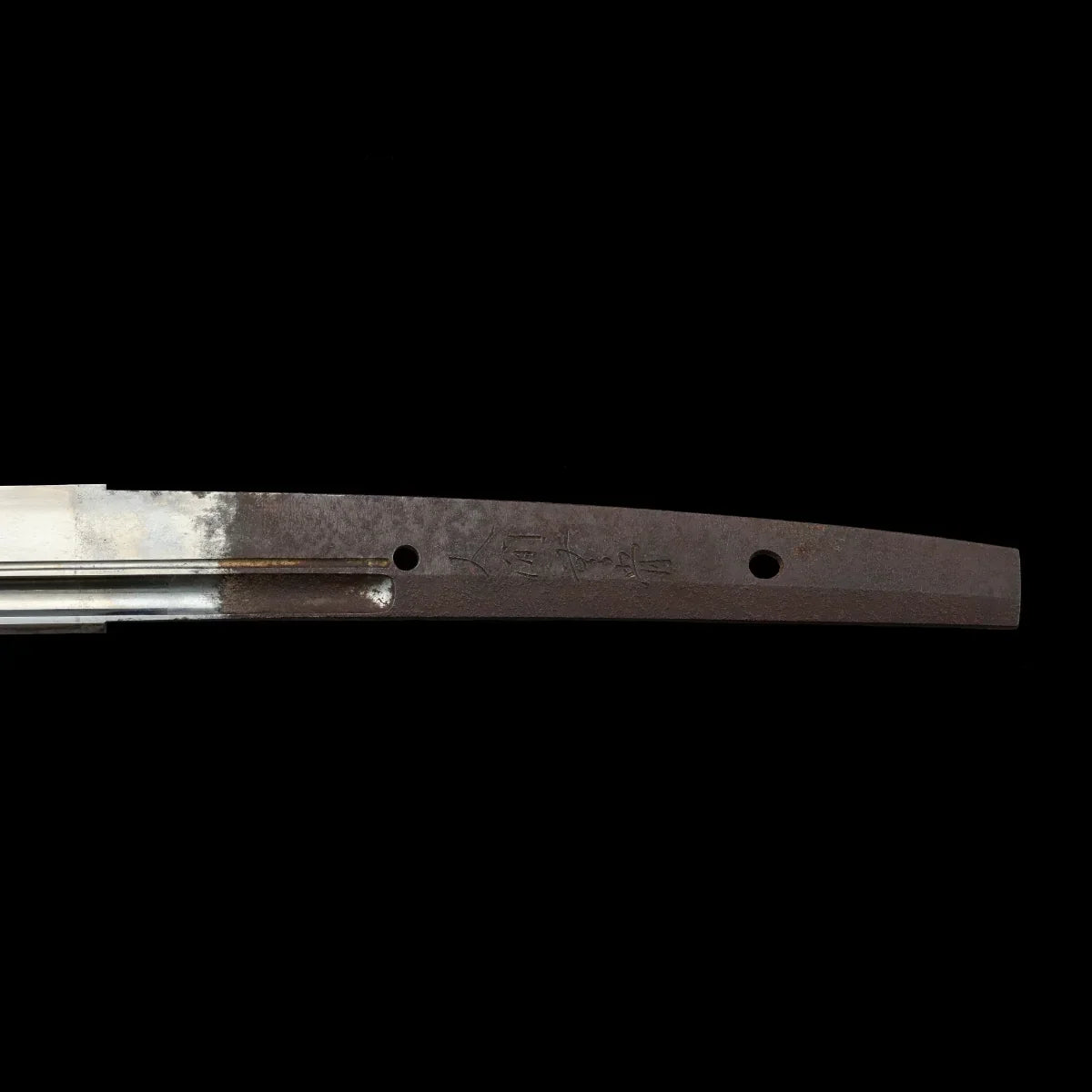
“Full tang” is one of the most common terms on sword and knife product pages. It is often presented as a sign of quality and may appear beside phrases such as “battle ready” or “heavy duty.”
It is important information, but it is not the whole story.
Full tang means that the blade steel and the tang are forged as one continuous piece; it describes how the blade connects to the handle. For a sword intended for practical use, this can be an important structural feature. It does not, however, prove that the steel, heat treatment, or handle assembly is good.
What Is a Tang?
A tang is the unsharpened section of a blade that extends inside the handle. It connects the visible blade to the part held in the hand.
In a Japanese sword, the tang is called the nakago (茎). It sits inside the tsuka (handle) and is secured by one or more mekugi (pegs) passing through both the handle and tang.
The nakago is more than hidden metal. On a traditional Japanese sword, it may bear the swordsmith’s signature, file marks, shape characteristics, patina, and peg holes. These features can matter for appreciation and authentication. The Kyoto National Museum’s introduction to Japanese swords likewise identifies the nakago as the part of the blade normally hidden inside the grip.
What Does “Full Tang” Mean?
A full tang means that the blade steel continues into the handle for the full, or nearly full, length of the grip.
On many knives, a full tang is visible as a strip of steel between two handle scales. On a katana, the tang is normally enclosed by the tsuka, so it usually cannot be seen without removing the handle.
The key point is continuity: the blade and tang are formed from the same piece of steel, rather than having a separate metal rod attached behind the blade.
However, full tang is a broad modern knife-and-sword term, not a single universal manufacturing standard. It indicates that the tang extends through the handle, but it does not specify its exact thickness, width, taper, or fit inside the handle.
Full Tang vs. Other Tang Constructions
Not all swords and knives use the same handle construction.
A partial tang extends only partway into the handle. It may be suitable for light-use tools, decorative pieces, or designs where lower weight is the priority.
A rat-tail tang is usually much narrower than the blade and may rely on a threaded rod or pommel nut. It is not an automatic sign of failure, but it generally has less material at the blade-to-handle connection and is usually less strong than a full tang construction.
A full tang provides a more continuous steel structure inside the grip. For swords intended for handling or cutting, this is a feature worth considering—but the design and assembly must still be sound.
How Does Full Tang Relate to Japanese Swords?
For Japanese swords, full tang is usually a plain-language term for general audiences. It refers to a nakago that extends through the tsuka.
The traditional Japanese sword structure is more specific than this commonly used term. The nakago must fit closely inside a shaped wooden handle core and is held in place by mekugi. The fit between tang and handle core, the location of the peg hole, and the condition of the sword fittings all matter.
How Is a Full Tang Forged?
In a properly made sword or knife, the tang is usually forged from the same piece of steel as the blade.
The process begins with steel stock or a forged billet. The maker establishes the blade’s general profile, then draws out and shapes the section that will become the tang. The blade, shoulder area, and tang are adjusted as one continuous structure before heat treatment and final finishing.
After the main shape is established, the maker refines the transition from blade to tang. This area matters because abrupt changes in thickness or shape can concentrate stress. The tang may then be adjusted in length, width, thickness, and taper to suit the intended handle construction.
For Japanese swords, the nakago is usually refined after the blade has been forged and heat treated. It may receive yasurime (file marks), a mekugi-ana (peg hole), and an inscription. The wooden handle core is then fitted closely to the shape of the tang.
Why Does Full Tang Matter?
Full tang construction creates a continuous steel connection between the blade and handle, helping provide a stronger and more durable overall structure. It can also improve stability in the hand and contribute to a more comfortable balance because the blade and tang are one continuous piece of steel.
For a katana, overall balance is still influenced by blade length, distal taper, profile, fittings, and handle length—not tang construction alone.
A study from the Japan Society of Mechanical Engineers also illustrates why the complete assembly matters. It examined the relationship between the nakago, mekugi, and tsuka, and found that the position of the peg hole affects the force placed on the retaining peg during impact. Read the study.
What Full Tang Does Not Tell You
Full tang is useful information, but it is not a complete quality verdict.
It does not tell you:
-
What steel the blade uses
-
Whether the heat treatment is appropriate
-
Whether the edge geometry is well made
-
Whether the handle is fitted tightly
-
Whether the fittings are correctly installed
-
Whether the sword is sharp, unsharpened, or blunt
-
Whether it is suitable for a particular use
-
Whether “battle ready” is a defined and well-supported claim
A full tang sword can still be poorly assembled. Likewise, a traditional Japanese sword should be evaluated as a complete construction, not by one modern term alone.
How to Read “Full Tang” on a Product Page
Treat full tang as one item in a broader specification checklist, not as the only buying criterion.
Also check the blade steel, heat treatment, edge condition, handle construction, fittings, dimensions, balance, and intended use. A good product page should make clear what the sword is suitable for—and what it is not suitable for.
Read more
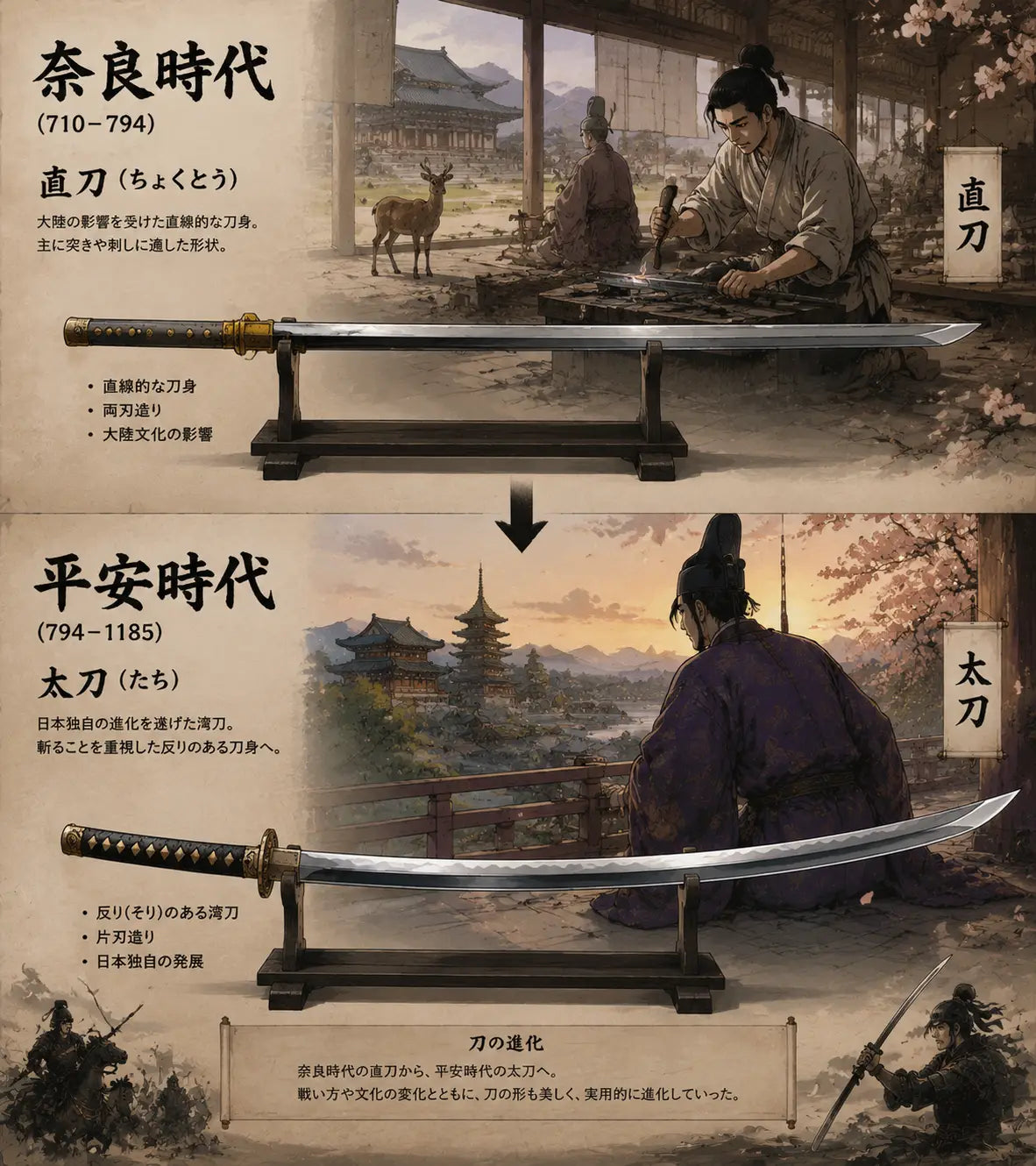
If an early straight sword and a tachi from the Heian period were placed side by side, the first thing most people would notice would not be the inscription or the temper line, but the curve. One b...
Buying your first katana is easy to overthink. You see a sword with a striking hamon, another with a black saya and gold fittings, then a third described as T10 clay-tempered Full Tang pattern-weld...
Leave a comment
All comments are moderated before being published.
This site is protected by hCaptcha and the hCaptcha Privacy Policy and Terms of Service apply.